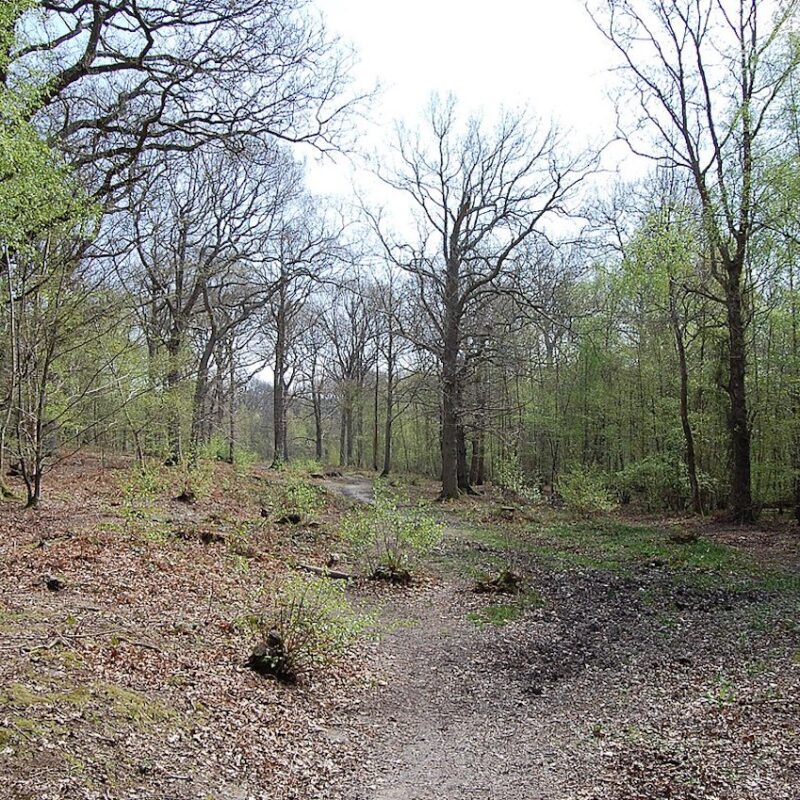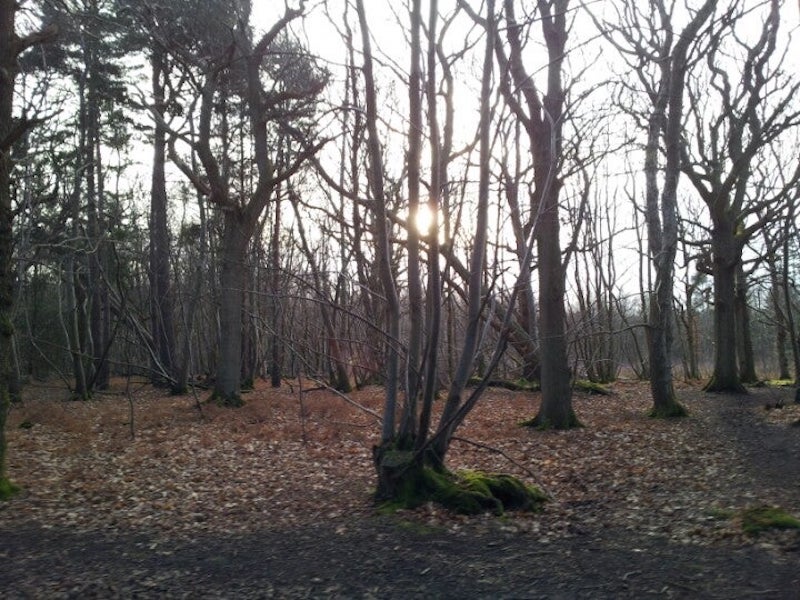
Welcome back to Flatropers Wood in the South Weald. Today, join Wildlife Matters for the second part of our adventure, exploring some of the fascinating wild plants you can find in winter.
In the first part, we focused on relatively easy plants to identify while enjoying a winter walk. I will challenge myself further by looking for fungi and mosses.
I have been foraging for fungi for several years. While I do not consider myself an expert, I have a reasonable understanding of the fungi that can be found throughout the year, including the edible varieties and those to avoid. Our goal today is not foraging but finding, identifying, and describing different species.
This year, I aim to improve my knowledge of mosses, lichens, and liverworts. Mosses and liverworts are classified as bryophytes, which, along with lichens, are tiny organisms that thrive in damp environments, such as tree trunks and rocks.
These organisms, algae and fungi, are often called “lower plants. ” Importantly, they provide homes for woodland creatures, slow the flow of rainwater into rivers, and help protect against flash floods.
In Britain alone, there are over a thousand species of bryophytes (mosses and liverworts) and around 1,800 species of lichens.
Both bryophytes and lichens reproduce by releasing spores and do not possess true roots. They existed long before the dinosaurs. Although you may find them growing on trees, they are not parasitic; they seek suitable places to thrive.
As we leave the glade and head towards the deeper, darker, damp woodlands, the first fungus I spot is
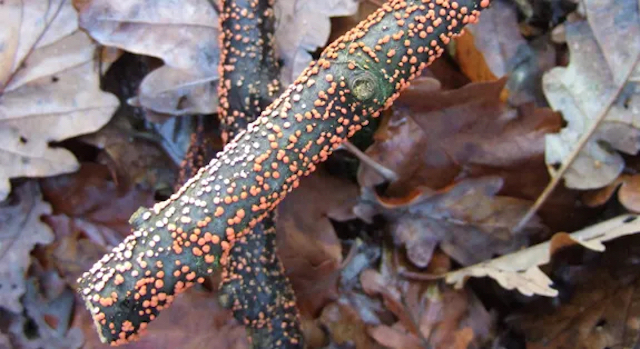
Coral spot fungus (Nectria cinnabarina)
The Coral Spot fungus, known scientifically for its distinctive growth patterns, often thrives as a saprophyte on decaying wood from broadleaf trees. At its initial stage, this intriguing fungus manifests as tiny, soft, and spongy pink blobs or pustules about the size of a pinhead. These delicate structures can be easily overlooked but are crucial indicators of the fungus’s presence.
As the Coral Spot matures, it undergoes a fascinating transformation. The once-soft pustules harden, shifting to a rich reddish-brown hue that can create a striking contrast against the tree’s bark.
This transition is characterised by the production of asexual spores during the spongy conidial stage, dispersed by environmental forces such as rain and wind. Additionally, the fungal lifecycle includes cylindrical and smooth ascospores, further contributing to its spread.
Although coral spots are primarily found on beech trees, they frequently colonise other broadleaf species, including Sycamore, Horse Chestnut, and Hornbeam. Although they can appear at any time of year, these vivid formations are widespread during summer and autumn, when environmental conditions are ideal for fungal growth.
The Coral Spot showcases a unique relationship with its host. While it is weakly parasitic, drawing nutrients from already stressed trees, it also demonstrates saprobic qualities, effectively decomposing organic material. Trees compromised by other environmental stresses or diseases are particularly vulnerable to Coral Spot infection.
Once this fungus establishes itself and proliferates in its spongy stage, it can lead to significant dieback in the tree’s upper foliage and branches. As they solidify, the pustules penetrate the thin bark, creating openings that weaken the structure of the infected wood.
This continuous weakening can ultimately result in branch failure, dramatically decreasing the tree’s overall health. Observing Coral Spots provides insights into fungi’s lifecycles and reminds us of the intricate connections within forest ecosystems.
As we head further along the edge of the densely wooded area, I can smell the rich, organic, earthy combination of damp soil, decaying leaves, moss, and wood bark, with a slightly musty undertone. This combination creates a fresh, calm, and invigorating aroma that can be considered a blend of woody, herbal, and slightly floral scents.
On our walks through ancient and broadleaf forests, stumbling upon these rustic fungi growing on decayed wood brings a sense of delight. The next fungi I’ve found for us are King Alfred’s cakes (Daldinia concentric)
The fascinating inedible fungus is also known as Cramp Balls or Coal Fungus.
They are distinct in appearance and rich in history and legend. As they age, these fruiting bodies develop into complex, rounded, dark brown spheres that deepen to a black hue.
Typically found on fallen or decaying branches of ash and beech trees, they thrive in damp, wooded areas.
When you slice one open, you’re greeted with an unexpected beauty: silver-grey concentric growth rings that mimic the intricate patterns of tree rings. The dry inner flesh, mainly seen in older specimens, serves as excellent tinder, igniting quickly and smouldering for some time—much like a barbeque briquette.
The folklore adds another layer of intrigue.
The tale of King Alfred hiding from Vikings in the Somerset Levels, tasked with watching over cakes that ultimately burned, intertwines with the life of this fungus, which is said to have been discarded in the forest during that fateful moment.
An interesting piece of folklore claims that carrying one of these fungi can protect you from cramps – further embedding this remarkable fungus into the tapestry of myth and nature.
Their gradual but distinct growth pattern often leads to spectacular clusters like the one we have found today on rotting stumps and fallen logs.
The true allure of King Alfred’s Cakes lies in their intricate internal structure. When cracked open, they reveal delicate black and silver rings resembling carbonised wood.
When fully mature, they shine with a glossy black finish reminiscent of coal, while younger specimens exhibit a rustic brown colour and matte texture.
They can appear alone but are more commonly found in impressive groups. Individual specimens can reach up to 10 centimetres in diameter.
Their unmistakable appearance makes them easy to identify. They possess a unique resilience, overwintering and continuing their growth year after year.
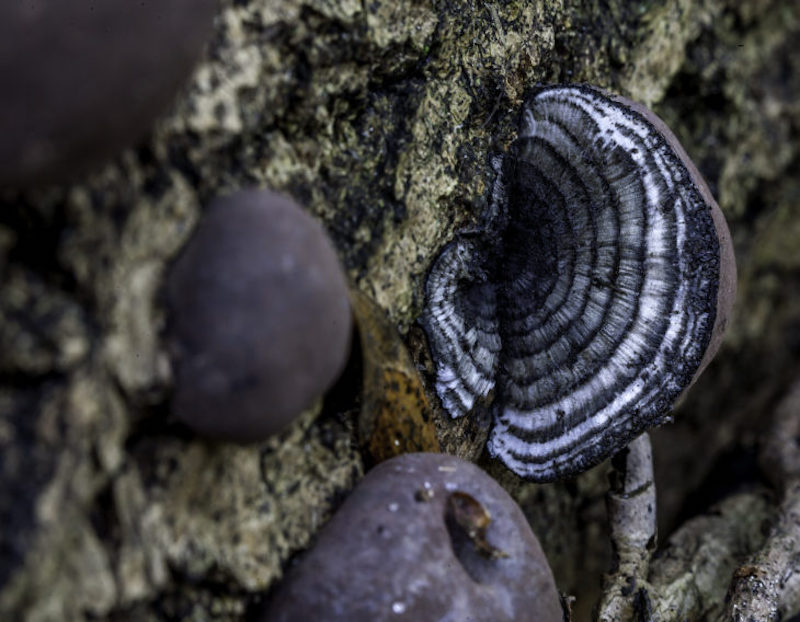
Another fungi that exists on rotting wood in these damp conditions in woodland has a very distinctive shape and a stunning combination of colours is
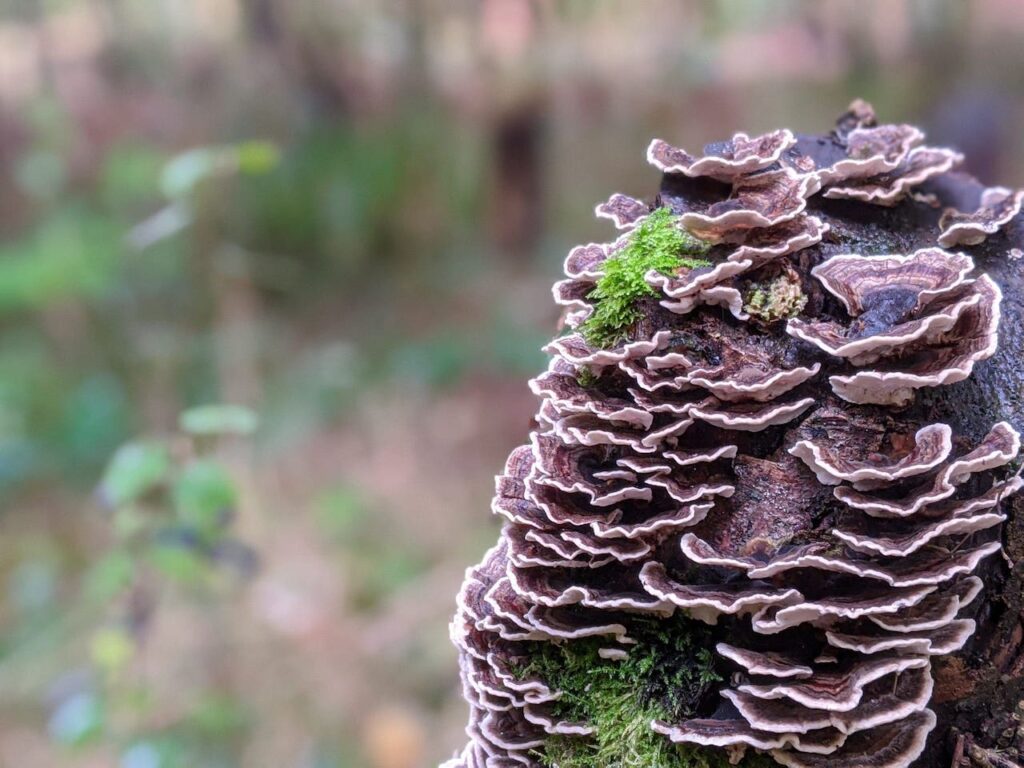
Turkey Tail Fungus (Trametes versicolor)
It is a captivating sight throughout the year, but it truly shines during the winter months when the branches of deciduous trees are stripped bare of their leaves.
This remarkable fungus is primarily found on dead hardwood, gracefully growing on everything from decaying stumps to standing dead trees and fallen branches.
The Turkeytail exhibits a striking appearance, characterised by its banded brackets that often showcase pale edges.
When freshly emerged, these brackets may display a delicate purplish sheen, enhancing their visual appeal.
Scattered across rotting logs, Turkeytail fungi can be seen in abundance, especially during this season when the broadleaf trees stand stark against the winter sky, revealing the intricate patterns of this fungus.
Its name is quite fitting. The shape and colours of the turkey tail evoke the fan-like feathers of a turkey tail, spreading out in a vibrant display. In traditional Chinese culture, it is referred to as the Cloud Fungus, a testament to its ethereal beauty.
As a saprobic wood-rotting fungus, Turkeytail plays a crucial ecological role by colonising its host and breaking down rotting wood. This process not only helps recycle nutrients back into the ecosystem but also supports the health of the surrounding forest.
As a member of the Bracket Fungi family, Turkeytail typically clings to standing and fallen deadwood, tree stumps, or damaged trees in the vicinity.
One unique feature of this fungus is its underside, home to countless tiny pore holes. Its scientific name, Trametes versicolor, literally translates to ‘thin in sections’ and ‘of several colours,’ a description that is vividly evident in its spectacular layering.
The colours can range from red and yellow to green, blue, brown, grey, and black, making this one of the most spectacular fungi you will likely find.
Other scientific names, such as Coriolus versicolor and Polyporus versicolor also know Turkeytail. It was formerly called the Many-Zoned Polypore, reflecting its diverse and colourful appearance.
Whether you’re a mycologist or a casual observer like me, the turkey tail offers a fascinating glimpse into the beauty and complexity of nature’s decomposition process.
The last plant family we explore today, during this deep winter season, is the Bryophytes, particularly the mosses that this woodland is renowned for.
As I mentioned earlier, I am focusing on expanding my knowledge of Bryophytes this year. Since it is still January, I am in the early stages, and my understanding of these fascinating plants is limited.
One distinctive moss that is perfect for beginners like me is the…
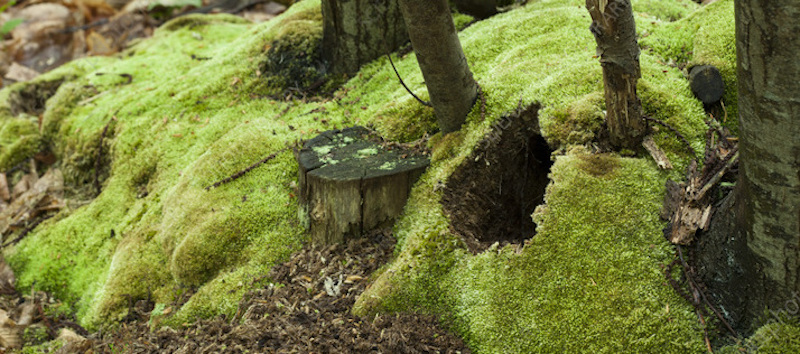
Large white moss (Leucobryum glaucum)
The common name is pin cushion moss. It thrives in shaded woodlands and creates lush, soft mounds reminiscent of pin cushions.
This moss prefers the damp embrace of high humidity and flourishes under the canopy of trees, where the sun’s harsh rays seldom penetrate. Its ideal growing conditions are in moist, cool areas that provide ample shelter from direct sunlight.
The distinctive appearance of pincushion moss is immediately striking. Its lush, rounded turfs can spread impressively, reaching up to 60 cm in diameter and rising as high as 12 cm, forming perfect mounds that stand out in the forest floor’s tapestry.
The moss’s vibrant green or delicate pale grey-blue colouration brings a touch of life to shaded areas. The individual leaflets, which measure between three and nine mm in length, exhibit sharp tips that resemble tiny aloe vera leaves.
When dry, the moss transforms dramatically, forming large, tufted clusters of white-green leaves that contrast beautifully against the darker colour palette of the winter woodland.
Pincushion moss plays a vital role in ecosystems. It is typically found in forests with sparse ground cover, particularly under beech trees.
However, identifying Leucobryum species can be challenging due to their variable nature, often influenced by their habitat.
Beyond their ecological significance to the woodland, pincushion mosses have a rich history. They have been used as natural pin cushions for centuries, a testament to their unique texture and shape.
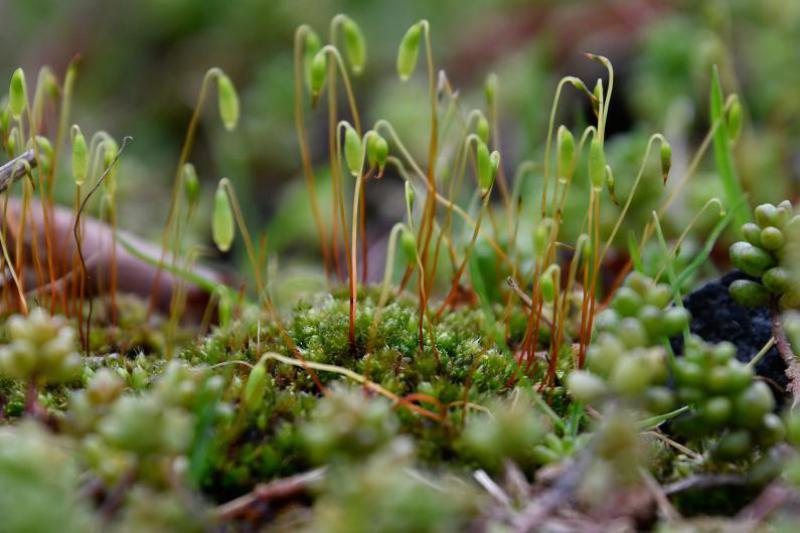
The next moss we found was the Capillary thread moss (Bryum capillare)
This species is relatively common and one that is more easily recognised by us newbies
It typically forms dense, domed cushions or fills crevices on hard surfaces like rocks and tree bases and artificial habitats like walls, roofs, concrete, and even tarmac. It is rarely found in soil.
This moss produces large, pendulous capsules that are abundant. The individual leaves are large and translucent, with a long excurrent greenish hair point. They are generally the widest at or above the middle section.
Many other cushion-forming acrocarps in similar habitats have brighter green leaves due to papillae that scatter light from their surfaces. However, in Bryum, the leaf cells are smooth.
Its most distinctive feature is that the leaves twist around the stem like a corkscrew when dry. Occasionally, tubers may also be present.
Bryum moravicum and Bryum torquescens are closely related species with similar leaves but much rarer. Each has particular habitat needs.
Bryum moravicum typically grows as an epiphyte, forming loose patches on fragile organic substrates such as decaying bark.
Bryum torquescens grows in soil in open calcareous habitats, such as chalk grassland. Its leaves are oval with hair-like tips, and it produces drooping, cylindrical spore capsules.
Today, deep in the woodland, we know we have found Bryum capillare by the habitat and that it is not growing in the soil.
The Bryum capillare is dioecious and has distinct male and female individuals. The broad leaves measure 2 to 5 mm long and are widest at or above the midpoint.
The leaf margins are narrowly recurved, and the borders contain narrow cells.
This extends into a fine, pale green hair point that can be short or long. The cylindrical, drooping capsules, 3.5 to 5 mm long, ripen in spring and summer and are borne on reddish setae.
While I am finding some common mosses, I am pleased with my identification and recall of details, but I know far more challenging mosses lie ahead, and let’s not forget about the liverworts and lichens.
The third moss species we’ve found today is one of the most prevalent moss species in Britain; it is the
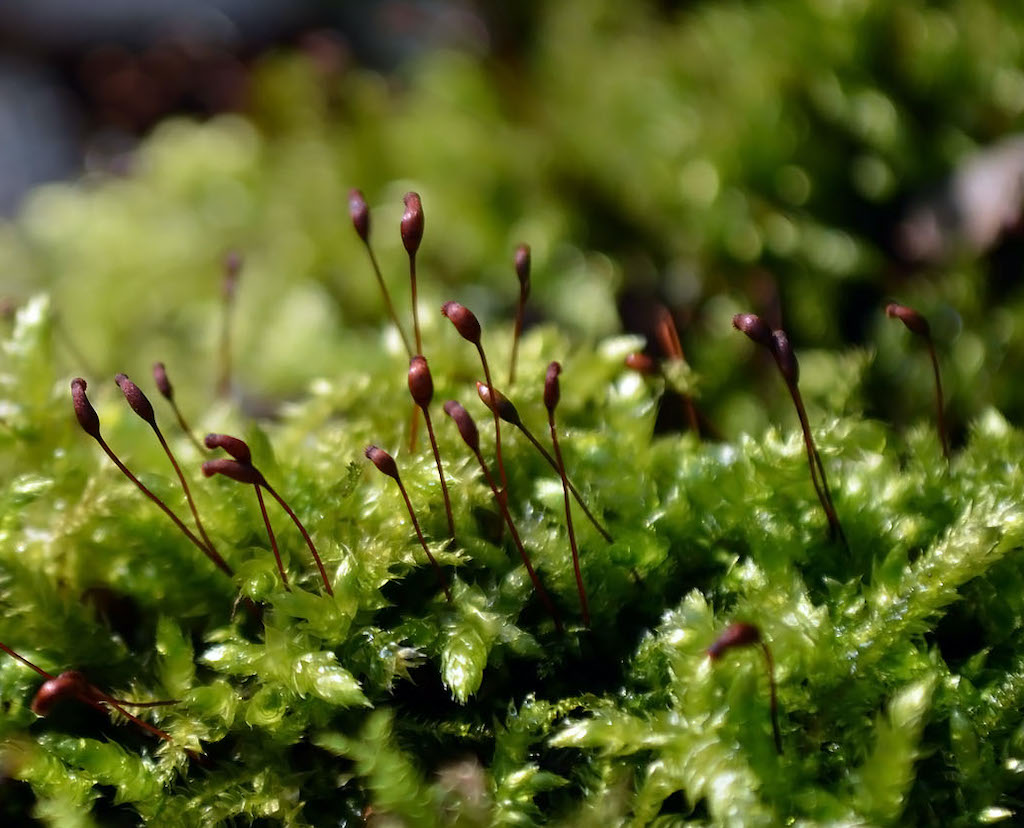
Rough-stalked feather-moss (Brachythecium rutabulum)
It is found in loose, medium to large patches that thrive in various environments.
Characteristics of the Rough Stalked Feather Moss are its ascending branches adorned with spreading leaves with delicately toothed margins.
These egg-shaped leaves have a slightly rough texture, which contributes to their distinctive visual appeal and earns them their common name.
The stem and branch leaves are similar in shape. The more prominent leaves measure between 2 and 3 mm and taper elegantly to an acute tip, enhancing their delicate appearance.
It flourishes in various habitats, favouring the moist surfaces of living trees, stumps, and decaying logs.
You’ll often encounter it clinging to soil, gravelly ground, stones, rubble, and rocks, as well as on well-trodden walls, grasslands, and marshes.
The moss thrives in shaded environments like woodland depths and hedgerow banks, but it also enjoys open spaces such as gardens, parks, overgrown areas, and stream banks.
However, this highly adaptable moss is not typically found in highly acidic soils or at high altitudes.
Today, I spotted three of the more common and easier-to-identify moss species. In truth, I likely overlooked others since mosses aren’t currently on my mind. While exploring woodlands, I’m more likely to notice animal or bird movement and mentally note interesting trees and hedgerows.
I thoroughly enjoyed visiting the beautiful Flatropers Wood, classified as an Ancient Semi-Natural Woodland. This indicates that the area has been wooded for over 400 years.
This woodland is also part of the larger High Weald National landscape, designated an Area of Outstanding Natural Beauty (AONB). “Weald” is an old term that refers to a wooded area, forest, uncultivated region, rural area, or open countryside.
Flatropers Wood features mainly gentle terrain, with unsurfaced footpaths and several wooden bridges.
Further Reading
Sussex Wildlife Trust Flatropers Wood
Wild Food UK – Identifying Edible and Poisonous Wild Mushrooms
British Bryological Society – Promoting the study of mosses and liverworts
If you enjoyed this blog, please check out more of our wildlife blogs here, or you may prefer to listen to the Wildlife Matters Podcast here.
If you want to support our work
Please click on the Wildlife Matters Patreon Community.
Please click to join the Wildlife Matters Substack Community.
You can donate here.