Discover the hidden gem of Pagham Harbour with Wildlife Matters during our captivating winter walk. Experience the incredible wildlife flourishing in this secret sanctuary on the South Coast.
It’s a crisp November morning as I start the van at home and defrost the windscreen. My fingers are numb as I begin the short journey now that the windscreen has cleared. Today, we are visiting a beautiful natural harbour on the South Coast for a winter walk around Pagham Harbour, just a few miles from the seaside towns of Selsey and Bognor Regis.
We should be able to spot a range of seabirds, some of which are winter visitors. Waders that feed on the flat mud banks, and we should see a range of land-based birds as we walk through the common and scrub on our journey around the harbour.
It’s a flat 5km walk with decent paths. Although they ‘wash away’ in winter, they are generally wheelchair and buggy-accessible, making them a great place to visit with the family.
It can be busy in spring, summer, and autumn, but the car park is empty today. I put on a second pair of socks before lacing up my walking boots.
With a windcheater over my layers, I lock the van but glance at the temperature on the dash – a mistake. As it’s -2, I shiver and set off to warm up with a walk.
The frost glistened on the grass in the fields and along the edge of the footpath, but the low winter sun was trying to break through the dull, grey sky with a mustard-yellow hue.
It is quiet here, with little traffic or other noise from the modern world, one of the many reasons to spend time here. However, this morning, the birds were quiet—they were more concerned about finding food than chatting away to each other.
I took a deep breath and smiled as these were perfect winter conditions for a walk across the marshes.
Walking around the old quay, a small flock of Wigeons was sunning in the grass by one of the marsh’s many inlets.
The sunshine on my face was pleasant in the shelter of the bushes, but once I stepped out into the open, the chill coastal breeze remained chilly and biting.
The tide was out, and the harbour looked vast and empty under these conditions.
The Ferry Pool was quiet. There were a few Teal and Shelduck, but not much was moving on this chilly early morning.
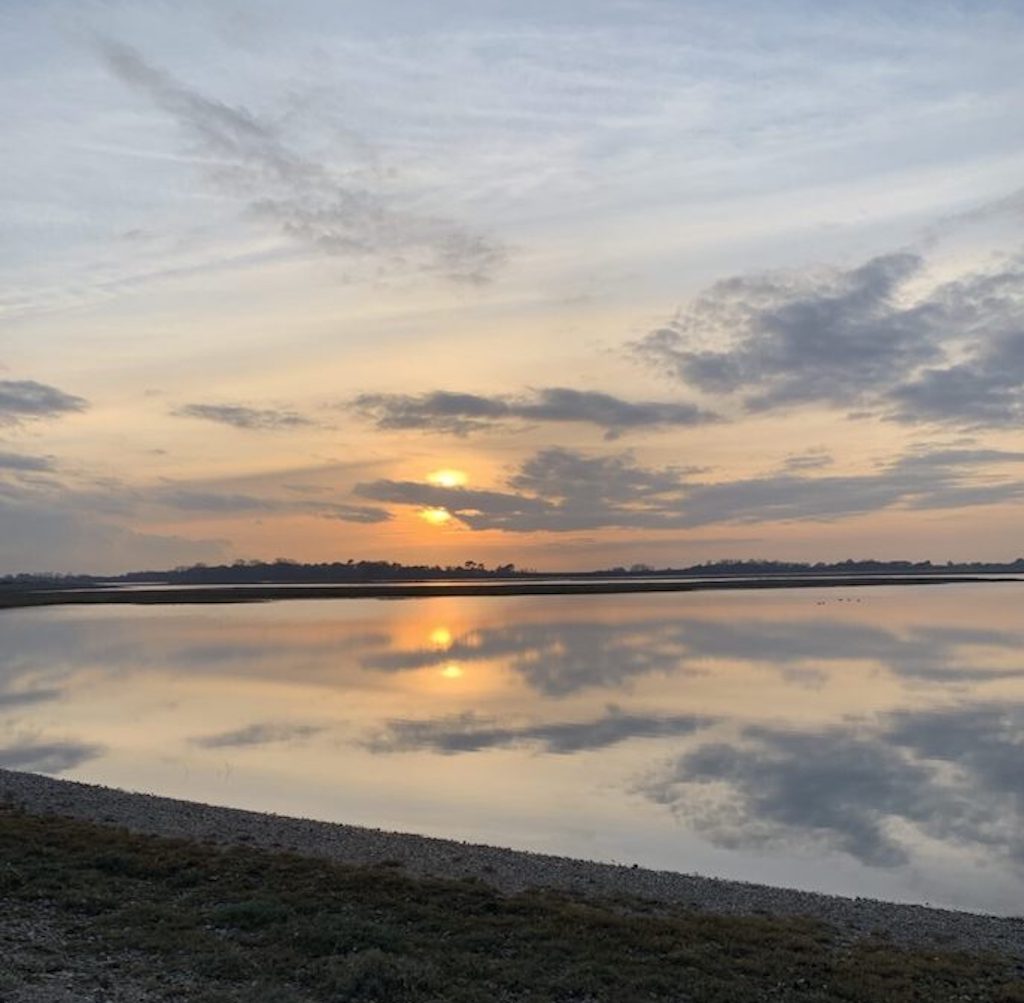
The sunshine lit up the reeds alongside the long pool, sending lovely reflections into the water as it climbed into the sky. As I set my camera, a pair of Mallards drifted through the viewfinder, and the drake’s bottle-green feathers perfectly caught the winter light.
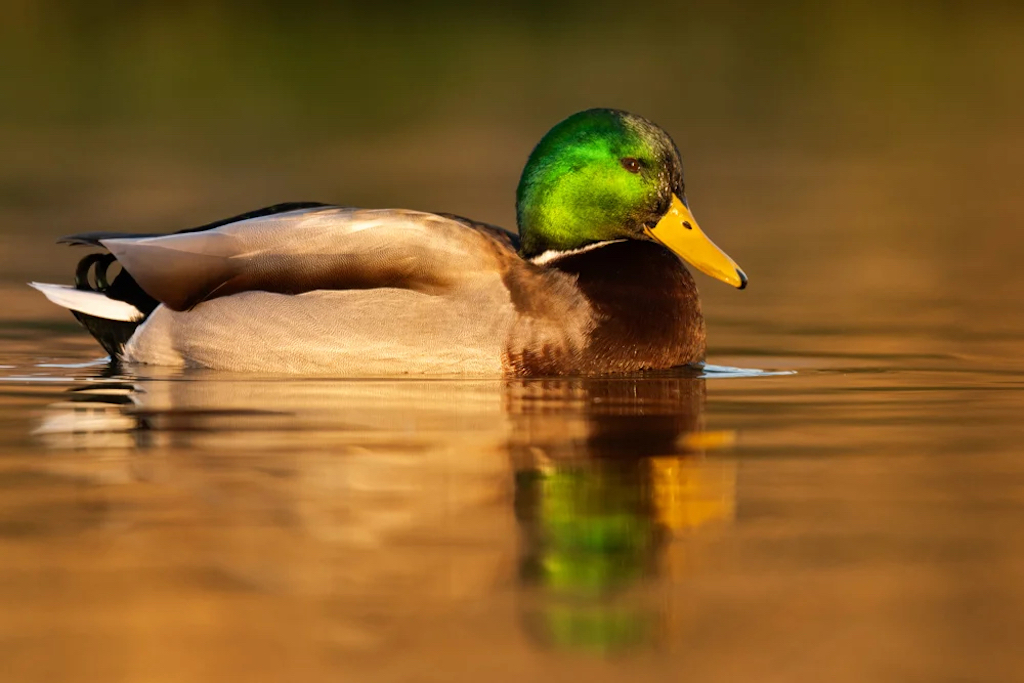
A little further along, a pair of drakes acted strangely. They copied each other’s movements as if synchronised; as one turned, so would the other, as if they were inseparable. I have seen this behaviour between a drake and a duck, but this was the first time I had seen it with a pair of drakes.
Perhaps we take Mallard ducks a little for granted, as they are a common sight on the rivers, lakes, and streams in the UK. Still, when you take the time to watch them and see the beauty of their iridescent feathers and get to know some of their behaviours, they have a certain charm and charisma, as all wildlife does for me.
The fields of arable land the path winds through were fallow and had not been sown with winter cover crops. The soil looked dusty and blew away in the wind, a sad reflection of the impact of modern agriculture on the soil.
The wire fences that once kept sheep in the field are defenceless against the Brent geese that head up from the harbour to graze on the Barron fields. The Brent Geese completely ignore the string and plastic placed on the fence by the farmer as a distraction.
Scanning the marsh and the mud flats, I could see a large flock of mixed waders in the middle.
I took some pictures as a couple of small groups took to the air, wheeling around close to the mud and flashing silver white as they turned in the sunshine.
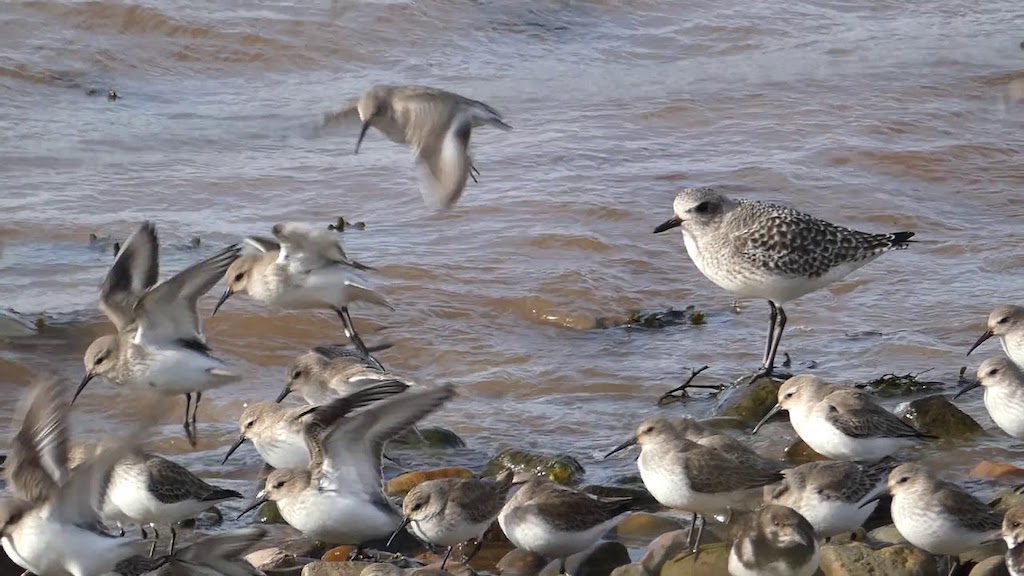
Through the scope, I could see mainly Dunlin. Dunlin are migratory wading birds. Dunlins are circumpolar breeders found around the Arctic and sub-Arctic regions. During the winter months, they can be observed throughout Europe, Africa, the Middle East, and Southeast Asia.
Dunlins in the UK are usually seen along the coastline where they can be seen swirling and whirling in large flocks. They are one of the most common shoreline birds, with around 350,000 birds found here each winter.
Ringing data from the British Trust for Ornithology (BTO) shows that most of them migrate back to their breeding grounds in eastern Europe and Russia in the spring.
They are replaced by birds that have spent the winter in Europe and northern Africa. Around 9,000 pairs breed in the UK, usually on upland moors and bogs. They predominantly breed in Scotland but can be found in parts of England and Wales. So, if you see a dunlin on a peat bog in the summer, it might have flown thousands of miles to get there!
In the same group, there are a large number of knots. The knot is a sandpiper species that looks remarkably similar to the Dunlin.
There are a few ways to tell them apart, but I have to wait to see the legs. Knots have grey legs, whilst Dunlins are black. There are also differences in the beak shape and size. Knots have straight bills, whilst the Dunlin has a slightly more slender and turned-down bill, and yes, I did have to check that!
The third main species in the group is the Grey Plover. The group is a little drab-looking, with all three species blending grey with black-and-white specks or end feather tips, but let’s be fair, it is winter. By the time they set off for their breeding grounds again in the spring, they will have their summer plumage, which is bright and colourful for all three species.
One thing I do know about Grey Plovers is that their breeding grounds are deep in the Arctic. I believe they were among the last humans to find them, so for that reason alone, I’m pleased to see them feeding on the harbour’s mud flats at a balmy zero degrees.
I decided to look further out in the harbour for some birds in the mid-water. I happily watched some Great Crested Grebes as they dived, sometimes synchronised to perfection, which is always so engaging to sit and watch.
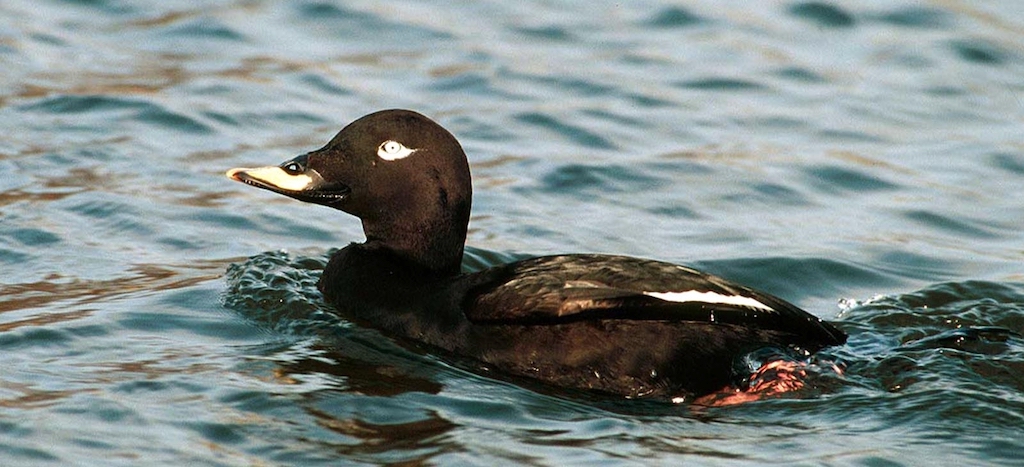
In the foreground, I saw a duck that I didn’t recognise. It was black all over with a thick yellow bill, but what struck me immediately was the flash of white below the eyes. It was also large for a duck. I took pictures and videos to help me research what I saw.
Some of you will be more attuned to seabirds and, to be honest, birds in general. I am certainly not an expert, except maybe for owls and raptors.
What I had seen was a male Velvet Scooter Duck. They are winter visitors but do not breed in the UK. They are stunning birds. Please let me know if you’ve seen them in the comments.
It was time to move on, so I headed towards the spit at Church Norton. This is a great place to find small pools, which I have always loved to explore. The harbour’s inlets attract birds to feed in the turbulent waters that collide there.
A Curlew fed in the grass close to the beach’s edge, and to my right, another waded belly deep in the pool in front of us, and I watched as the low golden sunshine picked out the many shades of browns in their body plumage.
Every so often, the distinctive call of the curlews could be heard close by, but the silence was soon interrupted by the raucous call of the Black-headed Gulls as they fed in the channels.
As I watched, I noticed one gull with a distinctive feeding approach. From the water, it would fly up a few feet. Then plunge head first down, finally covering its head and neck before furiously flapping itself back up.
I didn’t see it catch anything, but it continued with this approach, so it must have done. No wild bird or animal expends that much energy for so long without the reward of food, which is essential to keep their energy levels high.
Few things are better than a beach walk, even on a chilly November day. Walking along, I inhaled the fresh sea air and felt energised. Somehow, the sea air always makes me sleep well that night. Then, I walked along through the shingle and past the Severals.
A lone female Tufted Duck was in the open water, as I walked past the railway carriages and finally up onto the sea wall.
My route turns south west from here, so I walk into the low sun, which is now very bright. It’s incredible how much light changes the appearance of the sea and beach. A Herring Gull perched on a post created a nice silhouette picture opportunity that I couldn’t resist.
Walking along the sea wall, I noticed several places where the beach below had washed away. The entire area serves as a constant reminder of the impact of erosion on our coastlines. I heard the trill call of a Turnstone, a species well named because it is very hard to spot as it forages in the pebbles on the shingle beach.
Once my eye was ‘in’, I watched one Turnstone drinking from a shell, which must have held freshwater and had retained it and made a perfect natural bowl.
The path leads me away from the beach and towards the scrubby land just past East Beach.
The more familiar sight of House Sparrows sitting amongst the lichen-covered bramble and hawthorn, protected by the thick mass of entwined branches and vines full of spines to ward off any potential predators.
The chattery sound of the starlings could be heard long before the flock came into sight. It was a large flock, maybe one hundred birds or more, positioned in layers and levels through the tall bramble bushes and perched high in the holly, hornbeam, and hazel trees that peeped above the shrubby midlayer. They sat in similar bushes in the full sunshine.
The starling’s iridescent feathers caught the sun, flashing electric blues, deep purples, and glistening greens as they produced an acrobatic aerial display, each in unison with those around it, and still they chattered away.
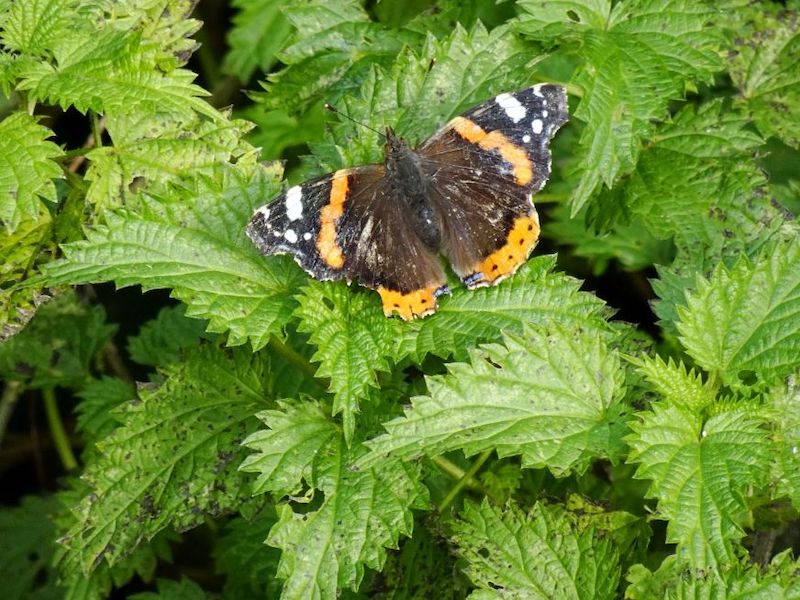
I was surprised to see a Red Admiral Butterfly still out and feeding on a patch of nettles, once again proving what a vital food source these plants are throughout the year.
At the end of the track, as is the boundary of Pagham Harbour, I decided to walk down the beach to the sea.
The tide was now turning and beginning to rise, but plenty of exposed sand was still easier to walk on than the shingle. It is a nice and secluded spot, offering a wonderful view of Bognor and Littlehampton.
I stood silently, soaking up the view and the sea air and allowing the rhythmic sound of the sea to wash over me. What a wonderful feeling that was.
The sun was already beginning to dip towards the far horizon, and a glance at my phone told me it was only a little after 2 pm, which meant I still had a couple of hours before enjoying the sunset.
As I began the return journey through the muddy track and passed the bramble hedges, a starling was taking a quick shower in a cold and muddy puddle on the path. I stopped and watched as she cascaded the murky water with a flurry of wing flapping and head dipping.
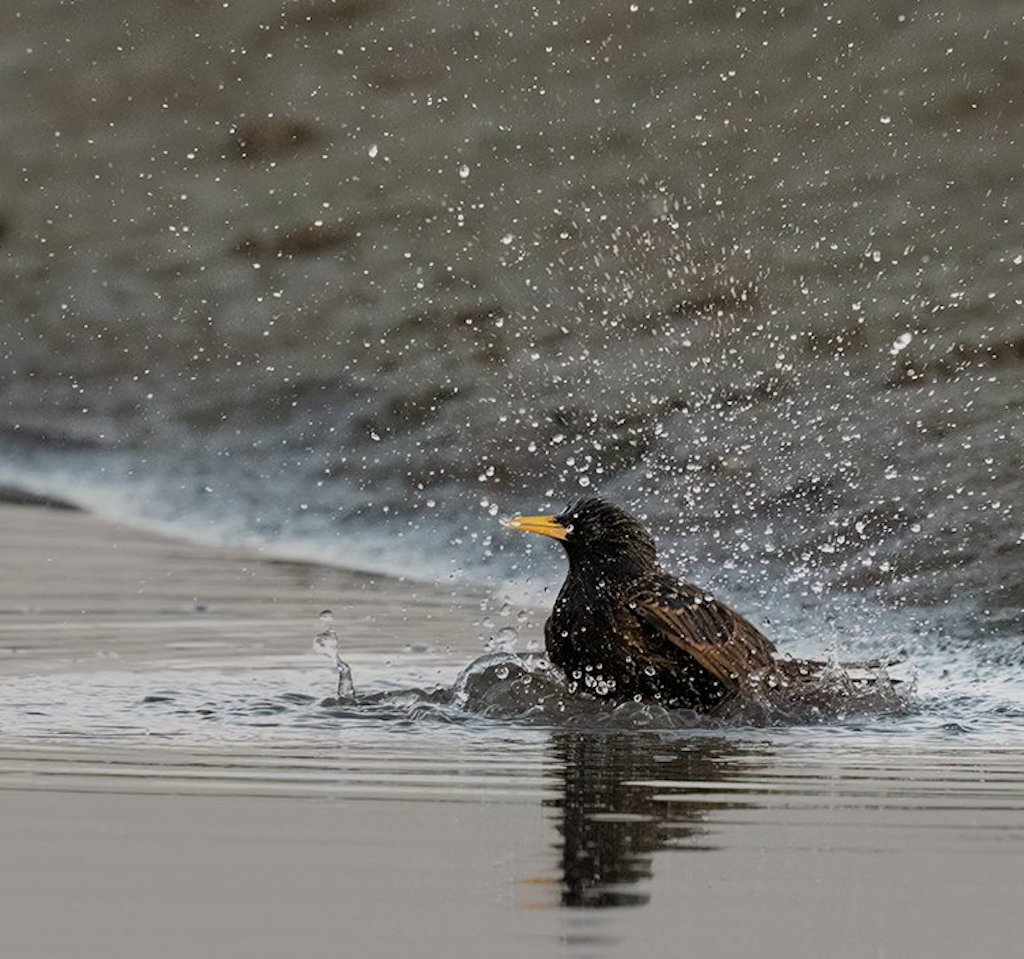
Once she was done, she vigorously shook, releasing thousands of tiny water droplets into the air around her. Then, she made the short flight back to the safety of the bramble thicket, her feathers still wet and heavy enough for her to fly far.
As I returned to Pagham village, the tide was still rising, and ducks and waders were out at sea, the darkening sky creating a stunning backdrop to the scene. Winter skies are so atmospheric and can almost make you shiver with their frigid appearance.
A Coot swam in one of the small pools. Although the water was cold and dark, it reflected the surrounding trees and reeds, creating a captivating reflection.
Ahead were a pair of Reed Buntings in the bushes, whilst on the breech pool were Teal, Mallard and a few Black-tailed Godwits.
The Teal were tucked up against the reeds at the back of the pool, and with them were three feeding Snipes. Nice. I was pleased with myself, as I had seen many wading and diving birds today and had been able to recognise most of them.
Two female Mallards were perched on the posts, backlit by the golden sunlight, which was now stretching its long, low shadow over the reed beds. The tide was rising very quickly, and on the water in front of me were two Great-crested Grebes.
Back at the harbour, I settled close to the water and set up the camera for a few sunset pictures when a Kingfisher flew out from my right.
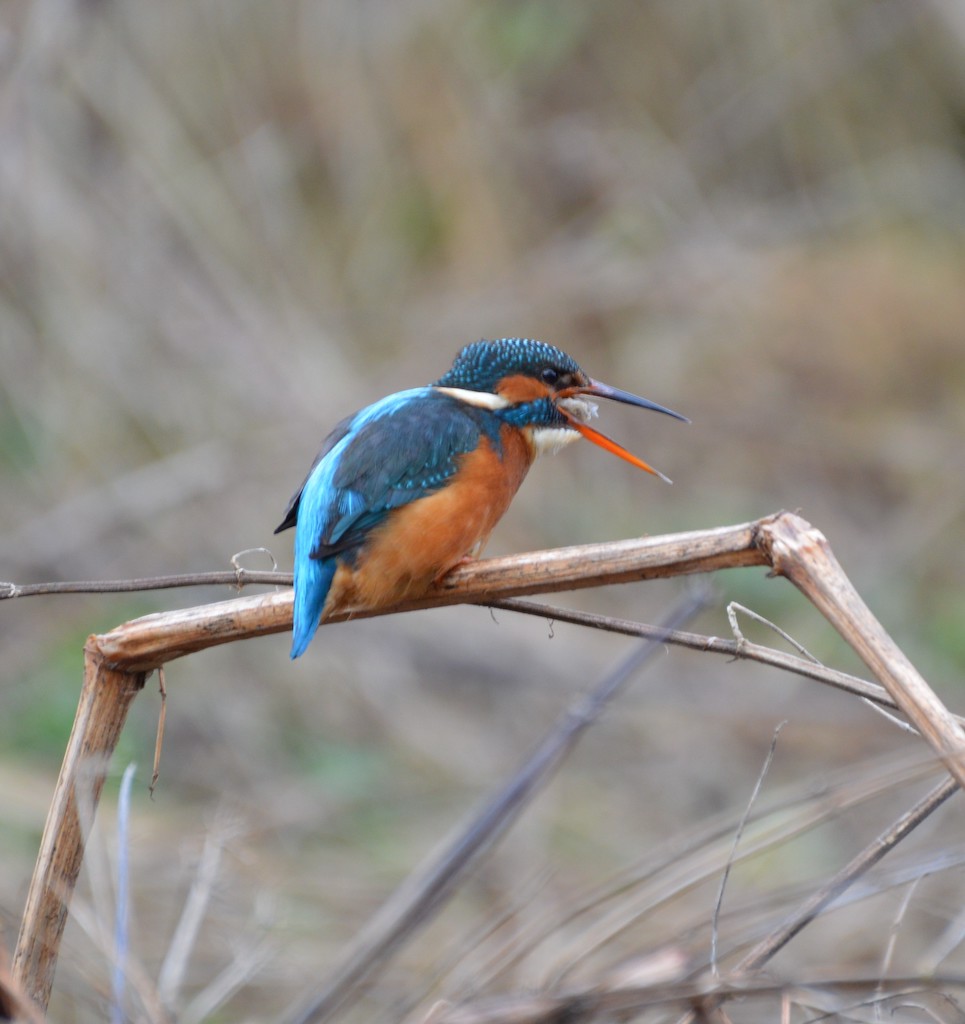
It must have been sitting there when I arrived, but I hadn’t noticed it, although I am surprised how unconcerned it was by the people and dogs that were on the path behind me.
I watched it fly low across the water to a low tree with a perfect branch for a perching kingfisher. Even though I don’t have long lenses, I could still get some good pictures and short videos.
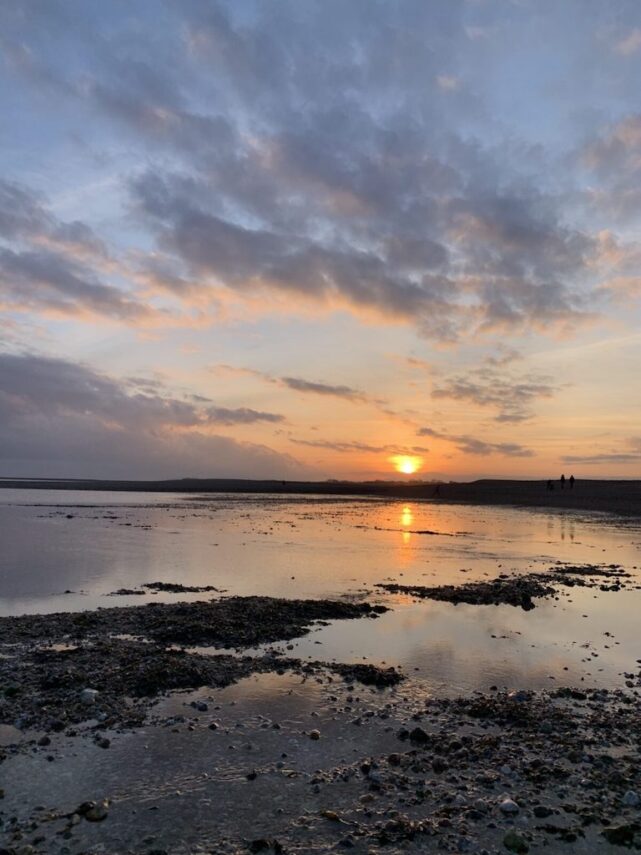
I was comfortable and settled, watching the watery winter sun slowly disappear from the sky and begin to sink beneath the horizon.
The clouds looked like thin pencil lines in the sky as the colour palette turned from blue to a deep umber, like burnt orange.
I took some nice pictures of the black-headed gulls as they flew around the harbour, beautifully silhouetted against the colourful winter palette of tonight’s sky.
It was turning quite cold, and the breeze picked up with the high tide. It would be another night when the air temperature dipped well below zero, and I hoped that the birds that had made my day so special had all fed well so they could keep warm and be ready to face a new day tomorrow.
I packed away the last camera gear, slipped on my rucksack, put on my hat, and finally pulled my gloves over my cold fingers.
My breath was now vapourising in the cold air as the breeze from the incoming tide raced across the harbour.
As I walked toward where Raven, my camper van, was parked, I saw the static Grey Heron in a hunched-up posture.
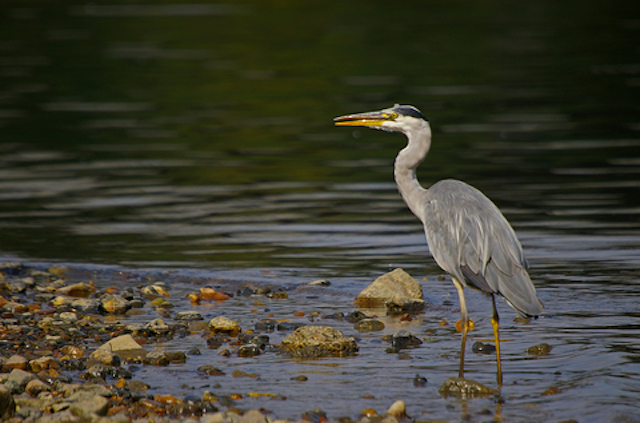
I don’t know about you, but they remind me of a tail-coated Victorian gentleman – maybe the station master from Thomas the Tank engine – but they certainly evoke memories from my childhood – to me, herons always look a little sad as if they are carrying the worries of the world on the broad, winged shoulders.
Another fantastic day at Pagham Harbour was quickly drawing to a close. If you are near Pagham, try to make time to visit. It’s an RSPB reserve with a cafe and toilets, and members can park for free.
As I leave the car park with my lights and heater on, and just a touch of frost clearing from my now-warm windscreen, I glance back towards the harbour, which I can hardly see as the night has descended, yet it is not yet 6 pm.
If you enjoyed this blog, please check out more of our wildlife blogs here, or you may prefer to listen to the Wildlife Matters Podcast here.
If you want to support our work
Please click on the Wildlife Matters Patreon Community.
Please click to join the Wildlife Matters Substack Community.
You can donate here.
Further Reading