
Welcome to Part Two of the Wildlife Matters article about wildlife species protected by law in the UK.
Alongside issues such as wildlife crime and persecution, there is now a new threat: the government is planning changes to protections for certain species and habitats through the proposed Planning and Infrastructure Bill, which is currently progressing through Parliament.
Today, as the government discusses the proposed Planning and Infrastructure Bill, we examine wildlife species protected in Britain that may be altered to facilitate the development of more homes, displacing wildlife.
In Great Britain, the Wildlife and Countryside Act 1981 protects wild birds. It is illegal to harm, kill, or disturb them, and their nests and eggs are especially protected during nesting season.
Deliberately putting wild birds at risk is a serious crime, and those who break the law face strict penalties.
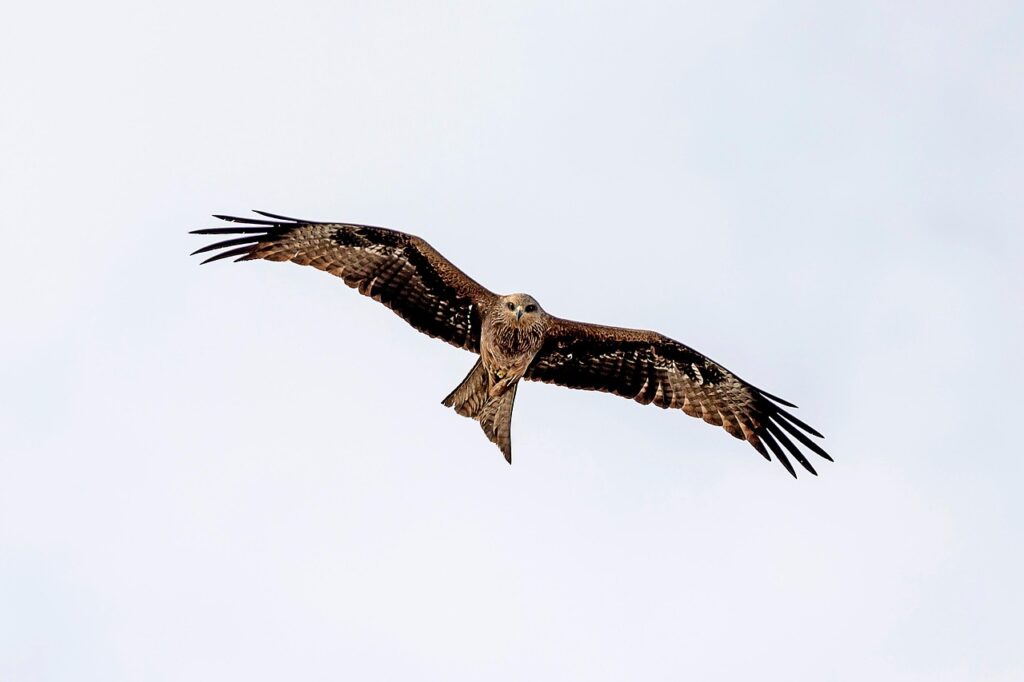
Every wild bird in Great Britain, from the robin chirping in your garden to the eagle soaring high in the sky, is protected by the Wildlife and Countryside Act 1981. It is illegal to harm, kill, or disturb these birds, and their nests and eggs are especially protected during nesting season.
It is a serious crime to intentionally put wild birds in danger, with harsh penalties. Birds of prey, which are often targeted for shooting on estates and farms, receive additional protection.
The Wildlife and Countryside Act 1981 covers all Raptors, and most, except for the Common Buzzard, Kestrel, and Sparrowhawk, have even more protection under Schedule One of the Act.
This means it is entirely illegal to shoot, poison, or trap any bird of prey.
If a species is listed on Schedule 1, you cannot disturb them while they build nests, raise chicks, or care for their young unless you have a special licence from the British Trust for Ornithology. Bird of prey, or any wild bird covered by Schedule 1, is a crime under the Act.
If you own property, you need to make sure that any work done on your land follows the law, whether you do it yourself or hire someone.
Contractors are not held responsible; the property owner is always responsible for any resulting harm. You should try non-harmful ways to remove birds before considering any other options. Killing pigeons, DEFRA strictly controls seagulls, or any wild bird, and the Wildlife and Countryside Act 1981 sets out strict rules.
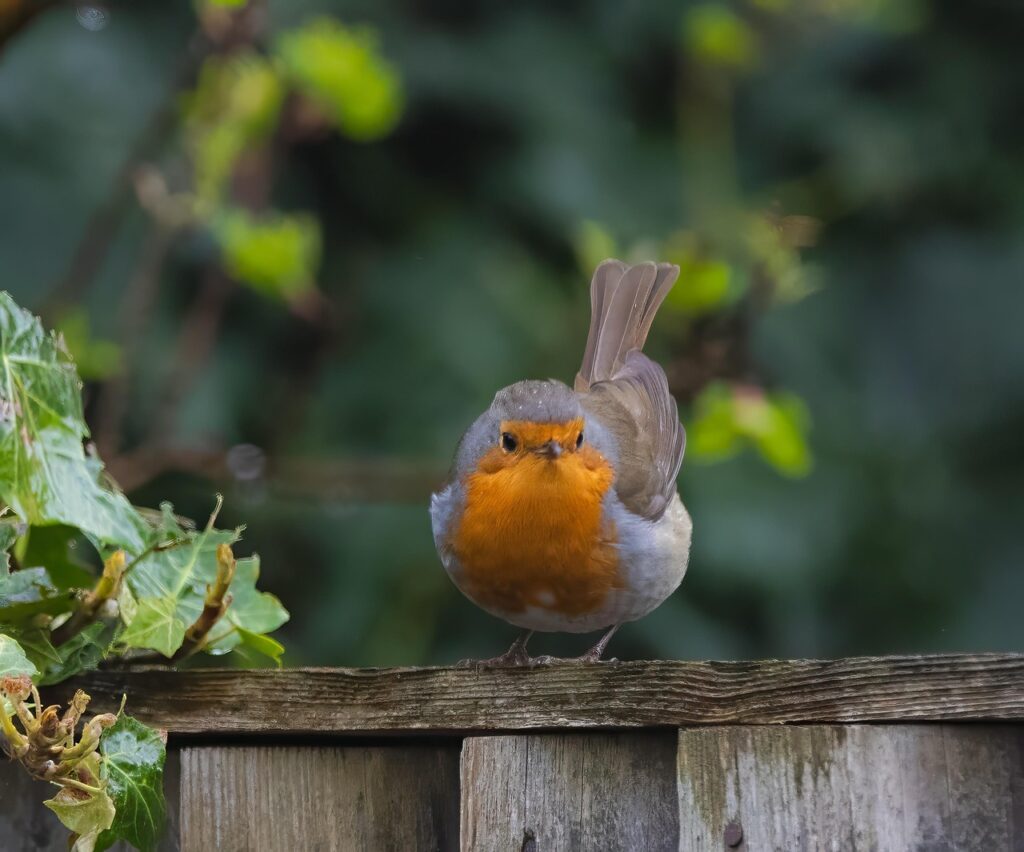
The Act protects wild birds, their eggs, and nests across England, Scotland, and Wales, although there are some differences in Scotland. In general, it is illegal to do any of the following:
- Intentionally kill, injure or take any wild bird.
- Intentionally take, damage or destroy the nest of any wild bird while it is in use or being built.
- Intentionally take or destroy the egg of any wild bird.
- Possess wild birds (dead or alive) and their eggs.
- Use traps, poison, or similar devices to kill, injure, or capture wild birds.
Intentionally or recklessly disturb any wild bird listed on Schedule 1 while it is nest building, or at a nest containing eggs or young, or disturb the dependent young of such a bird.
The Animal Welfare Act 2006 covers cruelty and suffering, whether intentional or accidental, to all animals, including birds. If a property owner is prosecuted for cruelty or causing unnecessary suffering, this law is usually used instead of the Wildlife and Countryside Act.
Whether you see pigeons in the city or seagulls by the sea, UK law makes it illegal to harm or kill any wild bird under DEFRA’s Wildlife and Countryside Act 1981.
If you look after animals, you are legally required to meet their needs, such as:
- providing a suitable environment and place to live
- giving them the right food
- allowing them to behave naturally
- making sure they live with or apart from other animals as needed
- protecting them from pain, injury, suffering, and disease
The Act bans all forms of cruelty, such as:
- causing unnecessary suffering to an animal
- hurting or injuring an animal on purpose
- poisoning an animal
If someone violates these rules, they may be banned from owning animals, fined, or imprisoned for up to five years.
Britain’s reptiles and amphibians, such as snakes, frogs, and newts, get extra protection under Schedule 5 of the Wildlife and Countryside Act 1981.
The European adder, common frog, and great crested newt are protected species. It is against the law to harm, catch, or kill them.
Their homes, as well as their breeding and resting places, are also protected. This helps both the animals and their habitats survive.
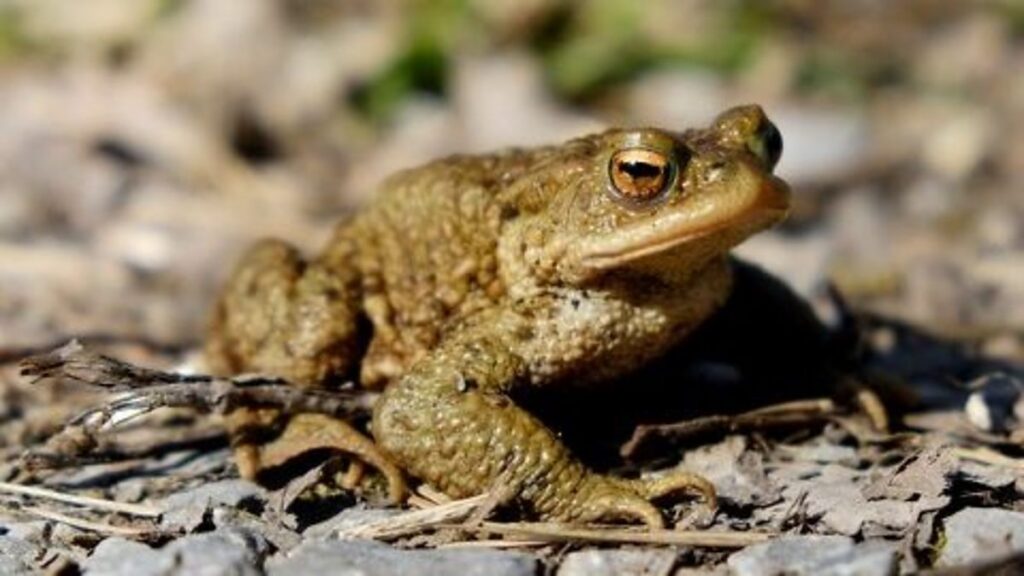
Frogs and Toads
Frogs and toads are fascinating amphibians that many people confuse. However, if you look closely, you can spot their differences.
Frogs have smooth, moist skin and strong legs that help them jump between ponds. Toads have bumpy skin, rounder bodies, and shorter legs, so they cannot jump as far.
Both frogs and toads eat plenty and are helpful in the garden. Frogs eat slugs and snails, while toads eat ants, making them useful for gardeners.
Frogs and toads need water to survive, so they often live in wet places such as ponds and damp grasslands.
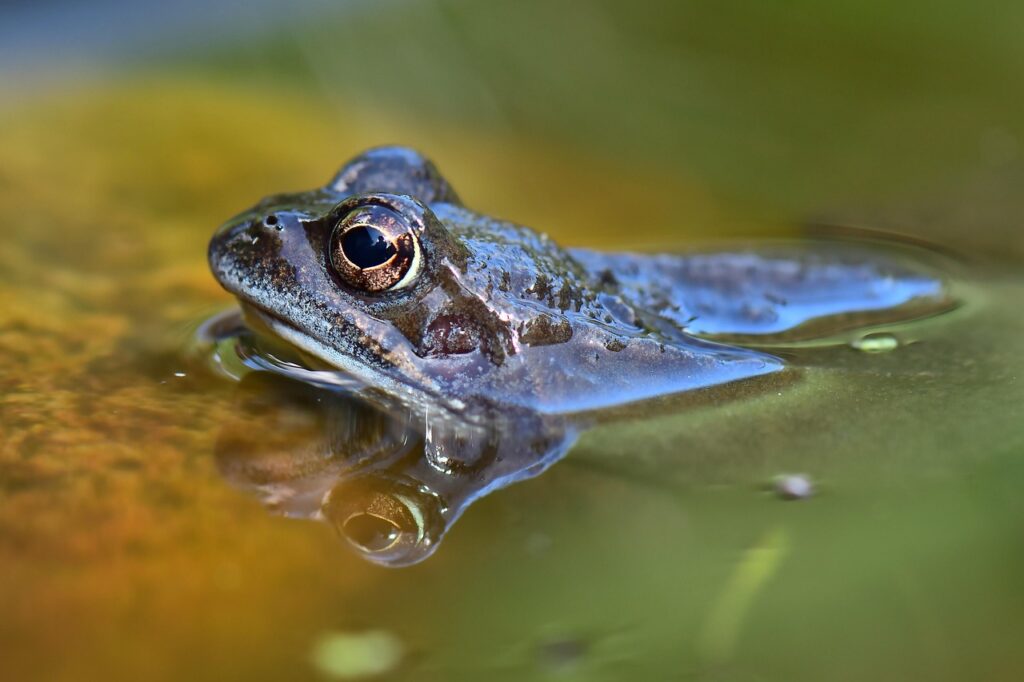
The common frog is often seen across Britain and Ireland, living wherever there are good breeding ponds. In towns, garden ponds can be safe places for them. These frogs, with their smooth, moist skin, remain near freshwater in damp areas during summer. After breeding season, they might travel up to 500 metres from their home pond.
Common frogs start laying eggs in early spring, sometimes as early as January in the south. Their tadpoles take up to 16 weeks to develop, acquiring legs and becoming small froglets. Most leave the water by June, but some stay until September.
Mature frog tadpoles have gold or brown speckles, which are very different from the black tadpoles of toads. These frogs eagerly hunt invertebrates, especially slugs and snails, which benefits gardeners.
In Great Britain and Northern Ireland, the common frog and its eggs are protected by law from being traded or sold.
The common toad lives all over mainland Britain and on many islands, such as the Isle of Wight.
Common toads are usually brown or olive, but their colours can sometimes surprise you. Female toads often have a reddish tint or reddish warts. Their dry, bumpy skin contains potent toxins, so most animals avoid them. Even their tadpoles have these protections.
Every spring, common toads return to their breeding ponds, usually arriving a few weeks after frogs.
After breeding, adult toads leave the water and show they are better at living on dry land than frogs.
Common toads are active at night, searching for ants, beetles, snails, slugs, and spiders. When there is plenty of food, they often spend summer nights in gardens.
Toads lay their eggs in long, shiny strings, unlike frogs. Their black tadpoles swim close together in groups. In early summer, after a good rain, many young toads leave the pond for the first time.
Common toads like to breed in deep water, such as farm ponds, reservoirs, fish ponds, or village duck ponds. Sadly, these places are disappearing in much of the UK, and there are fewer toads now, especially in the south.
The common toad is protected by law from being sold or traded. It is also a biodiversity priority species under the Natural Environment and Rural Communities (NERC) Act (2006) because its population has declined. This means it should be considered in planning and development.
Natterjack toads live at about 60 sites in Britain, with strong colonies on the dunes of the Merseyside coast, the Cumbrian coast, and the Scottish Solway.
Natterjack toads used to live on the heaths of Surrey and Hampshire and along the coasts of East Anglia, but now only a few colonies remain. People are working to bring their numbers back. Natterjacks have a thin, bright yellow stripe down their back and short legs, and they are known for walking instead of hopping.
The natterjack toad is named for the loud, raspy call that males make in spring. On warm, quiet nights, male natterjacks gather at breeding pools and call out. The louder their call, the better their chances of attracting a female. Their calls can be heard from up to a mile away.
Great Crested Newts
Great crested newts are fascinating animals that often rest near ponds and streams, much like frogs and toads.
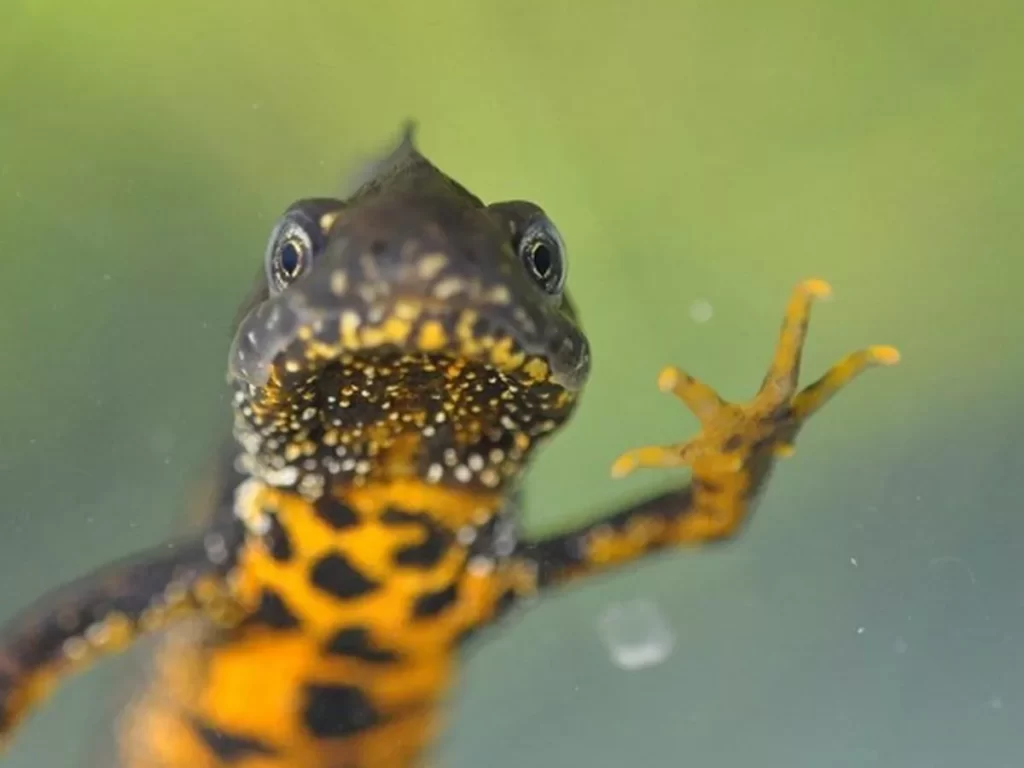
These newts can grow up to 6.7 inches (17 centimetres) and are easy to spot because of their rough, noticeable skin.
These newts have soft, dark skin, spotted sides, and a bright orange belly, which makes them easy to see. During breeding season, males grow a wavy ridge along their backs, and their skin becomes as bumpy as a toad’s.
Many people think of great crested newts resting in ponds, but they also spend much of the year moving through woods, bushes, and marshes.
They are choosy about where they live and rarely stay in garden ponds. In the UK and Europe, great crested newts are protected by law because their numbers have dropped. Loss of habitat, disease, and climate change put them at risk; therefore, it is important to protect them. It is illegal to harm, capture, or disturb them, or to damage their habitat. These rules safeguard newts at every stage of life.
Think about this: one out of every five creatures you see is a beetle. It sounds surprising, but it’s true! Beetles make up almost 20% of all known species on Earth.
With more than 400,000 species, these insects interest both scientists and nature lovers for their diversity and resilience.
Beetles play an essential role in ecosystems by decomposing organic matter and enriching the soil. Some beetles pollinate flowers and crops, while others consume greenflies, snails, and other pests, helping to keep ecosystems in balance.
The stag beetle is the largest in the UK, but it has become rare as their numbers have dropped. These striking insects search for places with abundant rotting wood, such as old logs and quiet gardens.
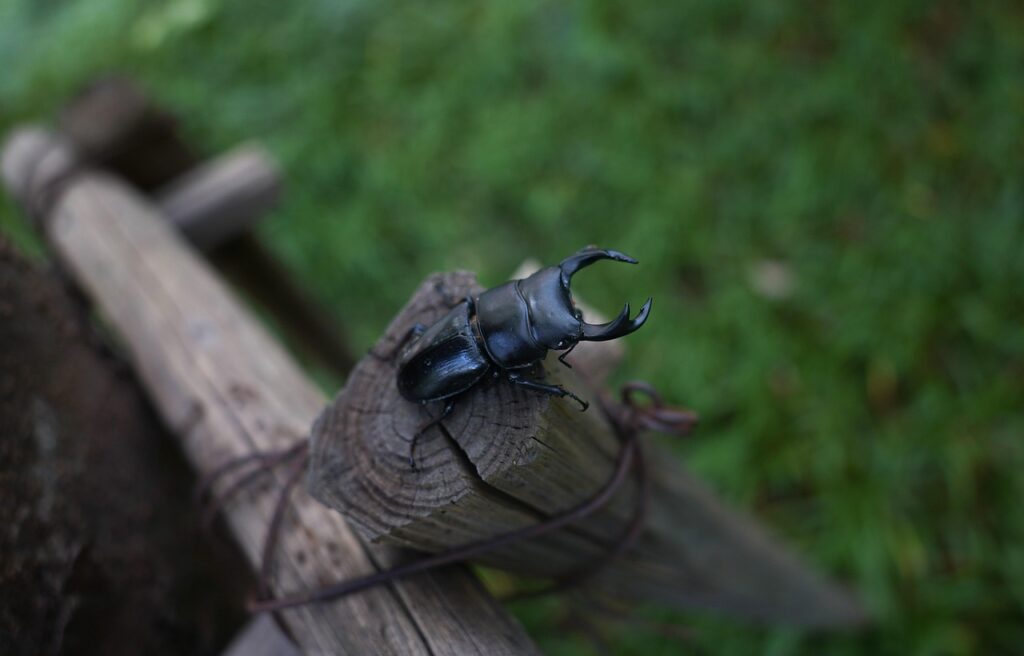
Spotting a stag beetle can feel like discovering a bit of history near your home. Today, London is one of the best places to see them, although they are primarily found in the South East of England.
Other invertebrates are also protected under the Wildlife and Countryside Act 1981. Here are a few examples:
- Rainbow Leaf Beetle (Chrysolina cerealis)
- Large Copper (Lycaena dispar)
- Mole Cricket (Gryllotalpa gryllotalpa)
- Norfolk Hawker (Aeshna isosceles)
- Glutinous Snail (Myxas glutinosa)
- Fiery Clearwing (Bembecia chrysidiformis)
- Ladybird Spider (Eresus sandaliatus)
All species listed above are afforded ‘Full Protection’, but not all invertebrates are fully protected. Some only have partial protection.
Protected species surveys are not just a legal requirement. They help make sure that buildings in the UK are constructed carefully and responsibly. Before starting work, builders must check if protected animals live on the land.
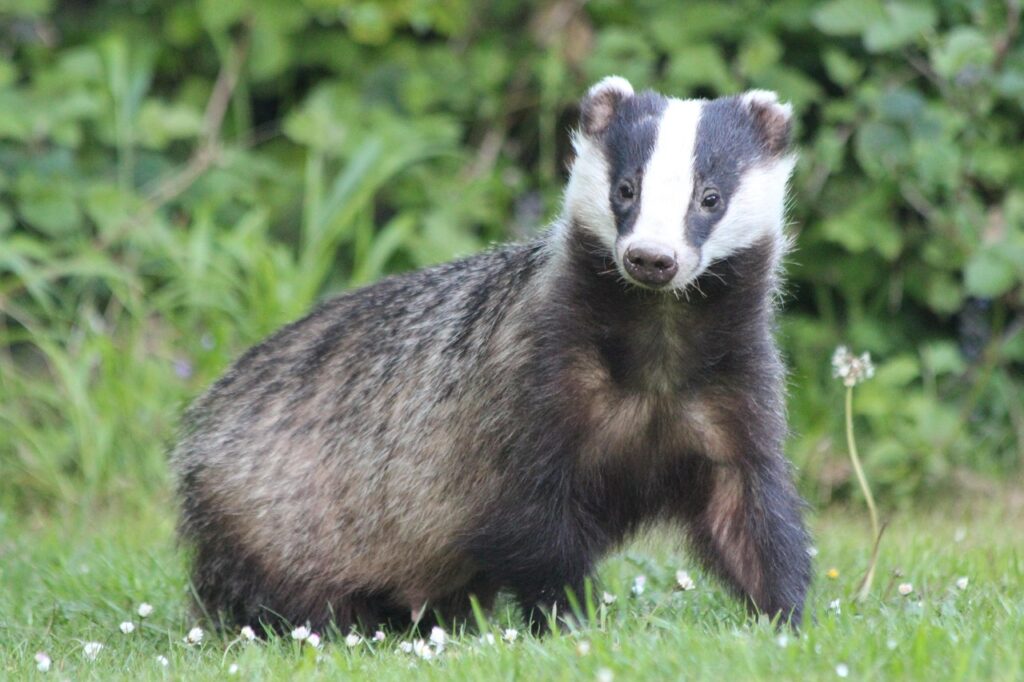
A thorough survey can show if there are badgers, bats, or hidden nests on the site. This information is important for planning your building project.
If protected species are found during your project, you might face delays and extra paperwork.
Local authorities require clear evidence from thorough checks before they approve a project. Starting early allows developers to incorporate nature into their plans, minimise disturbance, and find innovative ways to balance construction with environmental protection.
Paying attention to wildlife from the beginning helps you avoid unexpected costs and keep your project moving forward. If checks find protected animals, you need to develop new strategies. Developers must clearly show how they will keep these animals safe, using sound design, careful planning, and, if required, new approaches to solve problems.
Surveys do more than find animals. They also identify harmful plants and look for rare animals such as great crested newts, dormice, and water voles. Dealing with these issues directly helps protect essential wildlife habitats and supports broader conservation goals.
Ignoring survey rules is risky and can result in serious consequences. Respecting wildlife and their habitats during your project is not only a legal duty but also a true responsibility.
Following wildlife laws is more than just filling out forms. It lays a strong foundation for the project and benefits the local environment as well.
Protecting UK wildlife is important for preserving diverse plant and animal species and ensuring that nature and construction projects can both thrive in the future.
Learning the rules helps you avoid costly problems and supports the unique species that make Britain special. Legal protections not only protect the environment but also enhance your reputation as a responsible and forward-thinking developer.
Careful checks and expert help make it easier to understand wildlife laws, find protected animals early, and keep your project on track.
By planning, you avoid costly delays and become part of Britain’s conservation success stories. Making ethical choices today helps ensure a healthy and vibrant environment for the generations that come after us.
Wildlife crimes harm our environment by targeting essential animals, like illegally shooting wild birds or harming badgers and bats. Disturbing a nest or destroying places where bats or badgers live can create serious problems for local wildlife.
The UK has strong legislation, such as the Wildlife and Countryside Act 1981 and the Protection of Badgers Act 1992. Knowledge of these protections can help you identify and prevent wildlife crimes.
If you see or suspect a wildlife crime, contact the Police as soon as possible. Call 999 in an emergency, or 101 if you are reporting later or are unsure. Be sure to ask for a crime report number so your report is recorded and followed up.
Wildlife crime is when someone breaks the rules that protect Britain’s wild animals and plants. This can include illegal hunting, digging, setting traps, or disturbing animals and their homes.
If you notice anything suspicious, even if it seems minor, don’t wait for someone else to act. Report it to the Police yourself.
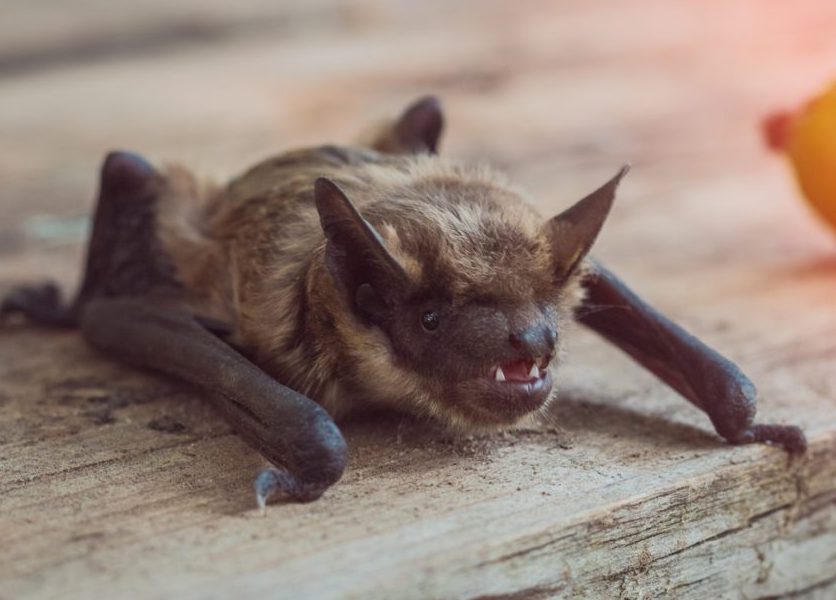
Conservation charities are dedicated to protecting British wildlife. They raise awareness, gather evidence, and work for change. Because bats, badgers, and birds of prey have faced numerous threats, organisations such as the Bat Conservation Trust, Badger Trust, and Protect the Wild focus on helping them survive. Each group provides expert advice on how to spot and report wildlife crimes.
You can find more information. We have linked each group’s website to their name.
Groups such as the RSPB, Wildlife Trusts, and RSPCA have teams that protect vulnerable species and work with the police throughout the UK.
Hunting foxes, deer, or hares with groups of dogs is illegal, but some hunts try to get around the law by using tricks like ‘Trail Hunting.’
As the government plans to close these loopholes permanently, Wildlife Matters asks you to remain alert.
If you see or suspect illegal hunting, contact your local Hunt Saboteurs Group immediately via the national tip-off line at 07443 148 426 to report it as it happens.
Be specific by noting the time, location, and type of hunt, and take photographs or videos if possible. Every detail helps.
For urgent issues like trespassers, dogs on roads, or animal attacks, call 999 for emergencies or 101 for less urgent matters.
Wildlife Matters advises always keeping your distance from hunts and anyone involved in wildlife crime. They can quickly become aggressive.
Help protect British wildlife and encourage others to monitor for harm, habitat damage, or cruelty, whether intentional or not. If something feels wrong, trust your instincts and report it.
If you enjoyed this blog, please check out more of our wildlife blogs here, or you may prefer to listen to the Wildlife Matters Podcast here.
If you want to support our work
Please click the Wildlife Matters Patreon Community link.
Please click to join the Wildlife Matters Substack Community.
You can donate here.