
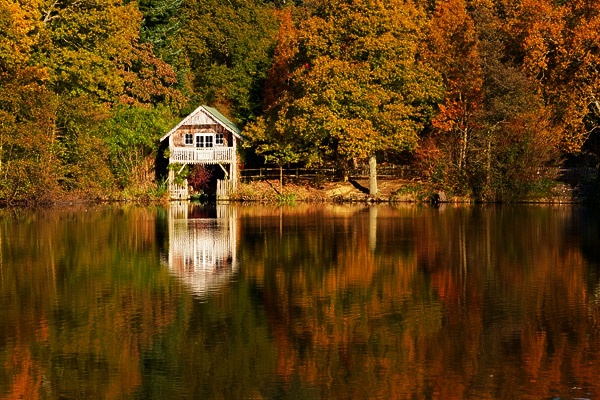
Today, Wildlife Matters is exploring something a bit different: an autumn walk at Winkworth Arboretum, a managed wild space.
An arboretum is a type of botanical garden where many kinds of trees and woody plants are grown, studied, and displayed. The word ‘arboretum’ comes from the Latin word for ‘tree’. Arboretums are used for education, conservation, and recreation, and often feature labelled, unusual, or rare species.
Dr Wilfred Fox founded Winkworth Arboretum in the early 20th century. It covers 95 hectares on the border of Surrey and West Sussex.
It’s the only arboretum managed by the National Trust. The garden is designed to highlight beautiful autumn colours, with red, orange, yellow, and brown leaves creating a striking display.
In 1938, Dr Fox planted over 1,000 tree species to create his own unique landscape. Today, the garden is nicknamed the ‘museum of trees’.
Winkworth Arboretum has three marked walking routes, and you can get a map at the entrance. Each walk varies in difficulty. The hardest route climbs a few steep hills, but most people can manage it, and it doesn’t take long.
You can easily spend a few hours here, walking at your own pace, enjoying the trees, or stopping for photos. There’s also a café on-site with a good selection of snacks and meals, including vegan options.
We’re taking the long walk, which covers all the main areas of the arboretum, including Magnolia Wood, the hill above the Azalea Steps, the Eastern Meadow, and the view from the Boathouse by the lake.
We’ll look at some tree species, but will mainly focus on the wildlife at Winkworth Arboretum and the fungi appearing this autumn.
Many people visit Winkworth Arboretum for the amazing autumn colours. This is the busiest time of year, so you may need to book in advance.
Even though we’re here in autumn, I also recommend visiting in spring.
The trees are covered in fresh green leaves, and the local wildlife and plants are full of energy for the new year. Today is mild and slightly overcast as we set off on a level route that includes a trail for children to follow during half term.
At first, there isn’t much wildlife to see, just a few hardy wood pigeons, some jackdaws, and a quick glimpse of a grey squirrel. These animals have adapted well to living near people and seem comfortable even in this busy rural area.
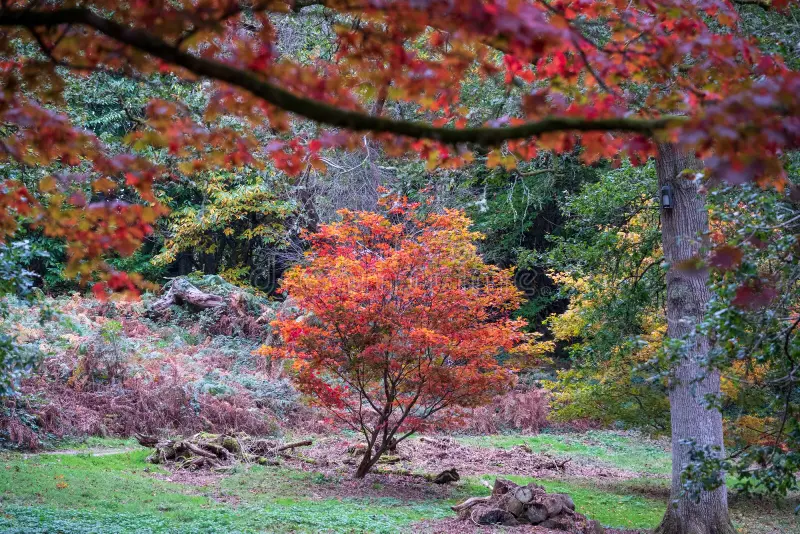
Winkworth Arboretum is set in a valley, with trees planted on the slopes and integrated into the existing broadleaved woodland.
Leaving a small patch of native broadleaved woodland that I believe predates the arboretum, we get to the top of a small climb, and we enter an area with some planted trees.
The first trees to catch the eye are the Japanese maples (Acer palmatum). These fast-growing, shade-loving trees are full of colour in autumn.
At the top of the hill stands a mature tree with a long, twisted trunk. Its canopy glows with deep crimson, turning to gold where the autumn sun touches the outer leaves.
Many of the Japanese maples here are Acer palmatum varieties, trees that have been grown in Japanese gardens for centuries.
These shade-loving trees grow along the steep valley sides.
At the top, you’ll find tall trees with long trunks, while further down, there are smaller, bushier ones.
This mix creates a range of sizes, leaf shapes, and colours, making the landscape beautiful and textural.
I’ve led wildlife walks and talks here, but I’m not an expert on cultivated trees like these maples. Tree enthusiasts might find my descriptions basic, as I know more about Britain’s native plants and animals.
As I continue along the upper ledge of the valley, I spot some Liquidambar trees, also known as American sweetgum.
They look very similar to maples because both have hand-shaped leaves. However, Liquidambar leaves grow singly along the twig, while maple leaves grow in pairs.
The trees also differ in their flowers, fruits, and bark, but the way the leaves grow is the easiest way to tell them apart up close.
Liquidambar trees have bright green, hand-shaped leaves that smell lemony when rubbed between your fingers.
Maple leaves don’t have this scent, so if you’re not sure, just give the leaves a squeeze.
Liquidambar styraciflua grows well in the UK but isn’t native to the UK.
It comes from the southeastern United States, ranging from southwestern Connecticut to mid-Florida, and west to Illinois, southern Missouri, and eastern Texas.
It avoids mountains except in Central America and Mexico, where it thrives in cloud forests.
The tree was introduced to Europe in 1681 by missionary plant collector John Bannister and was first grown in the gardens of Fulham Palace, home of Henry Compton, Bishop of London.
In its native range, you can also find the Tulip Tree, one of the largest native trees in North America.
It belongs to the magnolia family and has distinct tulip-shaped flowers.
The showy, goblet-shaped, orange-yellow-green flowers appear in late spring after the leaves form, while cone-like seed clusters sit upright on the branches.
Its golden-yellow autumn colour makes it a great choice for large landscapes.
Mature tulip trees have greyish-brown trunks with deeply furrowed bark, while young trees have smooth grey bark with shallow white lines.
Tulip tree leaves are 3 to 8 inches long and have a unique four-lobed, flat-tipped shape. They are glossy green on top, pale green underneath, and turn golden yellow in autumn.
The tulip tree’s flowers are yellow-green with an orange band at the base of each petal. These tulip-shaped flowers are often hidden by leaves at the tips of branches.
In October, the tulip trees have matured, producing 2-inch-long, cone-shaped, winged seeds. The seeds sit upright in clusters, turning brown in October and lasting through winter.
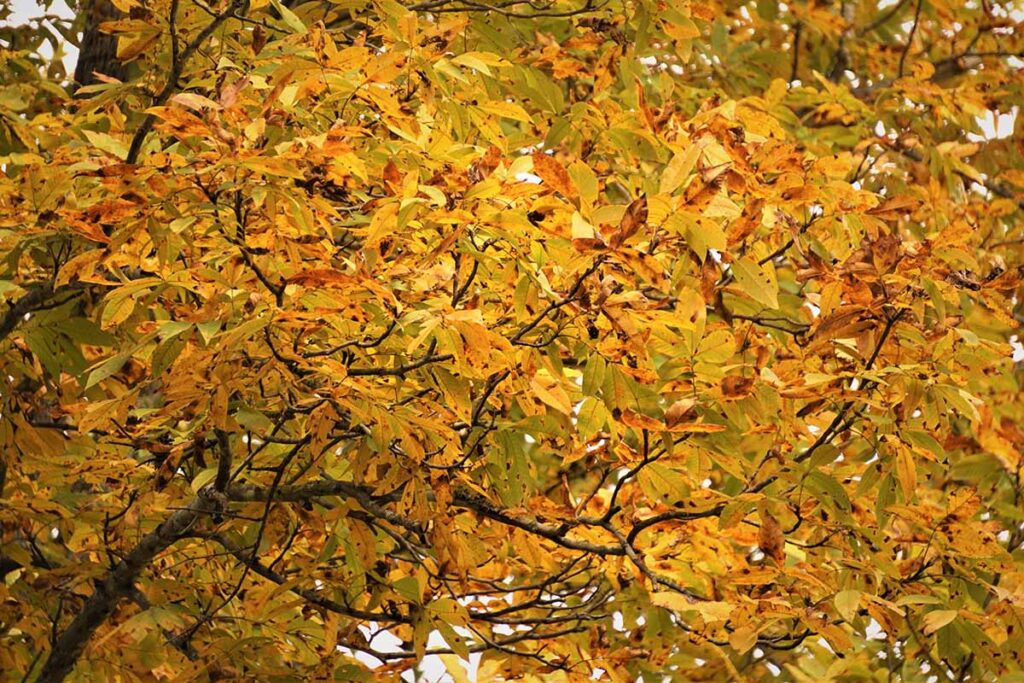
One of the tallest tree species at Winkworth is the hickory. Hickory refers to a group of similar trees belonging to the walnut family.
Hickories are known for their distinctive bark. Some of the best-known types are shagbark, shellbark, mockernut, and pecan. They grow to about 100 feet (30 meters) tall. They have a long taproot, or main root, that grows downward.
Hickories have compound leaves, which means each leaf is made up of several smaller parts called leaflets.
Hickory flowers have no petals and grow in spikes or in long, thin clusters called catkins.
The fruit is an egg-shaped nut covered by a fleshy husk. Birds, squirrels, deer, and mice all eat hickory nuts.
People also eat hickory nuts, especially pecans. Pecan trees are grown for their nuts and their light-colored wood.
Native Americans ground hickory nuts into flour for bread and used hickory-nut oil for cooking. Later, pioneers used tough hickory wood to make axe handles, wagon wheels, and cart axles. They also burned hickory in their woodstoves for cooking and warmth.
Another tall-growing species here is the Dawn redwood.
This is the smallest of the three redwood species and was only rediscovered in 1941, after it had been believed extinct in its native China.
It would have been an incredibly rare and exciting acquisition for Dr Fox while he was planting Winkworth.
An ancient tree from the “dawn” of time, the Dawn Redwood is called by plant enthusiasts “a living fossil or ” the dinosaur tree.
The dawn redwood dates back to one of the oldest trees of our time, to the age of the dinosaurs. Archaeological evidence suggests that the tree covered much of the Earth in that era. But the times change, and dawn redwood has been reduced to a critically small natural range in a few forest patches in China.
In the wild, dawn redwood is a critically endangered species. When mature, the trunk is fluted and bears soft, stringy bark strips similar to cypress or cedar.
The dawn redwood is a hardy species that grows quickly and easily. It requires sufficiently moist soils and tolerates standing water. The final specimen tree I want to discuss is one I am more familiar with. Although Larches aren’t native to Britain, they are relatively common in cultivation and in the wild.
Its home is the mountains of central Europe, upland areas in France, Germany and Austria.
Larches have woody trunks and stems, needle-like leaves, and a waxy coating that helps retain moisture, just like other conifers. But unlike most evergreen conifers, larches are deciduous, so they lose their leaves for part of the year.
Larch is the only deciduous conifer in Europe, and most deciduous conifers in other parts of the world are related to it in some way.
They have two species of Larch here at Winkworth: the European larch, which I have been discussing, and the Japanese larch. The Japanese larch originates from a small region in the centre of Honshu Island, Japan & has become the most popular species. In fact, most of the larches planted in recent years have been Japanese larch or a hybrid larch, not the European species.
The Japanese Larch is fast-growing and therefore more attractive to commercial foresters, which is why you will often see it in plantations.
Larch trees add lots of colour to the landscape as the seasons change. Both types have narrow, light-green leaves that turn yellow in autumn. Even after the leaves drop, brown cones stay on the branches.
The main difference between the European and Japanese species is that the leaves of the Japanese variety are slightly broader, and its blue-green twigs turn reddish-brown in its second year.
At the base of the valley sits the five-acre Rowe’s Flashe Lake and its iconic boathouse, which has featured in the movie The Wedding Date and, perhaps most famously, in the BBC series Cranford.
The lake is flanked by wetlands and reedbeds that provide ideal habitat for a range of waterfowl.
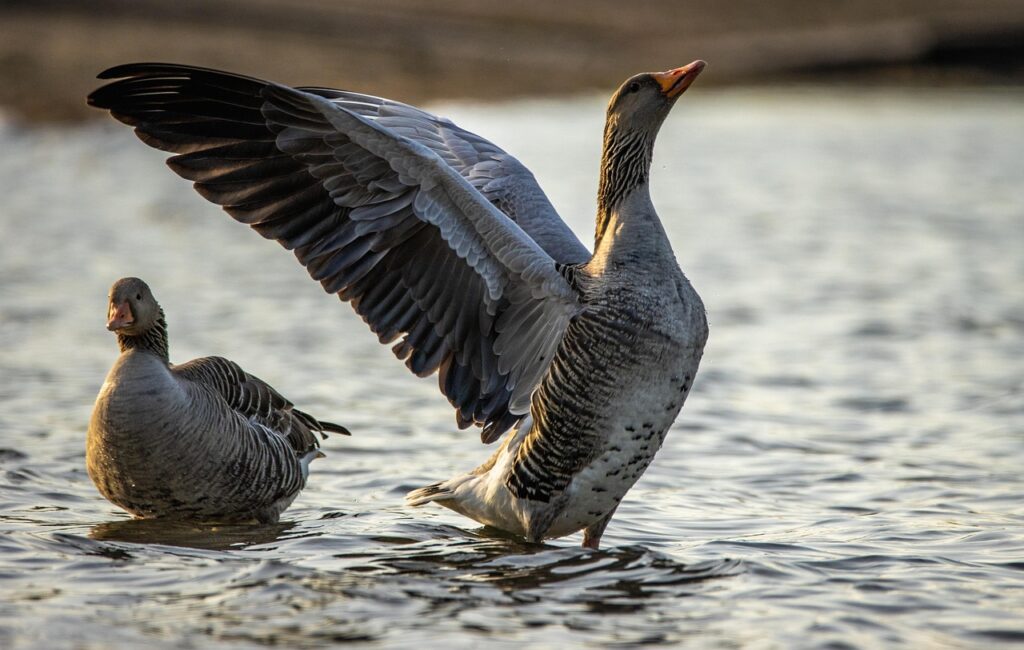
Today I can see several pairs of Mute Swans and many youngsters still sporting their grey plumage. Greylag, Egyptian, and Canada geese are all here in good numbers alongside Mallard ducks.
I know from site surveys that other species can be found throughout the year, including Mandarin and Tufted duck, as well as wigeon, teal, and red-crested pochard.
Winkworth has a good range of bird species from woodland species to garden birds, and a wide range of birds of prey, including multiple pairs of Tawny owls.
Part of this diversity of bird life is the year-round availability of food, much of it from berries that grow in the understory of the shrubs and bushes planted here.
Native plants like holly provide animals with shelter and food year-round, especially through their berries in late autumn and winter. The rowan’s berries are high-energy, beloved by Blackbirds, song thrushes, and winter visitors such as redwings and waxwings, while the spring flowers provide nectar and nesting sites in the dense canopy.
There is plenty of spindle on site, with its stunning pink and orange berries that will help support birds through the harsh winter months. With the abundance of birdlife, raptors are present, and I have seen Kestrel, Sparrowhawk, and Buzzards here, and today red kites were riding the thermals high above the arboretum.
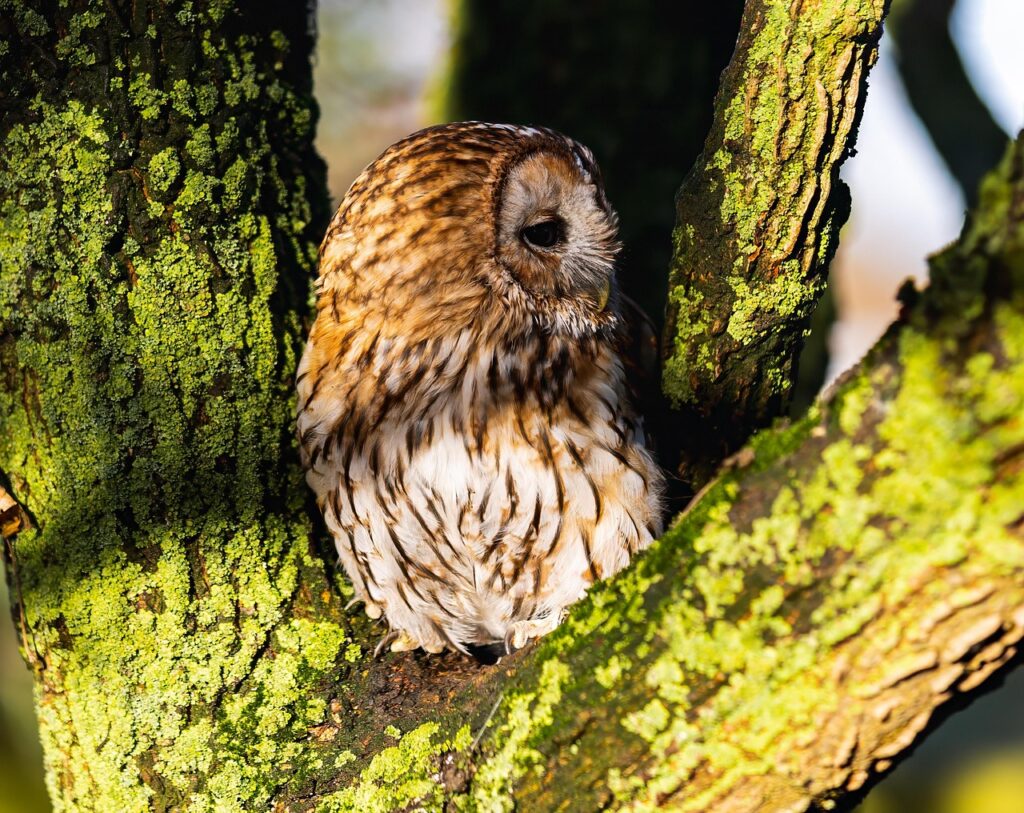
I mentioned Tawny owls are present in good numbers, as are Little owls.
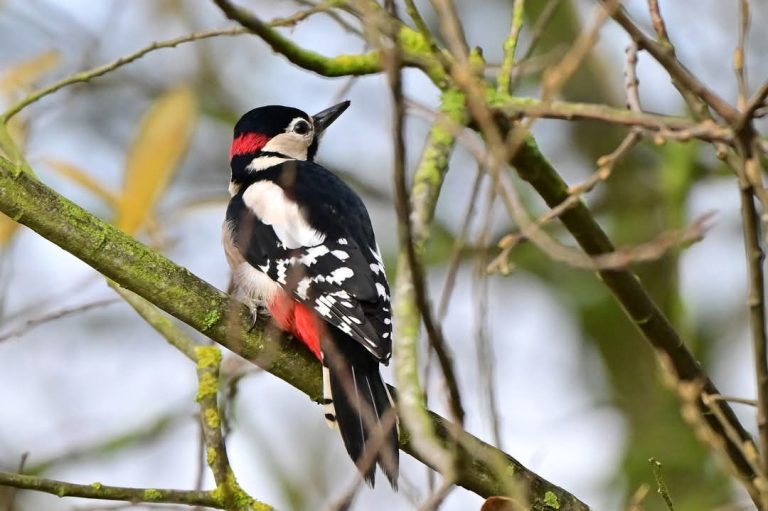
You can see all three woodpecker species here.
It was good to see the lesser spotted woodpecker today, as well as the more common Greater spotted in good numbers.
I didn’t see the Yaffell or green woodpecker today, but I have seen them here before.
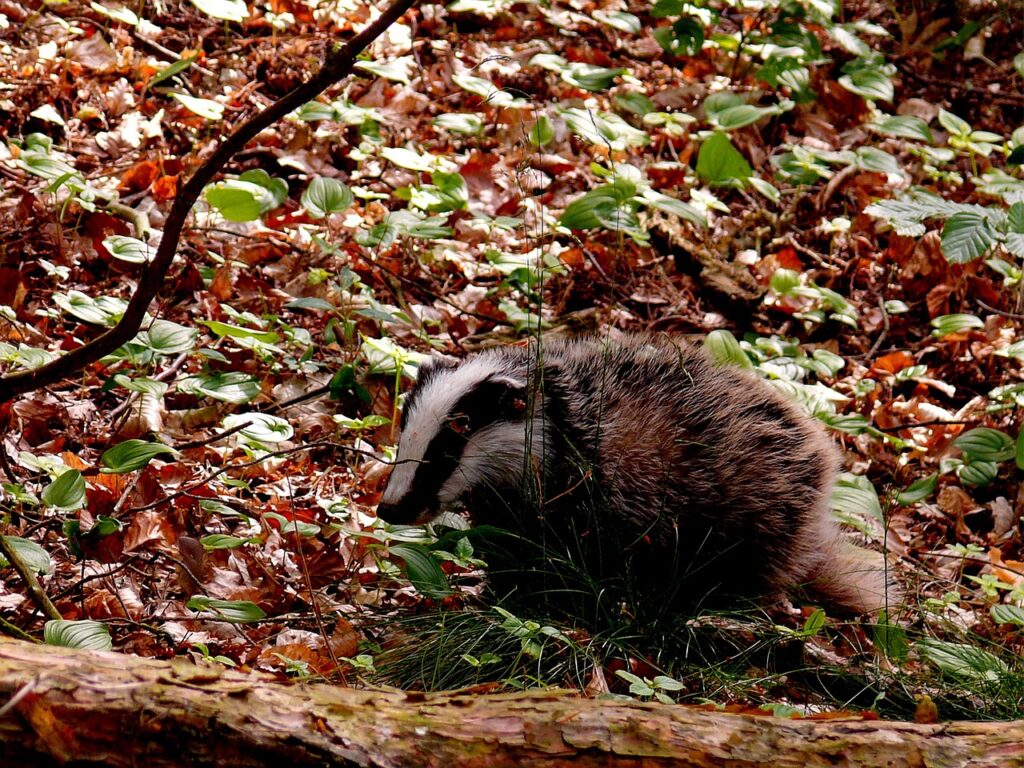
Wild mammals are present in good numbers, but not always easy to see.
Having done surveys here, I know Badgers are present in good numbers, and the Badgers Bowl is a bowl-shaped meadow that is perfect for picnics in the warmer months.
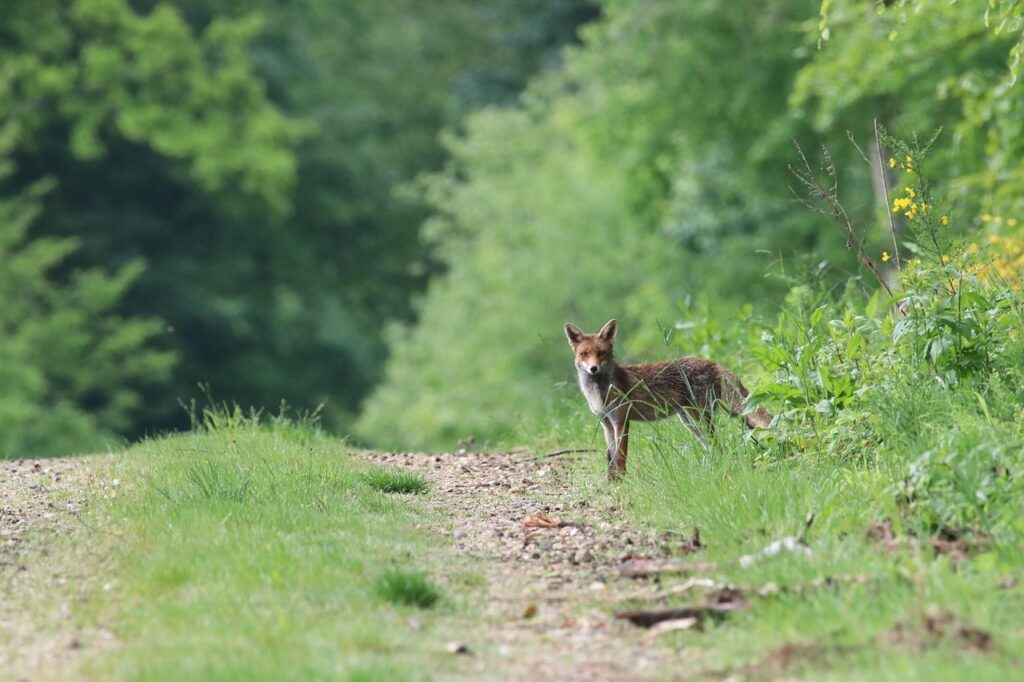
Foxes are also here in good numbers, but rarely around during the day.
I have seen Roe deer here today, mostly the fleeting glimpse before that distinctive white bottom patch disappears into the woodland, and earlier on, not far from the car park, I saw a solo muntjac browsing along a hedgeline.
The site is also important for its Dormouse population, which is monitored and recorded annually. There is an extensive hedgerow on-site, and nesting boxes have been in use for many years.
I’ve led mushroom walks and talks here before, and there’s a good variety of fungi throughout the year.
Right now, in autumn, there are plenty of mushrooms, but they can be hard to spot since they often hide among the trees, roots, or in small spaces.
There’s a whole world of wild mushrooms to discover. You can’t pick them here, but it’s a great place to practice finding and identifying them.
Always remember, some fungi are very poisonous, so never eat any wild mushroom or plant unless you’re completely sure what it is.
I’ve taken small groups of photographers on fungi forages, and they’ve captured excellent images. Fungi can appear as anything from small, delicate, toadstool-like mushrooms straight from fairy tales to huge bracket fungi clinging to tree bark.
The kingdom Fungi comprises a vast group of organisms with microscopic thread-like cells called ‘hyphae’ that propagate via airborne spores.
Many species form a complex network known as ‘mycelium,’ which absorbs nutrients from their surroundings and may form symbiotic relationships with other organisms.
The world of fungi is highly complex and not yet fully understood. At the basic level, fungi include moulds, yeasts, and the most recognisable club fungi with their familiar fruiting bodies.
The ‘mushrooms’ you see in woodlands and gardens generally belong to this group, known as ‘Basidiomycota.’ Most species reproduce through spore production in the gills or pores on the underside of the fruiting body.
Plants and fungi are so closely linked that plants probably couldn’t survive without them. Many fungi form partnerships with plants and trees called mycorrhiza.
The fruiting body that we see above ground is only one small part of a ‘mushroom’.
Underground hides ‘mycelium’, a vegetative mass made up of hundreds or even thousands of fine threads that can spread over long distances.
Fungal mycelium captures water and nutrients beyond the reach of plant roots, delivering them directly to the plant.
In return, the fungi receive sugars produced during photosynthesis. The species with a mycelium network measuring 2.4 miles across in the Blue Mountains in Oregon is thought to be the largest living organism on Earth.
Our first find today is the classic toadstool: the fly agaric.
This striking, photogenic mushroom is toxic but not deadly. It has a bright red to orange cap with white, wart-like spots and is often found near beech or birch trees.
It was mixed into a saucer of milk to attract flies, which drowned in the mildly toxic liquid. which is a small, bright purple that fades to a brownish-white.
They got the deceiver’s name from his colour change, which caught early foragers out.
Although edible, they are not the best. The caps are used and have a nutty flavour, but the stems are tough.
They should never be eaten in large quantities, as they can bioaccumulate heavy metals from the soil, which could become toxic.
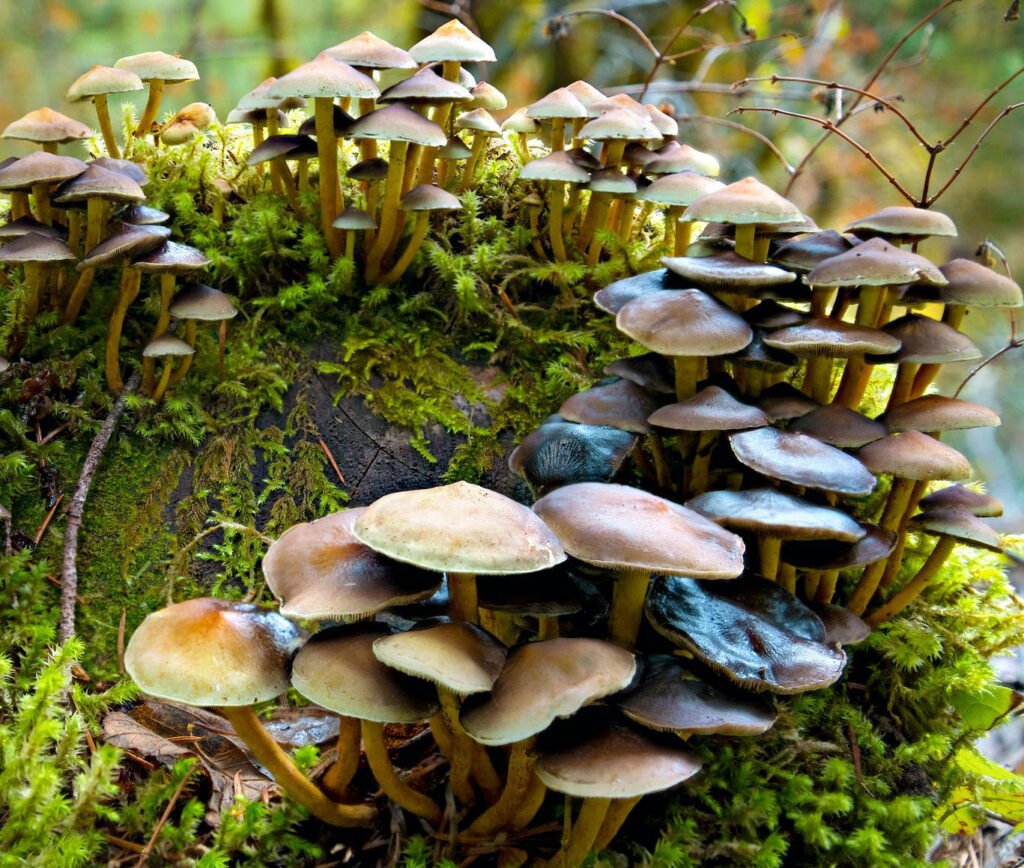
Sulphur tufts are a common mushroom readily spotted at this time of year. Known for their bright colours and massive clusters, they have several fascinating traits, as well as a dangerous side.
They’re great to find on a winter’s evening because sulphur tufts are bioluminescent. While they don’t emit a bright light, they produce a faint glow best seen in the dark with a long camera exposure or under UV light. Under blacklight, they appear bright greenish.
Their bright sulfur-yellow caps and greenish-yellow gills serve as natural warning signs to foragers and predators, indicating their toxicity. Despite their appearance, these mushrooms are poisonous and can cause serious stomach problems, including nausea, vomiting, and diarrhoea. Their bitter taste usually deters consumption, though symptoms can take 5 to 10 hours to appear.
The genus name Hypholoma comes from Greek, meaning “mushrooms with threads,” referring to the fine, web-like veil remnants that connect the cap to the stem when young.
Sulphur tufts have been used in research to competitively displace Armillaria (honey mushrooms), a fungus that causes deadly root rot in forests.
As saprotrophic fungi, they play a vital role in breaking down dead wood, particularly stumps and fallen trees, returning nutrients to the soil. Their gills start yellow but mature to a distinct, almost sickly greenish-olive to blackish colour, which helps with identification.
If you see them in the grass, you can be sure there will be buried wood or old roots just below the surface.
Stinkhorns are fast-growing, foul-smelling fungi recognised by their phallic shape and olive-brown, spore-filled slime cap. They mimic rotting meat to attract flies and disperse spores, often appearing overnight from “eggs.”
These short-lived fungi are harmless to lawns and spread via insects rather than wind.
The slimy, spore-covered top, called the gleba, emits a strong odour of carrion, dung, or rotting flesh to attract blowflies and beetles.
Flies arrive expecting food or a place to lay eggs, but instead find a sugary liquid.
As they feed on this slime, they become covered in spores and transport them to new locations. The spores pass through the flies undigested, spreading the fungus further.
They can sometimes grow rapidly, rising several inches in a single hour. They begin as small, whitish underground structures known as “eggs.” Once mature, they usually last only a day or two before collapsing.
Their unusual shape made them deeply unpopular in Victorian England. Charles Darwin’s daughter, Etty, famously hunted them down with a stick and burned them to protect ‘maidservant morals.’
The common stinkhorn is scientifically named Phallus impudicus, which literally translates to “shameless phallus.”
As decomposers, they feed on wood debris without harming healthy plants or grass. They’re frequently found near badger setts, where the flies they attract also feed on dung and carrion.
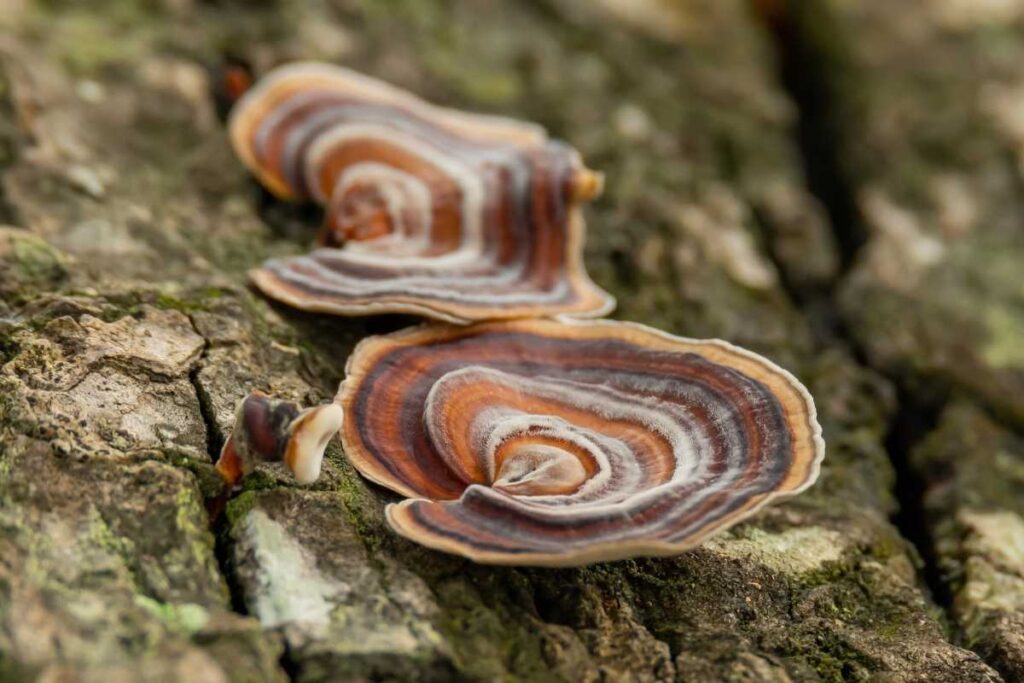
Turkey Tail is a common, colourful bracket fungus named for its resemblance to a wild turkey’s fanned tail.
Renowned for immune-boosting compounds (PSK and PSP), rich antioxidants, and gut-healthy prebiotics, it’s widely used in supplements and teas to fight fatigue and inflammation and to support cancer care.
The cap features concentric, multicoloured rings in shades of brown, gold, cream, blue, and green. Unlike typical mushrooms with gills, Turkey Tail has a tiny-pored, white or cream-coloured underside. Its scientific name, versicolor, means “of many colours.”
They contain compounds called PSK and PSP that help stimulate the immune system, particularly white blood cells. In Japan, PSK from Turkey Tail is approved as an adjuvant treatment to improve chemotherapy outcomes.
They act as prebiotics, feeding “friendly” bacteria like Bifidobacterium and Lactobacillus.
They’re also packed with phenols and flavonoids that reduce oxidative stress. They grow in overlapping tiers (shelves) on dead hardwood stumps, logs, and branches. While they grow throughout the year, they’re best spotted in autumn.
They’re essential for recycling nutrients from decaying matter. These mushrooms can break down hazardous substances in soil and water, aiding in the cleanup of pollution.
Due to their strong pigmentation, they’ve been used to create natural fabric dyes. They’re often brewed into teas or added to soups and broths, particularly in Japanese and Korean cuisines.
We have now identified a fascinating fungus that, although not rare, is difficult to find. They are known as Earthstars and are related to puffballs. These star-like fungi break down leaves and add nutrients to the soil.
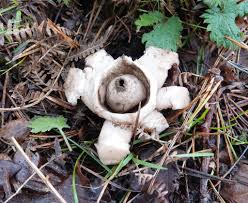
Found in UK woodlands, the most common is the Collared Earthstar, which starts as a puffball and splits into rays, releasing spores.
While inedible and sometimes poisonous, they’re a popular find, especially in autumn under hardwood trees.
They’re typically found in deciduous woods with leaf litter and sandy soils, and even in gardens or dunes.
Although they fruit all year round, they’re best found from late summer to autumn after rain.
Rain is important because raindrops hitting the spore sac eject spores through a small pore, like a miniature cannon.
Earthstars begin as a ball, then the outer layers peel back to form star-like arms, leaving a central spore sac known as the peridium.
We’re nearly at the end of our walk today.
This is my first time visiting an arboretum for the podcast, but it’s a local place I often visit for a leisure walk and I’ve come to know the site and its wildlife and fungi well.
There’s plenty here to interest wildlife lovers, with the bonus of unusual trees that form the collection.
Many people come here purely for the autumn colour, while others come to entertain the children, as there are regular events and activities, as well as special trails with well-known children’s characters during the main school holidays, which are always popular.
Being local, I enjoy evening walks here when things are quieter.
That’s when you can hear and see tawny owls, the rustle of foxes starting their night patrols and birds settling down to roost.
Winkworth is open year-round, and I believe it is well worth a visit. As the clocks change this week, we are plunged into darkness even earlier. This is still a good way to spend a morning and/or afternoon
And that has been this week’s main feature on Wildlife Matters.
If you enjoyed this blog, please check out more of our wildlife blogs here, or you may prefer to listen to the Wildlife Matters Podcast here.
If you want to support our work
Please click the Wildlife Matters Patreon Community link.
Please click to join the Wildlife Matters Substack Community.
You can donate here.
Further Reading
Winkworth Arboretum National Trust Site