
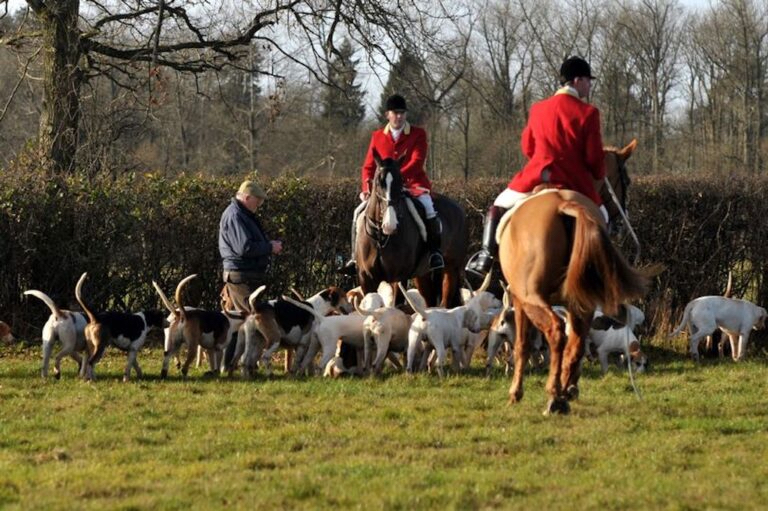
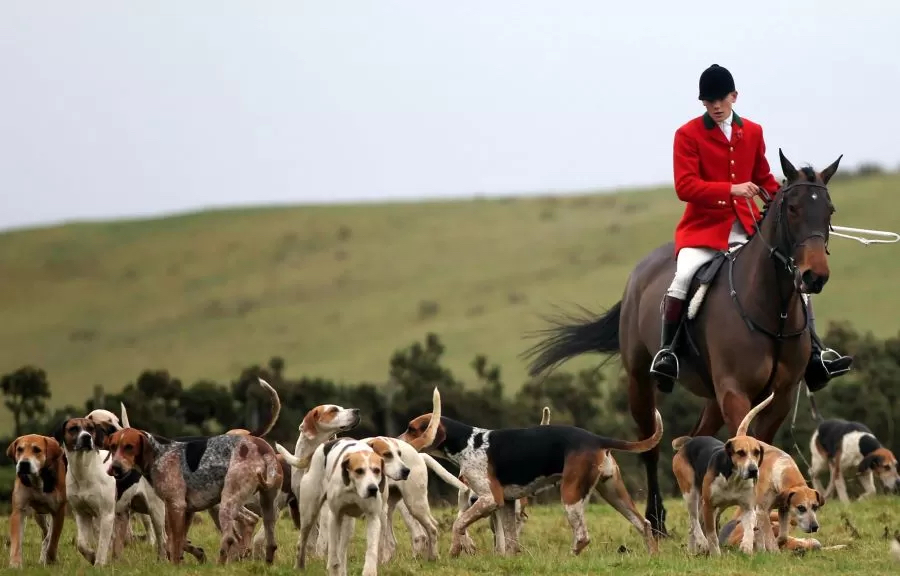
The Hunting Act turns twenty this week, but what does hunting mean to you? This is Wildlife Matters’ look at the Hunting Act -Twenty Years On.
If you are one of the 85-90% of people, a consistent outcome in public opinion polls, who want hunting to be entirely stopped in England and Wales, I stand with you.
If you are one of the other 10% who do support hunting, I do not believe you can justify hunting an animal for pleasure and to the 5-6% who say they don’t know – I genuinely do not understand your apathy to other sentient creatures.
My story began a long time ago. One weekend, as a preschool child, I was visiting my mother at an orthopaedic hospital when a group of men on horses rode through the hospital grounds with their dogs.
My Mum, with her legs wrapped in bandages, walked out the ward’s door and into the garden, with me following. In the garden, three nurses stood by a hedge, and the man on the horse shouted at them to move out of his way. They refused, and the dogs howled, and the horses jumped.
When the matron arrived, she instructed the man to gather his dogs and leave the hospital grounds. After a short argument, the matron won, and the men turned their horses and left with their dogs.
At under five years old, I didn’t understand hunting, tradition, or why the men were so nasty to the nurses and matrons. I certainly didn’t comprehend the trauma of a hunter riding through the hospital grounds, but those memories stayed with me.
Fast-forward a little over a decade, and I had begun work. One of my mates asked me if I wanted to join him on the fox hunt, and as an animal lover, I went along, utterly naive to what I was about to see and experience.
I won’t go into detail here, but I saw a fox killed by hounds on that first meeting. I saw the pleasure on the bloodhounds’ faces and felt the crushing disappointment of my fellow sabs who could not save that fox.
Later that evening, with the events of the day replaying in my mind, I made a vow that I would do everything I could do to end the hunting of wild animals with packs of dogs.
Throughout the eighties and nineties, the hunts had the upper hand, and Sabs were regularly beaten and whipped with riding crops, had their vehicle windows smashed and tyres slashed and were intimidated and sometimes beaten up by the hunt thugs in the street.
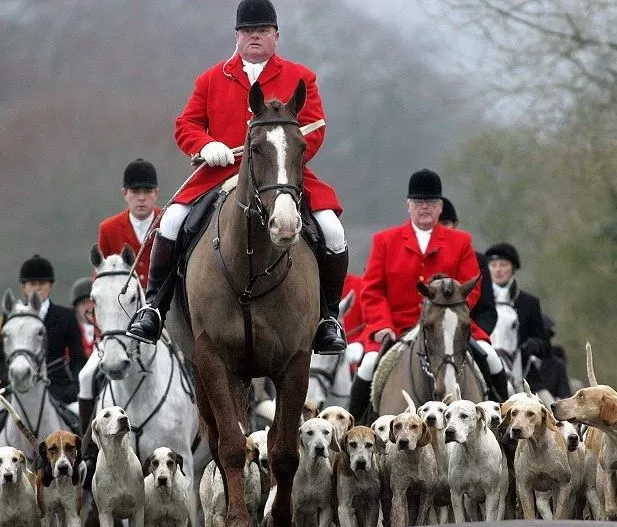
I have often come home to a fox with its entrails hanging out, lying by my door or over my back gate, and with every incident, beating or killing, my resolve to end hunting has strengthened and deepened. I hope you can understand why.
So, twenty years ago, with the media gathered, supporters popped champagne corks, and hunters declared outright defiance as a new law was enacted to stop the cruelty of hunting with hounds.
After years of campaigning, a government inquiry, and many hours of debate in Parliament, the Hunting Act 2004 was passed in November 2004 and came into force on February 18, 2005.
In the lead-up to the enactment of the Hunting Act, there was a notable increase in violence from hunt supporters directed against hunt saboteurs.
For the first time, hunt-related chaos spilt into urban areas, resulting in mass disorder outside Parliament, trespassing on railway lines, and dead horses left on city streets.
Despite the ban, three thousand hunt staff signed a pledge to break the law and continue hunting animals.
With this widespread commitment to defying the law, the hunting community’s leadership developed and began to promote ‘trail hunting’ as a way for them to continue their now illegal blood lust activities.
Trail hunting is a bastardised hybrid of blood hunting and drag hunting. In drag hunts, hunters follow a pre-laid trail, not a live animal scent.
This thought caused such fallout within the hunting community that the true drag hunters split from the blood hunters, and the two associations remain separate today.
The blood hunts claimed they needed trail hunts to keep hounds fit, maintain infrastructure, and ensure that supporters continued paying their dues until the ban could be repealed.
As the Countryside Alliance stated in their 2005 Hunting Handbook: “Any trail, simulated, or mock hunting should be promoted and seen as a measure to provide activity for hounds and their followers during the ‘temporary’ ban.”
However, as it became clear that the ban would not be repealed anytime soon, they intensified their promotion of the ‘trail hunt’ narrative, attempting to reshape hunting’s public image into a seemingly legal and acceptable activity.
Many hunt saboteurs can be forgiven for their initial celebrations and optimism. The new law should have ended hunting wild animals with hounds – but we know it did not.
In reality, the significant gaps and ambiguities in the new legislation, along with a lack of police enforcement, meant that, away from the scrutiny of the public and hunt sabs, hunts continued much as they had before, with wildlife continuing to suffer.
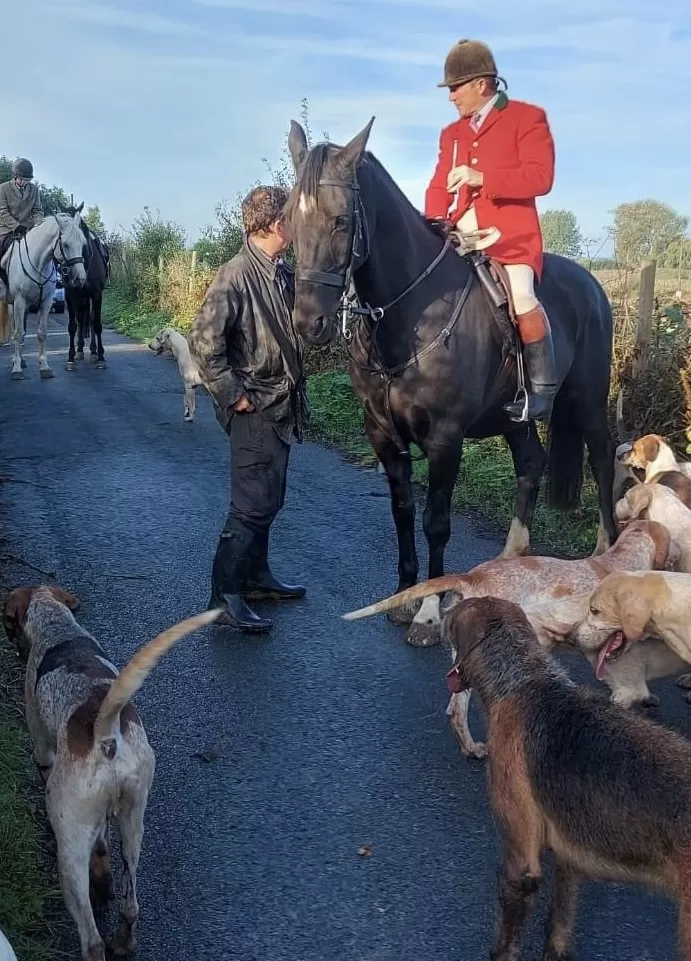
Fast-forward to today, and it is clear that hunt saboteurs remain the primary defenders of hunted animals, just as they were before the ban.
While several successful prosecutions have been brought under the Hunting Act, the minimal sentencing powers provide little deterrence to those who routinely violate it.
Hunting is undoubtedly significantly weaker today than it was in terms of the number and profile of hunts and the ever-decreasing support, while the number, capability, and technology available to hunt saboteurs have increased.
We hear of multiple hunts being forced to disband or merge yearly due to financial and logistical pressures.
In recent years, hunting has suffered several significant blows. In 2020, the leak of online webinars attended by hunt masters revealed discussions among leaders from the Hunting Office, the governing body of hunting, on how hunts could protect themselves while violating the law.
The hunting elite on the call described trail hunting as a ‘smokescreen’ for illegal hunting, leading some of the UK’s largest landowners to ban hunters from accessing their land.
The Hunting Office was recently rebranded as the British Hound Sports Association.
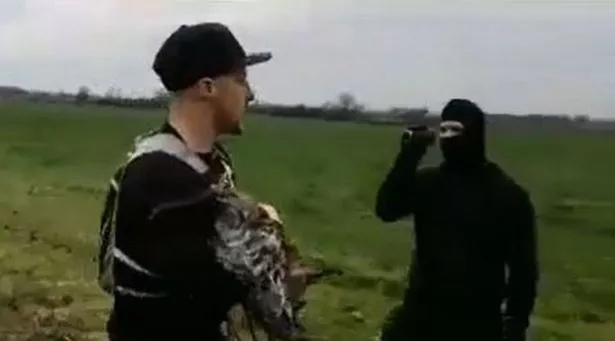
Some of the most damning footage, recorded and released after the ban, includes exclusive videos aired on ITV and Channel 4, such as a live fox being dug from the ground and thrown to hounds by members of the Avondale Hunt.
The Avon Dale became the first hunt to be forced to close by the hunting overlords at the British Hound Sports Association. The ‘kicker’ was that the hunt had filmed the footage themselves.
Increased media attention has brought the truth behind the ‘trail hunt’ narrative to public awareness, prompting police chiefs to be more vocal about the issue and the law’s shortcomings.
On the tenth anniversary of the Hunting Act, the then-conservative MP Caroline Dinenage said
“It should also be remembered that the Act remains very popular with voters. Polling conducted by Ipsos MORI for the League Against Cruel Sports shows that 8 out of 10 people think fox hunting should remain illegal, with similar numbers agreeing that deer and hare hunting should also remain unlawful. More than 80 per cent of those surveyed (in urban and rural areas) believe hunting with dogs should remain against the law. Public opinion seems settled on this matter, and to my mind, it’s the responsibility of Parliament to reflect this.
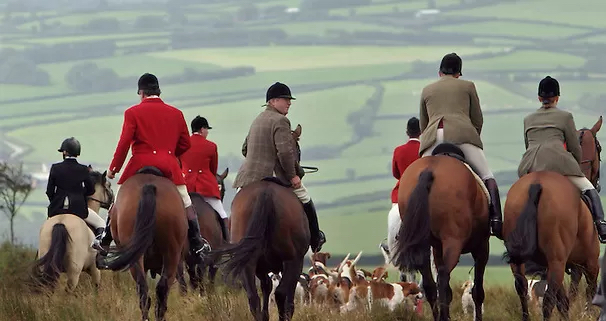
The Hunting Act has survived ten testing years. It has proven to be successful and popular, and the focus should be not on repeal but rather on how we can make an already good law even better so that more animals are spared from a horrific fate in the name of an inhumane & archaic sport.”
That didn’t stop Prime Minister David Cameron from attempting to revoke the Hunting Act in 2016. He had said he would offer MPs a free vote and planned to effectively castrate the law by amending a Statutory Instrument.
The vote was announced with the legal minimum of seven days’ notice. The Countryside Alliance in the Hunter’s Corner had already had months to engage and rally its supporters, including a widespread media campaign in the newspapers and on TV.
I remember that week so well. I was working for a well-known anti-hunting campaigning charity. In just 48 hours, without sleep, we initiated a nationwide campaign, asking everyone who could email their MP to request that they not support the amendment and to ‘Keep the Ban.’
Our founder was on TV at every opportunity, encouraging support and calling the hunters lying bastards on BBC Newsnight.
Our sources said that MPs were being inundated with emails, with most receiving more per day than they would in two or three months. There were so many that they would not be able to answer all their constituents, so they were making public statements.
If I remember correctly, the number was around 80 but soon grew to over 200. Once we had over four hundred, we knew our momentum would overturn Cameron’s plans.
On the day of the vote, we had arranged a demonstration outside the Houses of Parliament, supported by a wide range of wildlife NGOs that oppose hunting, as well as the wonderful folk at Lush—undoubtedly one of the most ethical and mindful companies in supporting people and wildlife. Along with thousands of others, I stood outside parliament with a fox mask and bright orange flares, which we released into the sky.
MPs gathered to observe. Taxi drivers beeped their horns, and people called out from buses and cars as they passed.
We were loud and stood in defence of foxes and all wildlife, and in defiance of the government.
Before the speeches were finished, the news came out from the media that Cameron had scrapped the proposal as he knew he couldn’t get enough MPs to vote for it. A genuine success for wildlife, but also for democracy that day
Of course, hunting has continued under the guise of trail hunting and with every season, more hunters have been caught on video killing foxes and cruelly breaking the law.
Not that the convictions follow, but the huntsman has moved around like a rabid game of musical chairs before eventually they are sacked for the final time, and many then sell their sad and depraved stories to the press.
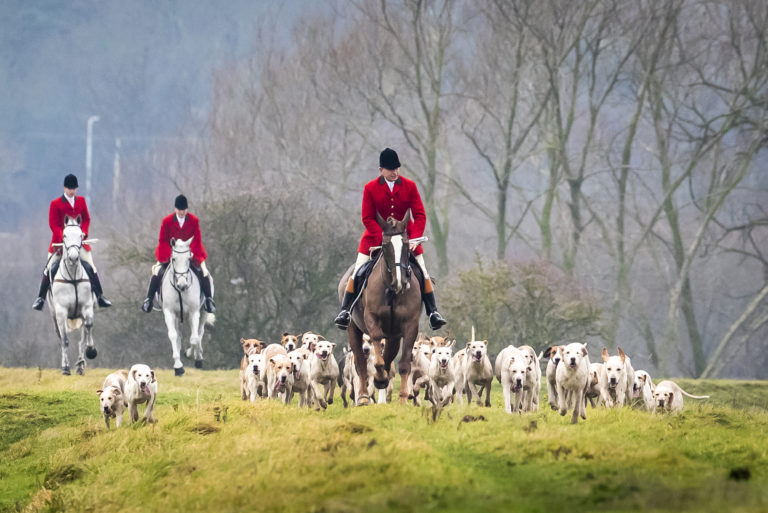
A huntsman told me that the term “trail hunting” has become irrevocably tainted. He said, “To save hunting while a Labour government is in power, we need to acknowledge that ‘trail hunting’ has turned toxic, and there are individuals who have let us down.”
A Master of a Hunt said, “We’ve had 20 years to change public opinion, and all we’ve managed to do is shoot ourselves in the foot repeatedly.
In one case last summer, a huntsman and a whipper-in from the West Norfolk Hunt, Britain’s oldest hunt, were found guilty of two counts of illegal fox hunting just after the new government won a landslide victory.
This appalling case highlighted that “trail hunting” serves as a smokescreen, as a fox was chased into a garden and killed by hounds on the patio of a private residence.
They cannot claim to have laid a proper trail; it is simply a lie upon a lie.
We must also examine the government’s refusal to issue hunting licenses on Ministry of Defence (MOD) land.
The Royal Artillery hounds recently joined other local packs at a meet hosted by their neighbouring pack, the South and West Wiltshire.
No licenses to trail hunt on MOD land have been granted for the 2024/25 hunting season. This situation risks the closure of the Royal Artillery and several other hunts, including the Staff College Draghounds, which are kennelled at the Royal Military Academy Sandhurst.
A government spokesman stated, “This government was elected with a mandate to implement the most ambitious plans to improve animal welfare in a generation, including the banning of trail hunting. Licenses for trail hunting on Ministry of Defence (MoD) land are currently under ministerial review.”
However, for those who have listened to hunters for many years, the current perspective from Oliver Hughes, managing director of the British Hound Sports Association (BHSA), comes across as a tone of stoic denial that verges on being reckless with the truth.
Hughes recently claimed that a complete ban is not imminent because it was not mentioned in the new government’s first King’s Speech.
Regarding the immediate issue of hunting on MoD land, Hughes commented, “It’s probably quite challenging for whoever grants these licenses to oppose their new political superiors without receiving guidance—and I would suspect there has been no guidance either way.”
He then went on to say… The government’s lack of a time frame on a ban ‘allows us to continue demonstrating that trail hunting is legal, legitimate and well-regulated.’
The man sounds delusional and defeated as he clutches some correctly banned plastic straws.
The cases of hunts running amok continue to make the news, and the League Against Cruel Sports has recently done some excellent work. They have shared the story of hunt hounds running loose through an Oxfordshire village, along with video evidence from Hunt Sab groups. Organisations such as Protect the Wild and Save Me Trust widely circulate these videos.
Over the past several decades, my involvement with the Hunt Saboteurs has been one constant in my life. Throughout this time, I have met many wonderful, passionate, and dedicated people who work tirelessly to prevent foxes and other wild animals from being killed for the sadistic pleasure of an ever-diminishing minority who derive enjoyment from hunting.
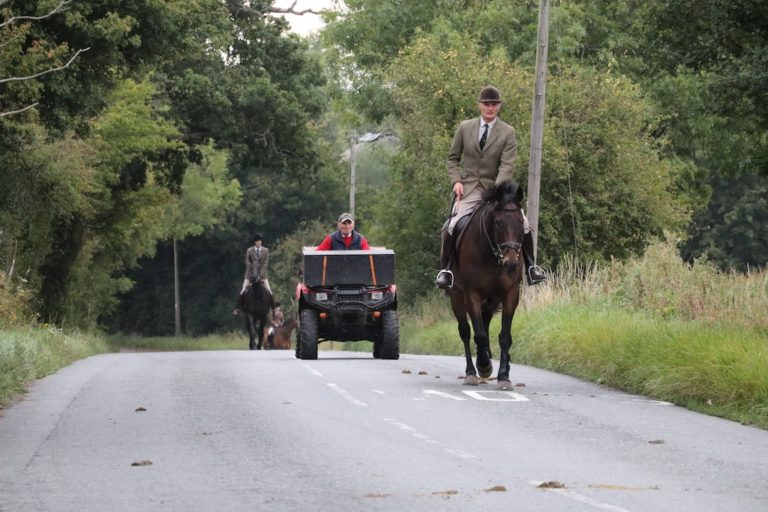
While the Hunting Act is far from what I had hoped, it can still be a compelling piece of legislation when strengthened by the seven amendments proposed by a coalition of anti-hunting wildlife groups (see the link to our article here). The punishments for those who break the law are custodial with high fines, and a register is kept of offenders just as it is kept of offenders who abuse people.
I stand by the hunt Sabs and look forward to the day, which is now not that far away, when the cruel and barbaric bloodlust of hunting with packs of dogs, whatever name they call it, is banned.
And I will remember some of the incredible people who were defenders of wildlife who are no longer with us, including legends like Mike Hill and Tom Worby, who were killed whilst sabbing hunts and others like Steve Christmas, who a hunter ran down in a car and then reversed over him breaking his back and changing his life forever and of course, I will remember my Mum, who sadly is no longer with us for standing up to the hunters all those years ago.
That is what the Hunting Act means to me and why we must defend and strengthen it.
If you enjoyed this blog, please check out more of our wildlife blogs here, or you may prefer to listen to the Wildlife Matters Podcast here.
If you want to support our work
Please click on the Wildlife Matters Patreon Community.
Please click to join the Wildlife Matters Substack Community.
You can donate here.
Further Reading
Hunt Saboteurs Association – Twenty Years of the Hunting Act
The Canary – 100,000 People want to see change. The Hunting Act
League Against Cruel Sports Let’s End Hunting for Good 20 Years of the Hunting Act
