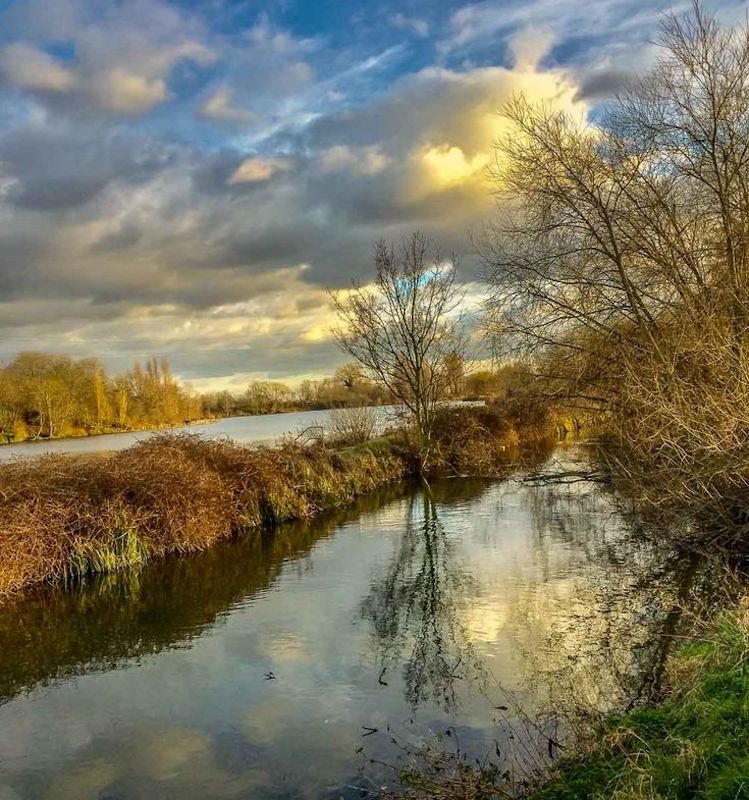
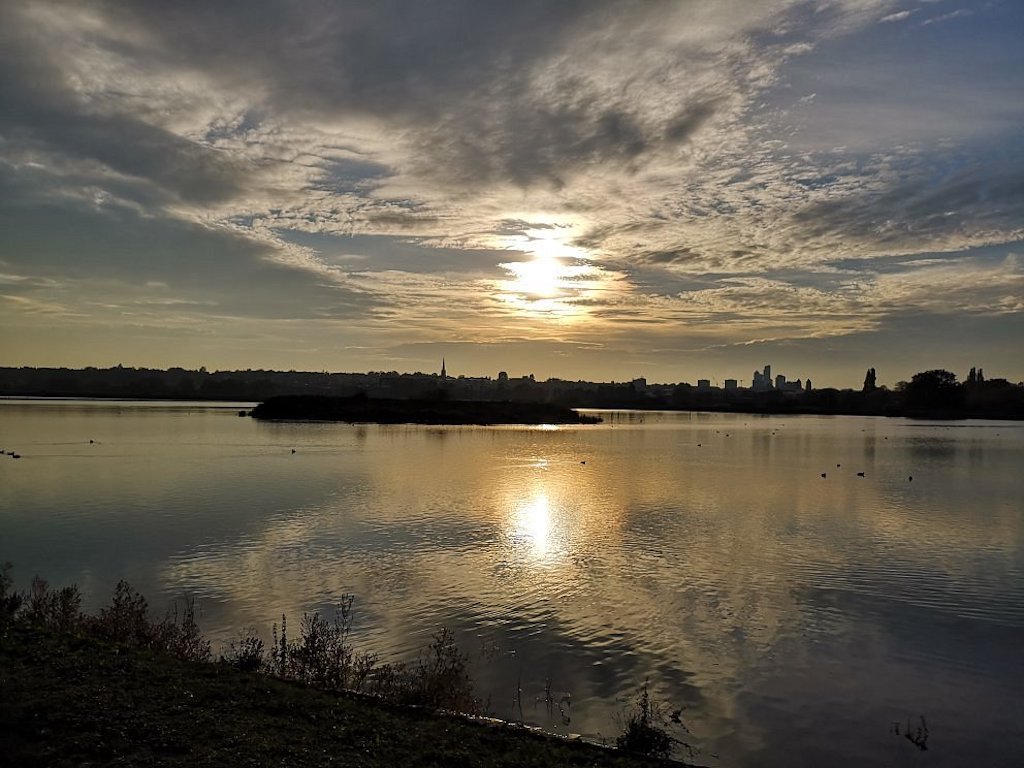
Wildlife Matters returns to East London for Part Two of London’s Wildest Places – Walthamstow Wetlands, the iconic Walthamstow reservoirs, a series of lakes and reservoirs that provide drinking water to much of London on a vast 211-hectare site protected as an SSSI.
If you missed Part One of our Walthamstow wetlands adventure, we covered the numbered reservoirs and some of the incredible and diverse range of birds and plant species you can find there in Blog 120.
Now, we return to explore the named reservoirs, often described as the ‘ones over the road’. But before that, we have permission to visit the East and West Warwick lakes, which adjoin the River Lea and are divided by railway tracks.
East Warwick is permit only, as I believe a local club has exclusive fishing rights, and I understand that you can only fly fish on the lake.
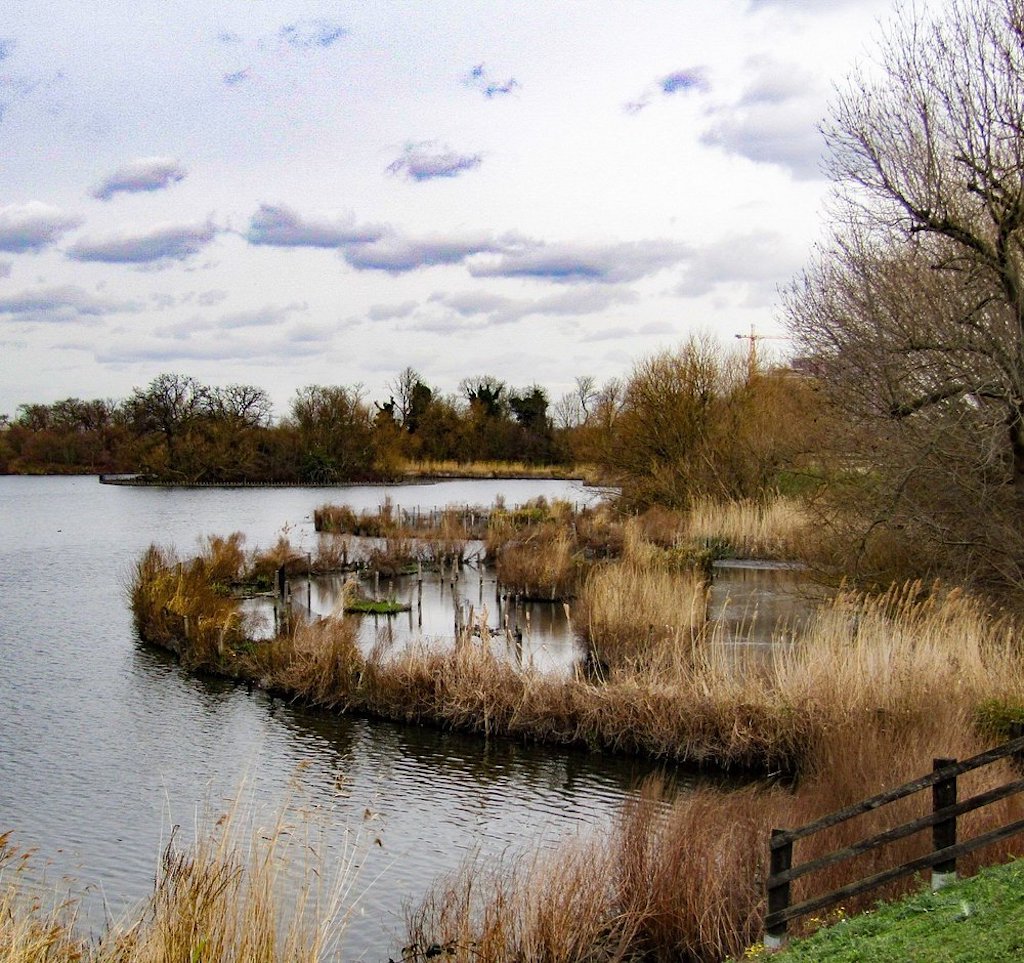
My interest here today is the Reedbank, which is not so popular with anglers. Today, albeit in the middle of the week, I am alone exploring the reed banks and some of the wildlife that call it home.
Reedbeds are a vital part of a healthy water body system. They are areas of water or marshland where reed plants provide excellent habitat for fish, invertebrates, and birds.
Reedbeds also act as natural filters, removing pollutants while providing oxygen to the water. These habitats are crucial for a wide range of wildlife, including birds, invertebrates, and mammals.
In the UK, over 700 invertebrate species have been recorded in reedbeds, including dragonflies and damselflies.
Reedbeds oxygenate the water, which benefits aquatic species, including fish. During severe pollution events, oxygen levels in the river can drop rapidly. Reedbeds serve as refuges to escape such incidents.
Reedbeds help reduce water pollution by converting toxic ammonia into nitrate, a less harmful substance.
Since the water quality throughout the Lea Valley is poor due to daily pollution from various sources, reedbeds are a natural and effective way to improve water quality.
Today, we are looking at a traditional reedbed, which is natural but can be created by planting the Common Reed (Phragmites) into soil at the edge of the lake.
Around Walthamstow wetlands, you can also find floating reedbeds in areas where creating a reedbed in the river bed is difficult or not permitted; floating reedbeds can be used.
These are floating islands of reed plants that provide the same benefits of a natural reedbed as the roots of the plants hang into the water, increasing the surface area to help tackle pollution.
Of course, reedbeds provide multiple benefits for wildlife species, offering food, shelter, and breeding grounds for a wide range of species.
The structure of reedbeds, with their tall stems and dense growth, creates unique microclimates and offers protection from predators.
Having had a look around the area and the reed beds I have decided to set up the camera and recording equipment in a small area of the bank where I have cover from the reeds on three sides so although I can’t see much of the East Warwick lake I hope to get a close up view of the wildife that call this urban reedbank home.
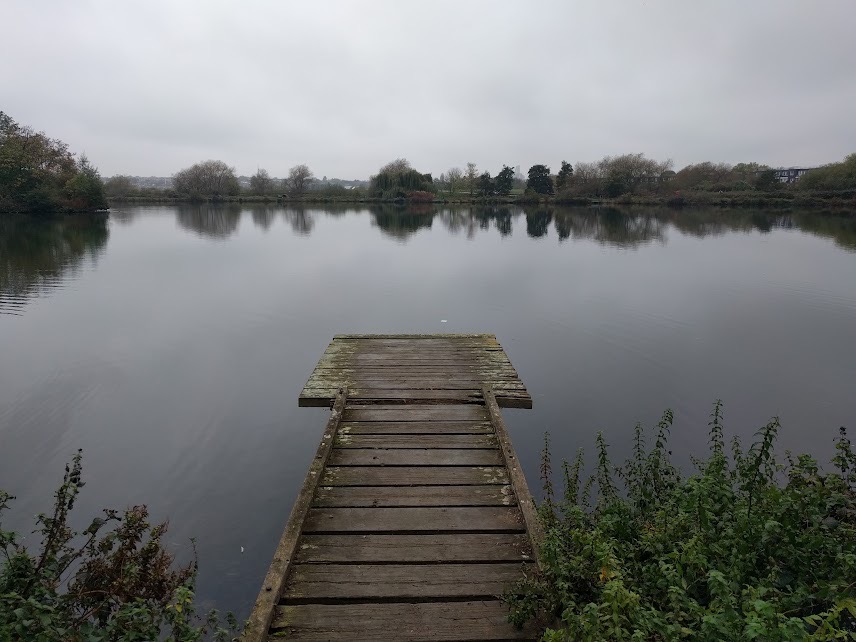
If it weren’t for the constant aircraft flying above, this would be a place of serene solitude and a quiet sanctuary for anyone who needs to escape the hustle and bustle of the city.
Out here, less than seven miles from Central London, the air smells fresh, and the slight breeze refreshes the stale, warm air from the city.
I don’t have the equipment of some wildlife and nature writers; my kit is all second-hand but decent quality, even if the tech has been updated, and my camera body is fast approaching one million shots, although I have only added around 25% of those.
Instead, I have developed field skills that enable me to approach wildlife closely. While it works many times, I have also spent many hours sitting quietly and still without seeing any wildlife. That is the way of things when watching nature; it is always on the wildlife’s terms, not ours.
I am sitting on my low perching stool with the camera on the tripod and my Zoom recorder positioned on the edge of a dense thicket of reeds to my right.
It was the zoom that picked up the sound of a slightly shrill but sweet song from this sparrow-sized bird, a reedbed specialist.
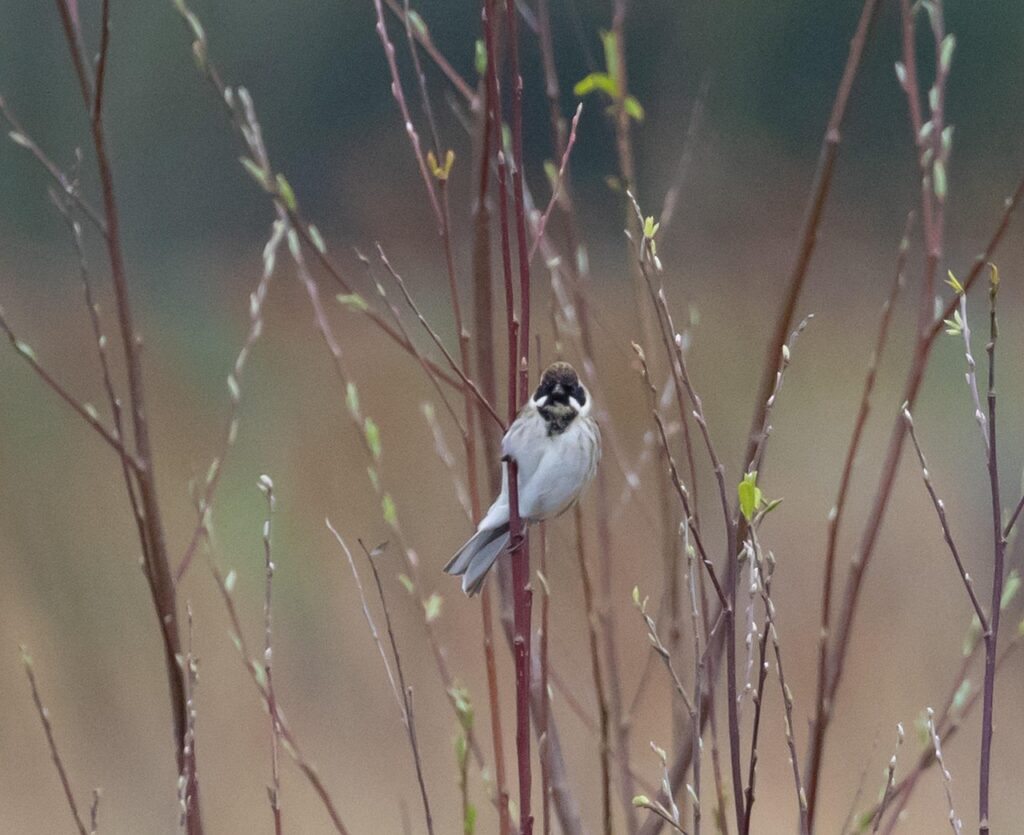
This is a male in his spring-summer colours, featuring a black head and black throat that extends down into a bib, accompanied by a white collar and a white ‘moustache’.
The female reed bunting is a streaky brown bird that closely resembles a sparrow. In autumn and winter, males are also speckled brown, although the white collar and ‘moustache’ remain obvious. The throat becomes pale, though there are usually traces of the dark bib still visible.
Female reed buntings have a pale throat and ‘moustache’, separated by a dark streak that reaches the base of the beak.
The reed bunting feeds on seeds and invertebrates.
In the winter, reed buntings join mixed flocks of buntings, finches and sparrows to feed on seeds on farmland.
Reed Buntings nest in low, dense vegetation, constructing their nests from grass, reeds and moss, and they were one of the species I had hoped to see here today.
One of the Reed Buntings ‘little tricks is that if a predator comes too close to the nest, one of the adult birds will flap and make a noise as if injured to distract the predator before flying away at speed in the dense reeds.
Of course, with all these small birds living and nesting in the reeds, you would expect to see some predators, and the next bird I spot is the apex predator of this habitat.
I don’t think they nest here in Walthamstow. Still, despite being reduced to just one nesting pair on the Somerset levels in the early 1970s, the Marsh Harrier has become a conservation success story and has now recovered to over 500 nesting pairs in England and Wales. They have a stable population in Scotland.
The Marsh harrier is the largest of the Harriers found in the UK. It has a wingspan of up to 130cm or around 50 inches, around twice its body length and can weigh up to 800 grams, as is common in raptors. The female is noticeably larger than the male.
The Marsh Harrier hovers above reedbeds in search of prey, which includes small bird species like the reed bunting and bearded reedling, as well as small voles, mammals, and amphibians such as frogs and toads.
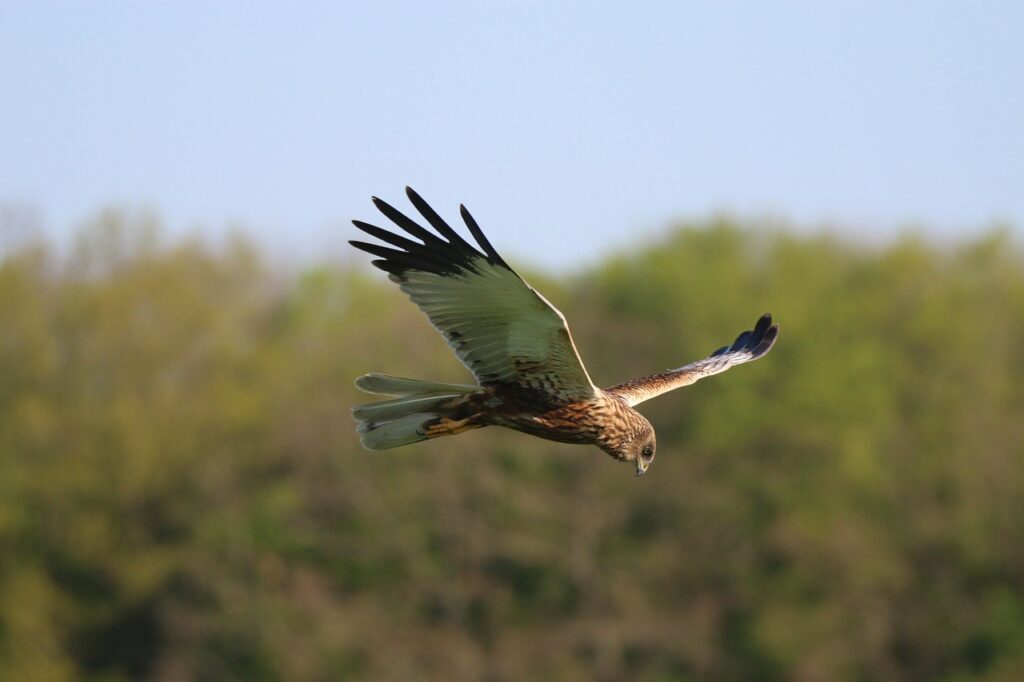
The Marsh Harrier creates a distinctive V-shape in the air by holding its wings up. Females are chocolate-brown with a golden-yellow crown and throat, whilst the male, which is what I can see, has a brown back, ginger belly, pale head and neck, and long, grey wings with black tips.
Once very rare, Marsh Harriers have begun to spread from their stronghold in East Anglia towards the south east and other parts of the country where reedbed habitat is found.
During the breeding season, males perform impressive courtship displays, wheeling at great heights and then diving towards the ground while performing a series of tumbles. Sometimes, the female will join him, and they will lock talons mid-air.
Today, it is a lone male who may be looking for food for this year’s chicks, which seemed to include taking dragonflies on the wing.
Having swooped and swirled through the air above the lake, he headed North, away from the lake, probably towards his nest site in Essex.
After spending several hours at the East Warwick lake, I packed up the kit. I walked around to the small land crossing that isn’t private land and onto the West Warwick before heading back towards the main entrance and up through the paddock alongside the River Lee and looking at the narrowboats before arriving at the Lockwood Reservoir.
The Lockwood is the largest of the reservoirs that form the Walthamstow wetlands. My walk took me past the Tottenham Marshes before heading around the top of the reservoir, where I didn’t see another person.
The Lockwood entrance is located approximately halfway along the return walk around the lake and features a wide path, making it very accessible.
I have found a good spot to settle down and watch for the Dragon and the damselfly.
Many people are uncertain of the difference between the two species. For me, Damselflies are delicate insects with eyes on each side of their rectangular head.
They have a fluttering flight, with the front and back pairs of wings of equal size. When the damselfly is resting, the wings are usually held closed.
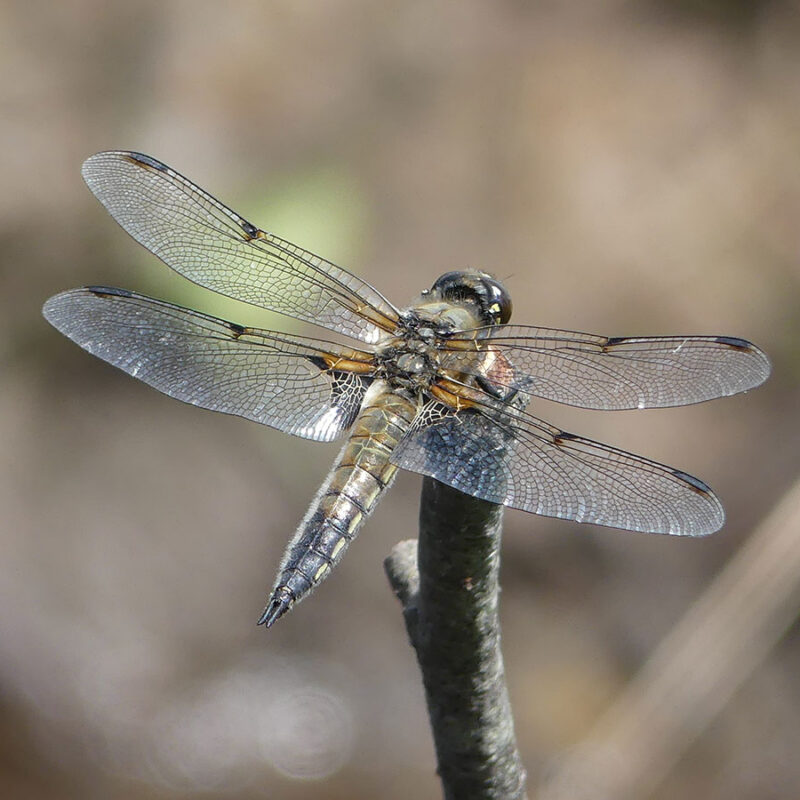
While Dragonflies tend to be the larger and heavier-built cousins, their eyes meet in the middle of their spherical head.
Their front wings are narrower than their hind wings, and when resting, both pairs are held wide open.
The main difference is that dragonflies are fast, as anyone who has tried to film a dragonfly in flight can attest. Some of the larger hawkers can fly at 15 metres a second, or the equivalent of around 30 miles per hour.
I once again find myself woefully underqualified to speak about Dragonflies and Dameselfflies, as my knowledge is general.
The local group has recorded 23 species of both dragon and damsel flies here at Walthamstow Wetlands, and thanks to a local’s tip-off, I am here and eagerly anticipating what we may see.
I heard a ‘plop’ sound at the water’s edge as something had slipped into the water. My first thought as I reached for the camera was a water vole. Still, I recall an earlier conversation with a regular who mentioned that, at present, water voles were not at the wetlands, but work was continuing on the River Lee, and once there, it would only be a small step for them to return.
As I watched, the incredible sight of a grass snake with its head up was swimming out into the lake. It had a graceful elegance as it propelled itself along the water’s surface in a wriggling, writhing motion, almost floating on the surface.
It must have been feeding in the reed bed, possibly on frogs, as there was a distinct bulge in its body, which was only a few centimetres from its mouth.
After the excitement of the grass snake, I settled down again and began to get my eye in, as they say, on the lookout for damsel and dragonflies.
After just a few moments, I spot a classic dameselfly, one that is a good indicator of clean water, the banded demoiselle.
The Banded Demoiselle is 42-45 mm long, with a wingspan of 60-65 mm.
Banded Demoiselle males have a metallic blue-green body, and their wings feature a broad band of dark bluish colouring in the outer third.
The females have a brilliant metallic green body, and their wings are tinted green. Each wing also has a tiny white spot near its tip. They have to go underwater to lay their eggs.
They can breathe whilst submerged, thanks to a trapped layer of air between their wings. The females can lay an egg every two to six seconds.
Damselflies look beautiful, but they are predators, catching other insects in flight when they are adults, and hunting them underwater as nymphs.
Banded Demoiselles have a graceful fluttering flight, similar to that of a butterfly. They are usually seen flying over freshwater or riverside vegetation with moderate to slow flow, often resting on beds of silt or mud, or perching on the waterside vegetation.
The Banded Demoiselle isn’t a rare species and can be found from the south coast to Lancashire and North Yorkshire.
Adults often fly from mid-May to September.
I mentioned the female lays her eggs underwater. The eggs take approximately two weeks to hatch, and the nymphs live underwater, among roots or aquatic vegetation, for around two years.
Once the nymphs have finished their development, they crawl up the stems of aquatic plants into the air, where they shed their skin and emerge as winged adults.
The next one I saw was the Common Blue Damselfly. The dark body and blue tip are distinctive. Still, like so many Dameselflies, there are some very similar look-alikes, which in this case take several colour forms. The abdomen can be pink (rufescens), lilac (violacea), or green (infuscans) when the damselfly first emerges, slowly turning to the blue of most mature adults.
To mix things up some more, there is a species called the Scarce Blue-tailed Damselfly; however, that species has not been recorded here at Walthamstow and as the name suggests, there are not too many around. It is also similar to the male Red-eyed Damselfly, which is larger and has reddish brown eyes.
The common Blue damselfly is regularly seen around England and Wales and is known to prefer lakes, slow-moving rivers, and streams. It can also be found away from a water source. Adults fly from late May until September.
The next species actually found me. They are known to be inquisitive, and I am certain this Southern Hawker came over to check me out.
The Hawker family contains the largest dragonflies in Europe and North America, as well as some of the largest dragonflies on the planet. Out of the 36 species of dragonfly that live in the UK, 12 belong to the Aeshnidae family.
The Southern Hawker dragonflies are up to 7 cm long and have a wingspan of up to 11cm. The males, which are what found me, are dark with bright blue and green markings, and have blue or greenish-blue eyes.
There have been males recorded that only have blue markings, but these are rare. The females are brown with bright green markings and have brown or yellow-green eyes.
Southern Hawkers can be found around ponds, canals, and lakes. They prefer non-acidic waters, often breeding in bodies of water lined with lots of vegetation.
The adults hunt well away from water and can be found searching for prey in woodlands located around the perimeters of the Walthamstow wetlands.
Adults can be seen in flight from June to October, and the males aggressively defend their hunting and breeding grounds against other males.
Once they have successfully mated, the females lay, or more correctly, oviposit their eggs on the edge of still or slow-flowing water, often in rotting wood or other vegetation.
Nymphs then hatch out of the egg and spend two to three years in the water developing into an adult.
During this time, the nymphs feed on small tadpoles, aquatic insects, and small fish. When they are ready, years later, the nymphs will climb up vegetation that protrudes from the water and shed their skin, which transforms the nymphs into adults and gives them their wings and final colouration. This often occurs from June to late July.
As an adult, the Southern Hawker dragonfly will feed on various flying insects, such as flies, mosquitoes, and midges, catching them mid-air using its expert flying skills and incredible eyesight.
Nymphs are aggressive predators that feed on midge and mosquito larvae, which helps to control their populations. They catch their prey by shooting out the entire bottom jaw and grabbing onto it.
My final spot for now is the largest dragonfly species in the UK. They are now a reasonably common sight in the south of England, but that doesn’t make them any less impressive.
Male emperor dragonflies are pale blue, with an apple-green thorax and a black stripe running the length of the body.
Females are similar, but they are a slightly matt greeny-blue colour. Both have green-blue eyes.
Emperors live up to their name by being the UK’s largest dragonfly. The Emperor is also one of the most territorial of all the hawk dragonflies.
They will emerge in late spring and fly almost continuously in the airspace above a body of water.
Their sheer size and their bright green and blue markings make them instantly recognisable, and in flight, the abdomen is often held in a drooping position.
Adults can be seen flying from June to August, often high above densely vegetated ponds, lakes, canals, ditches and even slow-flowing rivers.
Emperors are effective predators and are adept at catching and eating prey in flight.
Males can fly higher than any of the hawker dragonflies, aggressively chasing away any that enter their territory.
Like other dragonflies, Emperors have large eyes to spot prey, and powerful toothed jaws to grab victims in flight.
Their streamlined bodies are built for speed, and their four wings, capable of independent movement, enable flight in all directions, making the emperor a phenomenal predator.
They feed on insects, including butterflies and other smaller dragonflies and damselflies.
In addition to the slow-moving water of the reservoir at Walthamstow, one of the key factors for wildlife is the reedbeds that we have focused on today.
In nature, Reedbeds develop as young reeds colonise open water or wet ground. The reedbeds here at Walthamstow Wetlands have been planted; however, as reedbeds age, a litter layer builds up that can then be taken over by scrub or woodland.
They don’t generally grow in very acidic water, where bogs and fens replace them.
They are dominated by the common reed, Phragmites australis. The common reed forms extensive, yellow-brown reedbeds in wetlands across the UK.
These reedbeds are important habitats for birds, including the Marsh Harrier and Bearded Reedling, both of which we have seen here today. Common Reed grows from creeping rhizomes, which are underground stems and flowers from August to October.
Common Reed is the plant of British reed beds, and if you have ever looked at a reedbed, you will have seen this plant.
It is a tall plant with golden, hollow stems and has large, feathery flower spikes that appear dark purple but slowly fade to brown as the spikelets, which contain the flowers, develop bristles.
I mentioned that reedbeds, over time, can be colonised by scrub and succeed in becoming woodland if left alone. However, for many years, Reed has been cut and managed to produce reeds for thatching buildings. Continuing this form of management keeps the habitat intact, providing a home for specialist wildlife species..
Once common throughout the UK, reedbeds are now mostly confined to isolated coastal areas, with East Anglia being a hotspot.
The reedbed at WWT Arundel is designated a Site of Special Scientific Interest. Reedbeds are not only great habitats for wildlife species, but they are also efficient water filters, improving water quality and helping to clean some of the nitrates and other chemicals that leach into our waterbodies from industrial farms.
The other forms of reed most frequently seen are Great Reedmace (Typha latifolia):
Great reedmace, more commonly known as Bullrushes, is a familiar plant of freshwater margins, such as the edges of ponds, lakes, ditches and rivers.
They have an impressive stance, with long leaves and tall stems, which makes them stand out from other wetland plants.
But it’s the sausage-like flower heads that are unmistakable; these appear from June to August, but the plant persists through the winter, often dying back to a brownish colour from its usual green.
It’s also worth highlighting Club-rush, which is another plant species often found in wetland areas. The stout and tall common club-rush is an abundant plant of shallow water, including the margins of lakes, ponds, canals, slow-moving rivers and ditches.
It flowers from June to August, and, like other reed species, it spreads using rhizomes or underground stems.
Its straight, rounded stems are ideal for weaving, and it was regularly used to make baskets, seats and mats.
Mixed with scented herbs, it was also used to line the cold stone floors of churches and halls before carpets and floorboards became common.
Common club-rush has dark green, spiky stems that are rounded in cross-section. The stems bear loose flower heads with brown, egg-shaped spikelets, which contain the flowers.
There is ongoing work here at Walthamstow and in the wider Lee Valley to create habitat for water voles. Whilst you won’t find them in the area now, I have seen some of the projects and know the teams delivering the restoration of reedbeds and banks are confident the species will return.
You can still find other mammals in the reeds here at Walthamstow, and I have seen the tiny nest of one of the cutest small mammals, the stunning Harvest mouse.
I sit down, quiet as the ‘church mouse’ and wait to see if I can catch a glimpse, and Today, we are lucky enough to see this pale, ginger, yellow fur and just a glimpse of its white belly as it hangs from a reed by its almost hairless tail that is nearly as long as its body.
The harvest mouse is the only British mammal to have a prehensile tail; it can use it like a fifth limb, holding onto grass stems with it.
The tiny harvest mouse requires long tussocky grassland, reedbeds, hedgerows, farmland, and around woodland edges to survive. With the decline of these habitats, the Harvest mouse has also experienced a rapid decline.
They mainly eat seeds, fruits and berries but will also eat invertebrates.
Harvest mice build a distinctive spherical nest of tightly woven grass, which I observed high up in the tall grasses. In this nest, the female gives birth to around six young.
The other small mammal that can be found in most reedbeds is the water shrew.
You don’t think of shrews as being large, and I guess they aren’t, but the water shrew is the largest of Britain’s shrews.
They have a long pointed snout, small ears, and tiny eyes. The fur is jet black, short, and dense, with a velvety texture on the upper surface of the body, and usually greyish-white or yellowish underneath.
Most have a tuft of white hairs on their ears and white hairs around their eyes. Distinctive stiff white hairs on the margins of the feet and the underside of the tail form a keel.
Their primary food source is freshwater shrimps, water skaters and caddis larvae, which they obtain by diving and hunting underwater. Occasionally, frogs, newts and small fish are eaten. They also feed on many terrestrial invertebrates such as earthworms, snails and beetles.
The water shrew is most unusual amongst mammals in possessing venomous saliva. A mild toxin secreted into the saliva in the mouth helps to stun the prey.
It is relatively powerful, so humans can feel the effects of this if bitten by a water shrew. Even though the shrew’s bite rarely punctures the skin, a red rash appears at the site of the bite, which is sore to the touch.
Water shrews do not hibernate; they remain active throughout the year, diving for aquatic prey even in midwinter. The fur is denser than in other shrews, efficiently insulating them against cold and wet.
Water shrews are generally solitary, each maintaining its territory, although they frequently live in close proximity to each other in a favoured area of streambank.
They breed throughout the summer, producing two to three litters, each with 3-15 young, between April and September.
Females produce their young in a nest woven from dry grass, usually in a burrow or under a log.
After breeding, the adults die off and the young shrews carry the population through the winter before becoming sexually mature the following spring, ready to breed in the summer following their birth.
Water shrews are rarely abundant, and it is challenging to determine if their populations are under threat. They are still numerous in many sites where long-term studies have been conducted.
The likely reasons for any decline in their numbers are habitat loss and water pollution.
They are very vulnerable to pollutants and pesticides in the water, which they ingest indirectly via their prey and directly through their grooming activities.
As I start to pack away my camera and equipment, I hear a sound that makes me stop. I quickly hit the record button on the Zoom Audio recorder and scoured the reedbeds with my binoculars.
Nothing, I sat down, still as a statue, and slowly scanned the reedbeds from where the sound was coming. I have heard this sound before on several occasions, but I have never been able to get a picture or even catch a glimpse of the elusive source of the sound —the mysterious and elusive Bittern.
Bitterns are a rare and shy heron species that are currently listed as Amber on the UK’s endangered species list. Incredibly, they are here, and I hope they are thriving in London.
The bittern spends almost all its time hidden away in large reedbeds, where it feeds on eels and other fish.
It has wonderfully camouflaged plumage, which helps it blend into the reeds. It can also stand motionless for long periods to avoid detection.
During the breeding season, the male bittern ‘booms’, producing a deep, foghorn-like sound that can be heard up to two miles away, primarily at night.
This wasn’t the ‘boom’ call, but the Bittern was calling to another, which means there must be at least one pair here.
Despite spending another hour in silence, hoping to see the Bittern, today was not my day. After not hearing it for a long time, I packed up my kit and walked back to the main entrance towards the Blackhorse Road station, and my journey home after an incredible wild day spent in the heart of the capital.
Thank you, Walthamstow Wetlands; you are a special place, and somewhere I will return to visit many more times.
If you enjoyed this blog, please check out more of our wildlife blogs here, or you may prefer to listen to the Wildlife Matters Podcast here.
If you want to support our work
Please click on the Wildlife Matters Patreon Community.
Please click to join the Wildlife Matters Substack Community.
You can donate here.
Further Reading
London Wildlife Trust Walthamstow Wetlands