Join Wildlife Matters as we explore some of Scotland’s Secret wildlife and nature areas, starting with the stunningly beautiful Ness Glen in Ayrshire
Our day starts at the dam on the north side of Loch Doon, where the River Doon flows out and winds south through one of Ayrshire’s most beautiful gorges.
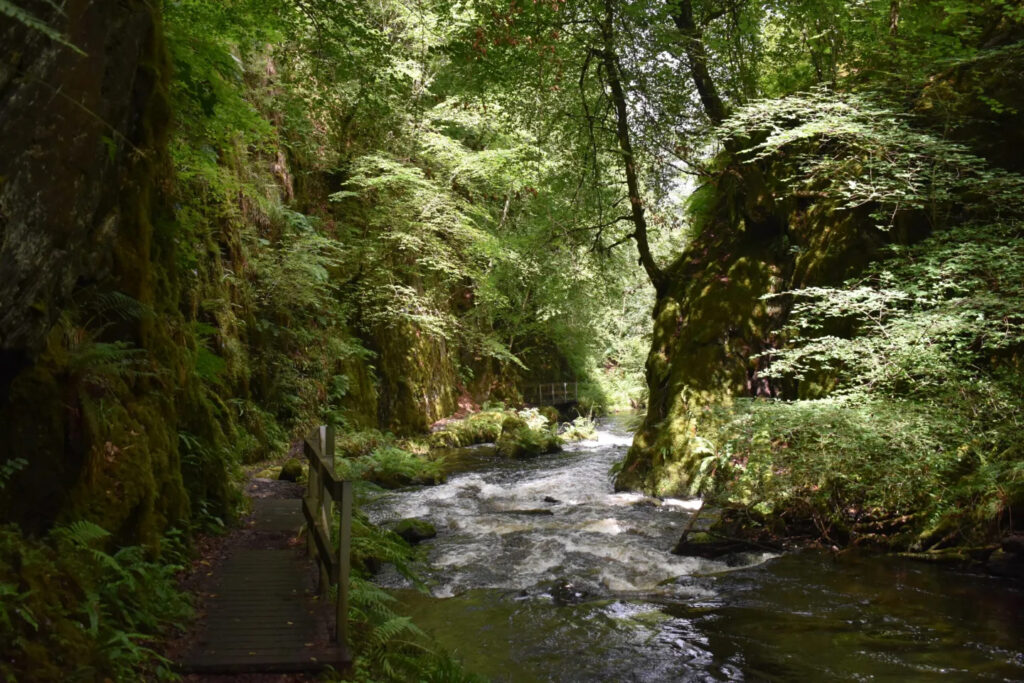
The Ness Glen Walk stays close to the river, following the base of the gorge and sometimes rising onto wooden walkways when needed.
The path dates back to Victorian times, when exploring wild gorges was a popular pastime. It still has a timeless feel, far from the busy modern world.
As you start, watch the lower slopes of Craiglee Hill for buzzards, ravens, and merlins, which are often seen here as they go about their day.
The gorge is truly spectacular. Cliffs covered in moss rise on both sides, and the River Doon rushes quickly and sometimes wildly below, which is a striking change from the calm water behind the dam.
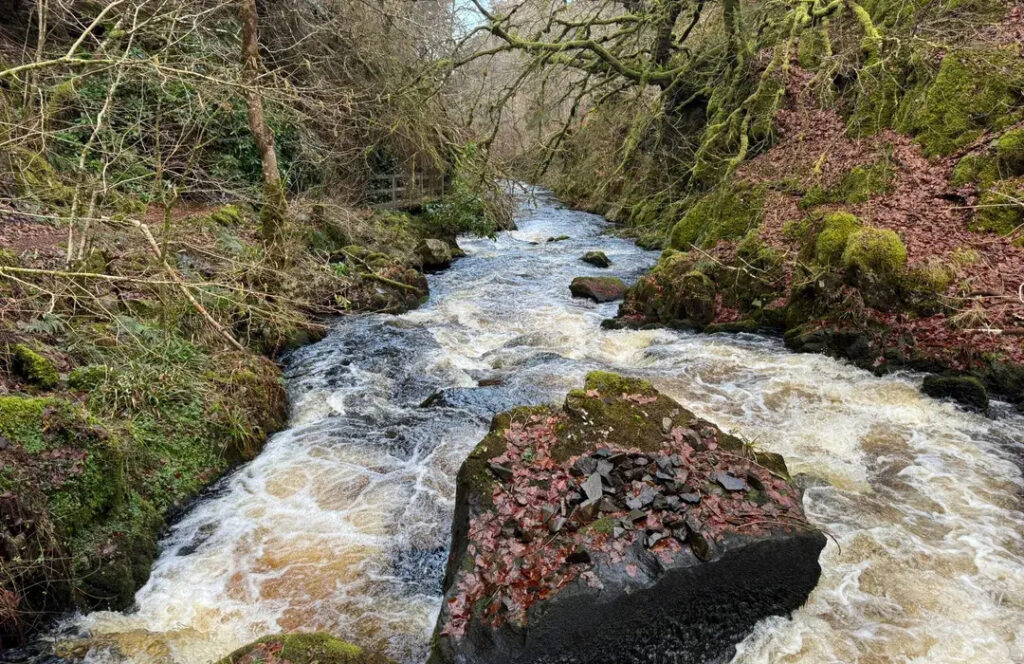
You’ll hear the waterfalls before you see them, their roar growing through the trees, and they alone make the walk worthwhile.
Thanks to volunteers, the path is in great shape, with footbridges, benches, and signs that help people enjoy the route while keeping its wild feel.
As you walk, look closely for ferns growing on the rocks, fungi appearing in the leaf litter, and if you’re quiet, you might even spot otters along the riverbank.
At the lower end of the gorge, you’ll find both a footbridge and a road bridge, giving you a choice.
You can walk back along the river, which is always enjoyable, or cross over and take the return path through the pine forest above the gorge, which is the route we’re taking today.
This higher path gives you wide views of the landscape that you can’t see from the valley floor.
Along the way, a track leads toward the Scottish Dark Sky Observatory, or at least where it used to be.
The observatory was badly damaged by fire in 2021 and will not reopen here. There are plans to rebuild it at Clatteringshaws Reservoir in Galloway National Park.
If you enjoy stargazing, that area is truly special. I’ve spent several nights at Clatteringshaws, and it’s an experience that’s hard to describe.
Ness Glen is a Site of Special Scientific Interest, mainly because of the amazing variety of mosses, lichens, and ferns along the gorge walls.
More than 162 species of moss grow in the damp microclimate here, which is more common in the north-west Highlands. It’s easily one of the most underrated wildlife walks in southern Scotland.
This walk is suitable for all ages and abilities, and it’s rewarding year-round.
Each visit brings something new, a different light, new wildlife, and changing moods. For now, it’s still a hidden gem
So join me as we discover Ness Glen and some of the incredible wildlife that calls this incredible gorge and woodland home
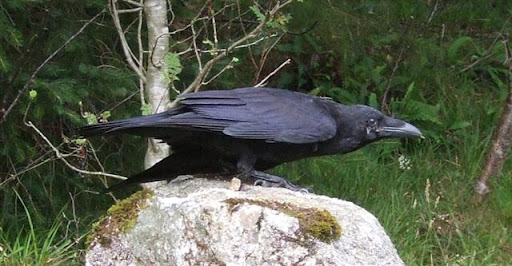
Ravens are some of my favourite wild animals. There’s something almost magical about them. Their large size, shiny feathers that flash green and blue in the light, dark eyes that seem to notice everything, and strong black beak all make them stand out. Their intelligence makes them even more fascinating.
I liked them so much that I named my campervan after them. Raven has taken me to nearly every part of the UK over the past four years, so it feels right to be here with these birds on a grey November morning.
There are many more ravens in Ayrshire now than in the 1980s, and they have spread into lowland and even city areas. This comeback is mostly thanks to less persecution and the raven’s ability to adapt to different nesting places.
Local wildlife experts think there are now about 200 to 250 pairs of ravens in Ayrshire, which is great news for anyone who loves these birds. Today, their deep ‘gronking’ calls were almost always in the air, adding a rich, moody soundtrack to my walk.
Besides ravens, the skies above Loch Doon are full of raptors. Buzzards, which are the most common bird of prey in Scotland and are seen all year in Ayrshire, stand out today.
As I walk by, three buzzards sit calmly on fence posts, while others glide easily on the warm air above the loch and the woods below.
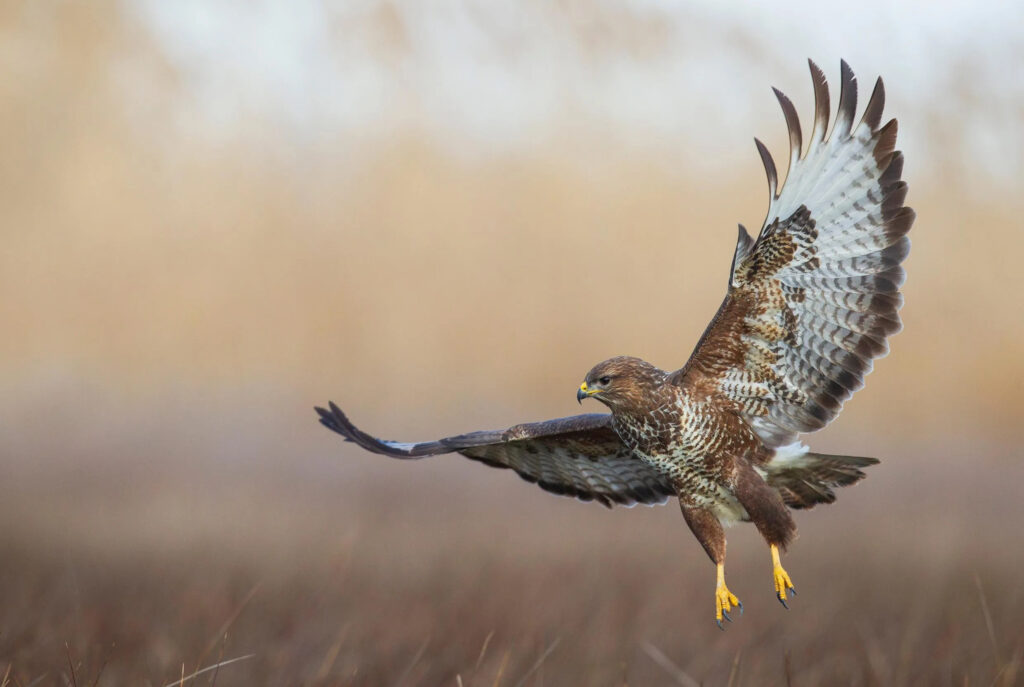
Buzzards are some of the most adaptable birds you’ll find. They live just as comfortably in highland glens, thick woods, open moors, and even near cities. You can spot them almost anywhere in Scotland.
Buzzards can look quite different from one another. Their feathers range from pale to dark brown, often with white spots. But you can always recognise them by their mewing call and the V-shape of their wings when they fly.
Some of my local wildlife friends have a saying: “It’s just a buzzard.” They tell me they appreciate Buzzards but because they’re everywhere, buzzards are often confused with golden eagles, especially in the Highlands, where they tell me they affectionately call them ‘the tourists eagle”
If you’re not used to spotting birds, buzzards and golden eagles can look quite similar. Buzzards are large birds, with wingspans of about 1 metre, sometimes a bit more. Golden eagles, though, can have wingspans up to 2 metres, and you can really notice that difference when you see them, even from the ground.
Buzzards may be everywhere in Ayrshire, but they are always special to me. They are the first wild bird of prey I ever saw, and a buzzard was the first raptor I took a picture of, and I still remember that moment clearly.
I spent many hours outside practising my skills, with buzzards as my teachers, even if they didn’t know it.
Watching them closely and learning about them really solidified my love for raptors, so to me, they’ll always be more than “just a buzzard”.
Buzzards are one of the UK’s biggest conservation success stories. Their numbers have grown from about 1,000 breeding pairs to around 70,000 today.
They have been recorded soaring over 1,000 metres high and flying horizontally at around 40km/h.
They hunt when they get the chance, going after rabbits, voles, small birds, and frogs. They are just as happy to scavenge carrion whenever they find it.
Perhaps the most surprising part of their diet may be the earthworm which they will seek out along with beetles and other small invertebrates, worms make up a surprisingly large part of what a buzzard eats each day. This is not what you might expect from such a large bird of prey
Besides their diet, one of my favourite things about buzzards is their call. The mewing cry sounds almost like a cat, plaintive, far-reaching, and deeply tied to the feeling of open countryside.
Once you know that sound belongs to a buzzard, you start to notice how often they are around, circling quietly overhead in places you might not expect.
One of the best things about coming to Scotland from southern England is seeing the coniferous forests. We have small patches at home, but nothing as large as these vast plantations that feel like a completely different world.
These forests have their own special residents. Crossbills and goldcrests are some of the most distinctive, with their bright flashes of red and gold standing out in the dim, resin-scented shade under the trees.
My friends at Ayrshire Birding assure me that both species are present in Glen Ness, rewarding patient observers with memorable sightings. So I find myself sitting on an old tree stump, waiting.
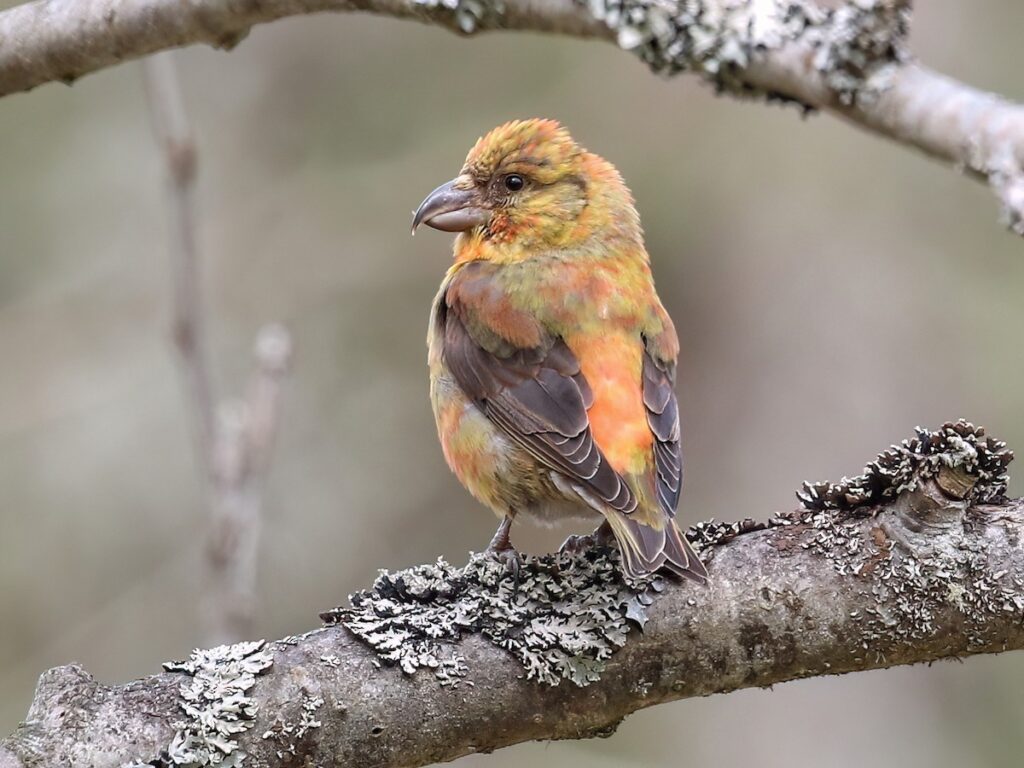
Crossbills are stocky, medium-sized finches roughly 14–20 cm in length. They are a type of finch whose beaks have evolved to overlap, making them perfect for prying seeds from pine cones.
They appear restless and noisy, always moving through the upper branches in small, active flocks.
As so often happens in birding, I hear them before I see them. Their call is a sharp, repeated ‘Yip, Yip, Yip’; it’s not especially loud, but crisp enough to carry a remarkable distance through the plantation.
I scan the treetops, looking for any movement among the branches. Suddenly, there they are: a small, restless flock, calling nonstop as they move through the canopy.
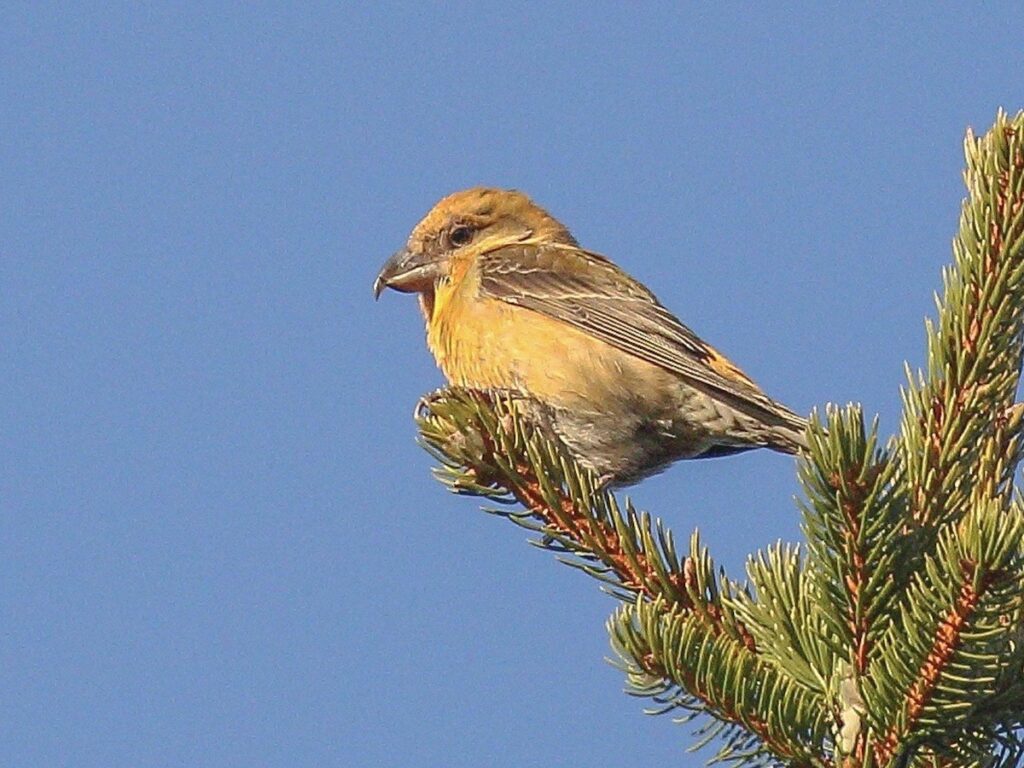
While I waited, I also got to see another of the forest’s tiny residents: the goldcrest.
The goldcrest is Britain’s smallest bird, and its size is almost hard to believe. A fully grown adult weighs just 5 to 6 grams, about the same as a 20 pence coin.
In Ayrshire, goldcrests are common and easy to find, especially in coniferous woodland. Ness Glen is one of the best spots to see them.
With their delicate olive-green feathers and bright, fiery crests, they were once called the golden crested wren.
Beyond Britain, their range is even more impressive. The goldcrest is the smallest bird in the whole western Palearctic, living across much of Europe, though it is rare in the far south.
The goldcrest’s migratory behaviour makes it even more remarkable. Even though they are so light, huge numbers travel from Scandinavia and nearby parts of Europe every autumn.
They arrive on Britain’s east coast from late August to early November, then leave the next spring again.
Early ornithologists found it hard to believe that such a tiny bird could cross the North Sea on its own.
Many thought goldcrests rode on the backs of migrating woodcock or short-eared owls. This idea was so common that the goldcrest earned the old-country nickname “woodcock pilot.”
By the time they reach our shores, these tiny travellers are often exhausted, pushed to the very limits of their endurance by the crossing.
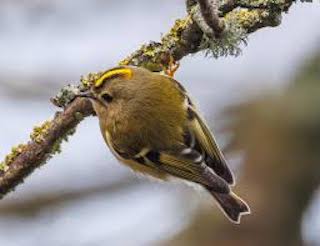
I’ve been told stories of newly arrived goldcrests sometimes being so exhausted that they will land right on a person, too tired to notice any danger. For a bird that is usually just a quick flash of movement high in the trees, this is one of nature’s most intimate and surprising encounters.
The number of goldcrests arriving in autumn can be staggering. Records show that in October 1982, at least 15,000 goldcrests landed on the Isle of May in a single event. This remarkable sight shows just how large these migrations can be.
Unlike their Continental relatives, goldcrests that breed in Britain usually stay close to the woodlands where they were born. Because they are so small, they are rarely found dead in the wild. Of the ringed birds that have been recovered, most were caught by cats.
When feeding, goldcrests move carefully toward the tips of branches and up into the treetops. They often hover in front of spider webs to pick out whatever is inside. Although they eat mostly insects, spiders are especially important in their diet, which makes their nest-building habits quite clever.
Even though they are usually quiet in the treetops, the male’s song is surprisingly strong. It is a high, silvery sound that carries well and is one of the best ways to find a goldcrest.
You can hear it from late winter through midsummer, almost always present in coniferous woods.
The nest is a tiny masterpiece, shaped like a neat, round cup woven from lichens, cobwebs, moss, and hair. It hangs delicately among the twigs at the end of a conifer branch.
In this small cradle, the female lays 9 to 11 eggs, which hatch in about 16 days.
Most pairs are remarkably industrious, raising two overlapping broods each spring.
The female starts incubating her second clutch before the first chicks have even left the nest. At that point, the male takes over feeding the older brood. This smooth handover shows just how quietly efficient these tiny birds are.
It is a reminder that survival, for the smallest bird in Britain, demands nothing less than constant effort.
If the goldcrest lives in the canopy, the red squirrel makes its home on the woodland floor and in the mid-storey.
Ness Glen offers both habitats. For someone from the south of England, where red squirrels are hardly ever seen, spotting so many here is always exciting.
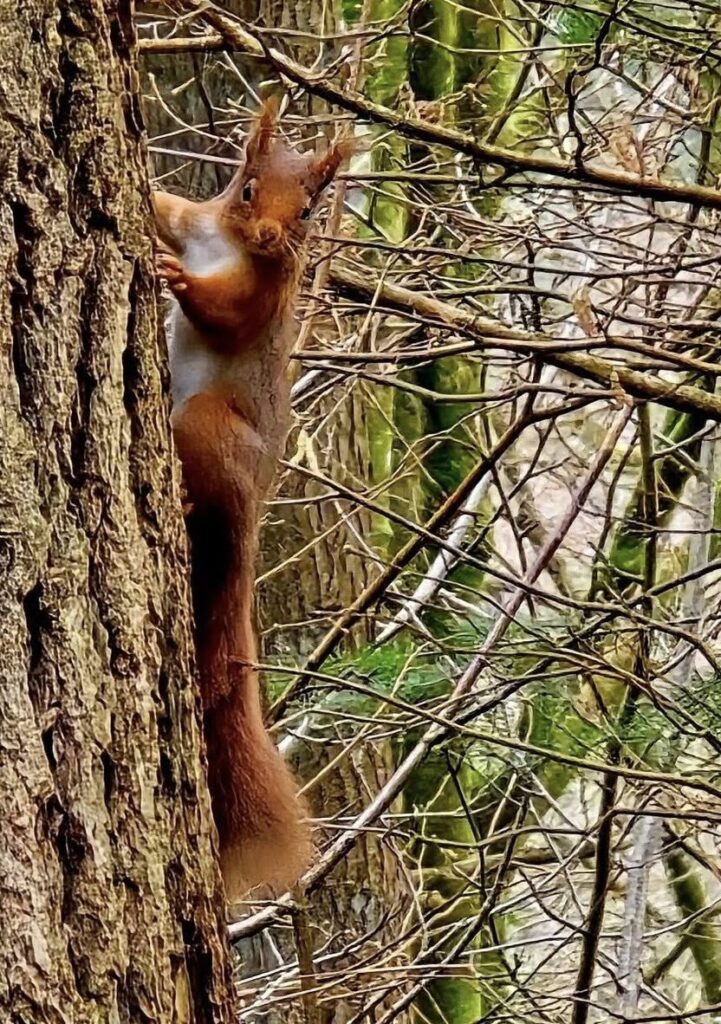
Unlike many woodland mammals, red squirrels do not hibernate and stay active all year.
By November, they are especially busy, frantically building up fat reserves and hiding food in dozens of secret spots around their territory. When winter sets in and the forest falls silent, these hidden stores help them survive.
Scotland is the main home of the red squirrel in Britain. While they live in many types of woodland, they truly thrive in the large conifer forests of the Highlands and in the south-west, including Ayrshire and Dumfries and Galloway.
The red squirrel is smaller and more delicate than the grey squirrel, and it is truly a beautiful animal. Its russet coat, distinctive ear tufts, and a bushy tail as long as its body make it stand out.
Even when the squirrels are out of sight, the forest reveals their presence. High in the canopy, you can spot large, messy dreys, which are nests made from twigs and leaves and often tucked into the fork of a branch.
Lower down, scratch marks on the bark and neatly stripped pine cones, scattered on the forest floor and resembling an apple eaten to the core, are clear signs that a squirrel has been busy. Once you notice these clues, the woodland feels alive in a whole new way.
Scotland is now the last real stronghold for Britain’s red squirrels, but even here their place in the landscape is uncertain.
Fewer than 150,000 remain across the country, which is a sobering number for an animal so closely tied to our image of native woodlands.
Red squirrels eat a wider variety of foods than many people think. Seeds are their main food, especially those from pine, spruce, and larch cones.
One squirrel can get through up to 20,000 cones in a year.
They also eat nuts, fungi, shoots, fruits from shrubs and trees, and sometimes even birds’ eggs.
One of the most impressive things about red squirrels is how selective they are.
They can tell if a nut is worth eating just by shaking it in their paws, sensing if the kernel inside is hollow or rotten before they bother to crack it open.
In autumn, you might see fungi wedged high in the forks of branches. Squirrels leave them there to dry out before adding them to their winter stores with seeds and nuts.
Red squirrels are active during the day, especially just after sunrise and before sunset. Like people, they prefer to stay sheltered during heavy rain or strong winds, so your best chance to see one is on a calm, dry morning.
The future for red squirrels is complicated. One reason is the return of another well-known Scottish woodland animal: the pine marten.
Last winter, I was lucky enough to spend a night watching pine martens. That experience has stayed with me ever since.
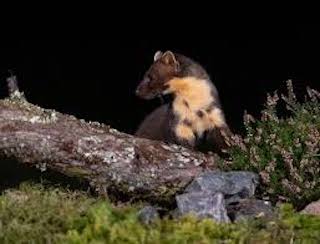
These animals are rare, roam over large areas, and are mostly active at night, making them some of the hardest mammals to spot in Britain.
If you want to try your luck, the woodlands of south-west Scotland, especially the forests around Loch Doon, are a good place to start.
People say that seeing a pine marten brings good luck, and since it happens so rarely, that seems fitting.
The good news is that their numbers are slowly but surely increasing as their recovery quietly continues in the forest.
A pine marten is about the same size as a domestic cat, but it is much more flexible and quicker.
It is part of the mustelid family, which also includes animals like the weasel, stoat, polecat, badger, and otter.
Pine martens stand out with their thick, dark brown fur, a bold cream patch on their throat and chest, rounded ears, and a long, bushy tail that helps them balance in the trees.
Pine martens usually live alone and only meet up in the summer to breed. As their name suggests, they prefer pine forests, where they make their homes in tree holes and hollow logs.
They are very territorial, and one animal might defend an area of up to 25 square kilometres.
Pine martens eat a wide variety of foods. They mainly hunt small mammals such as voles and mice, and sometimes squirrels, but they also eat small birds, eggs, insects, berries, and nuts.
Pine martens like peanuts and sometimes visit wildlife feeding stations, giving patient watchers a good chance to see them.
Their hunting skill comes from their amazing agility in the trees.
With semi-retractable claws, they can grip branches better than most predators, and they can leap up to four meters between branches. It is an incredible sight if you ever get to see it.
Interestingly, although a predator of squirrels, pine martens actually help protect populations of endangered red squirrels because they find grey squirrels easier to catch than reds.
What a day to remember. Ness Glen offered up every wonder we wished for: ravens gliding over Craiglee Hill, crossbills darting through the treetops, and a red squirrel poised in perfect stillness on a branch.
Tomorrow, our attention turns to Loch Doon itself. This vast freshwater loch in southern Scotland holds stories waiting to be discovered.
In summer, visitors flock here for the ospreys, but by November, with the crowds gone and the land stripped bare, the loch reveals its wild, untamed spirit.
We will wander the loch’s shoreline, lose ourselves in its forests, and uncover the secrets of the ruined castle by the water. For now, the day draws to a close.
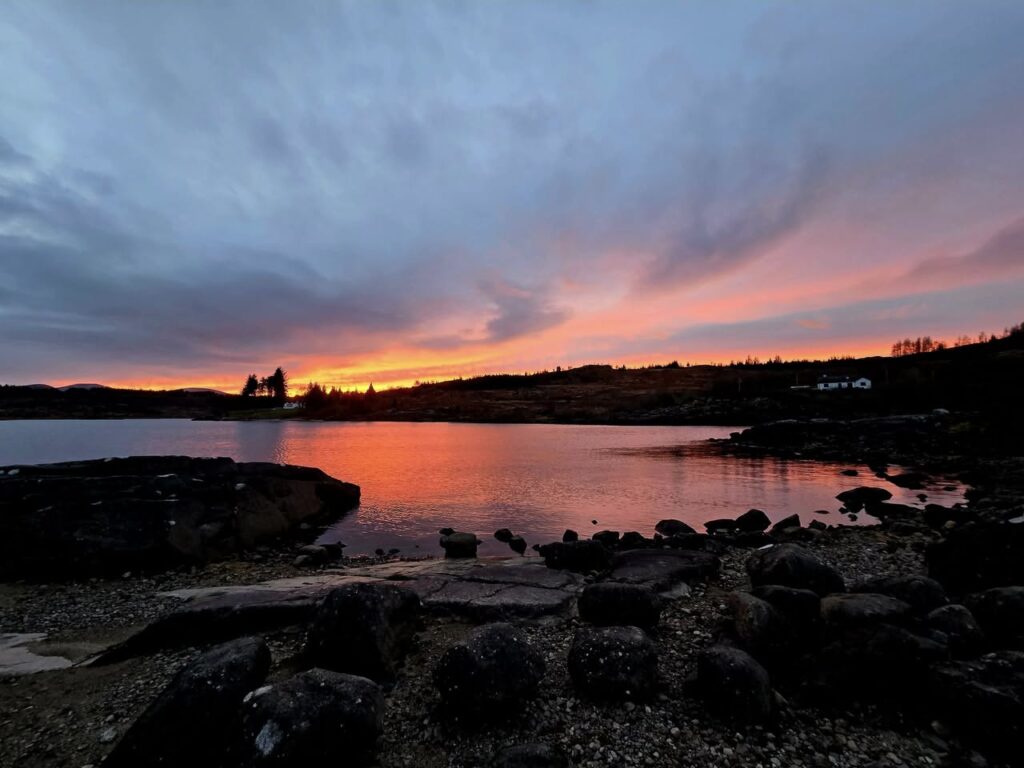
Tonight, just three of us share the quiet campsite. I watch as the moon paints a silver trail across the loch on this crisp November night.
The forest stands utterly silent, and I realise there are few places in Britain I would rather be.
Tomorrow cannot come soon enough.
If you enjoyed this blog, please check out more of our wildlife blogs here, or you may prefer to listen to the Wildlife Matters Podcast here.
If you want to support our work
Please click on the Wildlife Matters Patreon Community.
Please click to join the Wildlife Matters Substack Community.
You can donate here.
Further Reading