

This week’s Wildlife Matters Investigates looks at Cub Hunting, Autumn Hunting, and Hound Exercise—they are all the same cruel thing.
Autumn Hunting is often referred to by hunters as ‘gentle training’ and is classified as suitable for younger members, meaning that children from the Pony Club can attend.
So what is Autumn Hunting?
Autumn Hunting, also called ‘Hound exercise’ as the Hunts now refer to it, was previously known, perhaps more honestly, as Cub Hunting. Hunting takes place ‘when the harvest allows’. It generally runs throughout September and October and will start from ‘first light’ at around 6 am. The “Meets”, as the hunts refer to them, are held early in the morning as the scent of the foxes is fresh and more accessible for the young hounds to pick up.
Hounds are trained on the scent of fox urine, which quickly evaporates in the sun’s warmth. ‘Meets’ are sometimes held in the evening when the scent is more accessible to pick up again. Hound packs will be significant. Most of the hounds will be youngsters trying to make the grade but will include a few experienced hounds to lead the way. Hunt claims, “Hounds are ‘best-trained’ by killing many foxes”. “The hounds need to know to smell, look and taste ‘Charley”. Charley is a hunter’s name for the fox.
During September and October, Fox Cubs are preparing to leave their parents. Although these cubs resemble adults in size, they are still babies and very curious and playful. During the day, a Vixen will ‘hideout’ with her cubs undercover, often in thickets and copses. Farmers and Gamekeepers are asked to tell the Hunt where the foxes are hiding.
Mounted hunt riders and supporters on foot will surround a thicket or copse in a large circle, known as ‘holding up’. The vixen will be aware of the activity but will not bolt because she has cubs. Anywhere a fox may live is called a covert (pronounced with a silent ’t’). The hounds will be entered into the covert, often in complete silence from the Hunt.
During a traditional fox hunt, a pack of 30 to 40 hounds is released to track the scent of a fox. If a young fox tries to escape, the hunters will make loud noises by banging their saddles, cracking their whips and shouting “aye, aye, aye” to scare the fox back towards the waiting hounds. This process is repeated until the hounds catch and attack the fox and its family.
Every so often, a brave Fox will ‘bolt’ through “the wall of noise’ from the encircled hunt. These are known as ‘good foxes’ and are left to provide a ‘good run’ in the hunting season. This horrific scene is repeated as many times as possible. A hunt will last three to four hours, but they will be hunting for up to six hours in October. These ‘Meets’ are held up to four times each week, but not on Sundays.
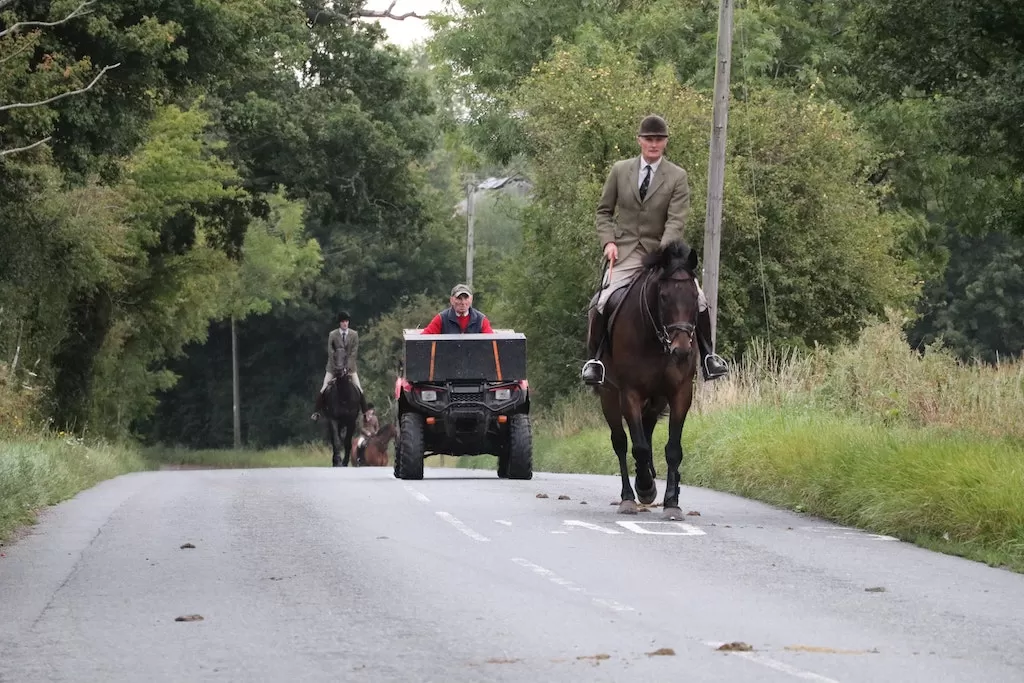
Since the Hunting Act of 2005 came into effect, hunts have changed the name of their activity from ‘cubbing’ to ‘hound exercise’. They claim that it is an essential part of preparing their horses, hounds and the surrounding area for the upcoming hunting season, which usually starts in early November. During the ‘hound exercise’, hunts do not wear their traditional hunting attire, known as ‘hunting pinks’. Instead, most riders wear beige riding jodhpurs with blue or black jackets and caps, while some prefer grey or tweed jackets.
Whatever name the hunt cares to use, Cubbing, Autumn Hunting and Hound exercise – they are all illegal under the 2005 Hunting Act. And yet, at the time of writing, 18 years after the ban, hunts are still training hounds on fox scent, leading to the ‘the inevitable accidents that frequently occur during most ‘meets’ during the hunting season. An ‘accident’ is when the hounds ‘accidentally’ chase and kill a live fox, supposedly following a pre-laid scent whilst Trail Hunting.
Since the introduction of the Hunting Act, it is clear that many hunts have blatantly defied the law and have continued to hunt foxes. Wildlife Matters believes this must change and wants to see a strengthening of the Hunting Act, Enforcement of the act and stronger sentencing.
Cubbing is described in an extract from Fox Hunting by the late Duke of Beaufort, Master of the Fox Hounds, published by David & Charles in 1980.
“Early in the morning a Hunt of mounted riders quietly surrounds a thicket they know to contain a family of foxes. The female fox or vixen hears the movement but will not leave her cover as she has cubs to protect. The huntsmen surround the thicket, they slap their saddles, holler, and shout to prevent the fox and her cubs from leaving the thicket. They want to have their fun”
“The hounds are sent in and the vixen comes out to protect her cubs, young fox cubs do not have the skills and knowledge of their parents, they are playful and trusting and unlikely to flee danger. Their inquisitive nature ensures they investigate anything new”.

The registered Hunting packs are estimated to kill some 21,000 – 25,000 foxes annually. That is an irresponsible number of accidents for anyone to have! It’s estimated that around 10,000 fox cubs, all babies and under six months old, are killed in the autumn/cubbing hunting season. Of course, cub hunting is illegal under the Hunting Act of 2005.
In Wales and other upland areas, a high proportion of foxes are dug out by terrier men or flushed using dogs; the lucky ones are shot. Many times, they are kept and thrown just in front of the baying hounds, where they are unceremoniously ripped to pieces. Outside of the registered packs, many more foxes are hunted. They are flushed, dug out, shot, or chased by lurchers or other “long dogs.” Farmers, landowners, and gamekeepers carry out some of these activities.
The depravity of those people who actively hunt foxes for nothing more than their pleasure is difficult to understand or explain. So, here is how a hunter explained cubbing
“Never lose sight of the fact that one really well-beaten cub killed fair and square is worth half a dozen fresh ones killed the moment they are found without hounds having to set themselves to the task. It is essential that hounds should have their blood up and learn to be savage with their fox before he is killed.”
That mindset concerns me. Where would it stop? Could women be seen as a chase and conquest? What happens if she is interested – I hope this never happens to anyone. We need to stand together to ensure this barbaric, cruel, and utterly senseless murder of sentient wild animals is effectively stopped and that those who abuse wild animals and defy the laws of the Country are brought to justice.
Wildlife Matters continues to work and dedicate our resources to ending the hunting of wild animals with packs of dogs forever.
If you enjoyed this blog, please check out more of our wildlife blogs here, or you may prefer to listen to the Wildlife Matters Podcast here.
If you want to support our work
Please click on the Wildlife Matters Patreon Community.
Please click to join the Wildlife Matters Substack Community.
You can donate here.
Further Reading
Autumn Hunting – Sir Brian May’s Save Me Trust