
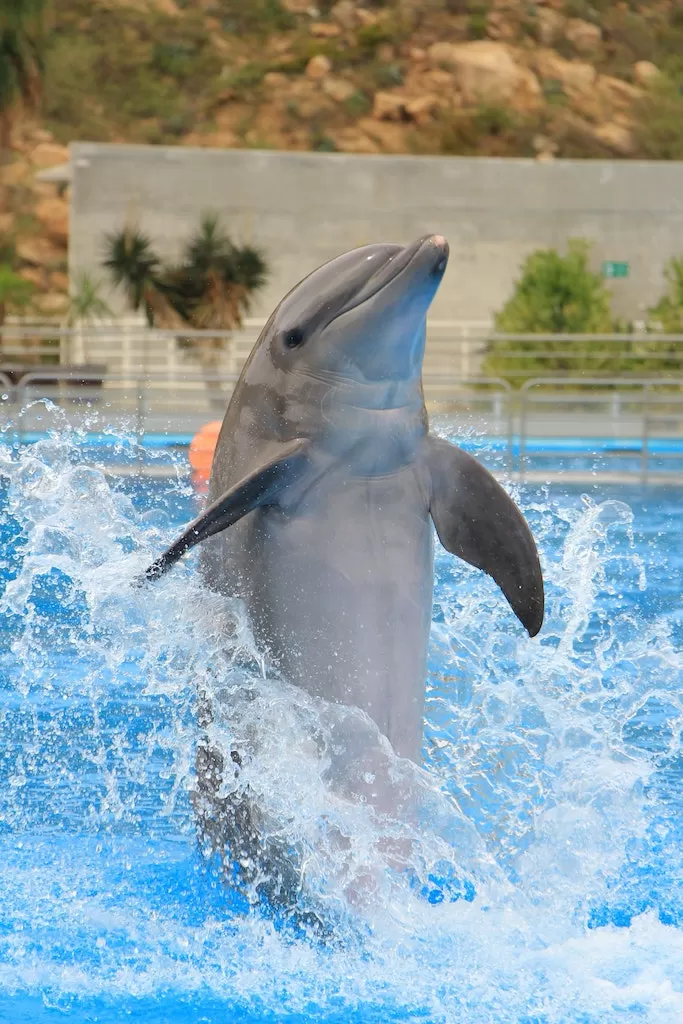
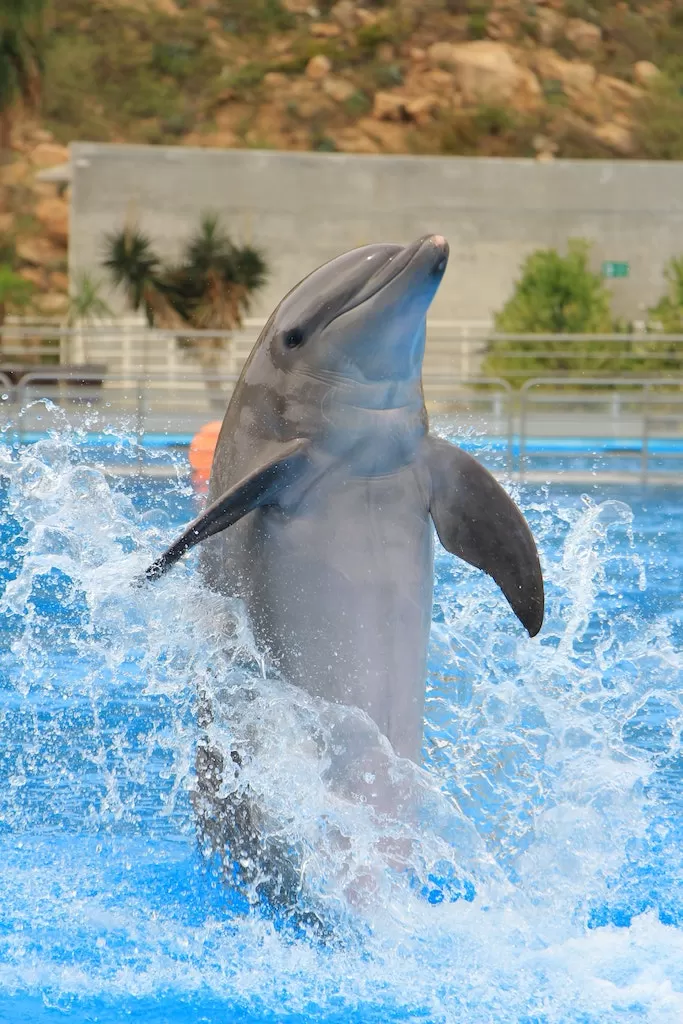
In this article, Prison Grove, Wildlife Matters Investigates the reality for captive dolphins. We know the feeling: when you see Dolphins interacting with each other, you feel empathy for these highly sentient, incredible animals. So what’s wrong with SeaWorld and the many other Dolphinariums worldwide keeping Dolphins in captivity?
If you haven’t already, take a look at the film Blackfish. Link here This film exposed the plight of orcas at SeaWorld, it is a distressing and gritty look behind the scenes at the reality of keeping animals captive purely for human entertainment.
What happens when the show is over, and the audience is gone? Answer – NOTHING. Most dolphins are left to languish in their caged tanks, forced to wait for food until the next showtime.
Keeping dolphins captive for entertainment purposes is morally unacceptable, as they are highly intelligent and highly sensitive beings who should be recognized as “non-human persons” with their own specific rights.
We want to see the implementation of animal rights to protect these and other sentient beings from the hell of captivity. We support Steve Wise of the Non-human animal rights project who works for the recognition and protection of fundamental rights for nonhuman animals. Steve’s film ‘Uncaged’ shows the legal path he has been following here
Orcas are dolphins, Spanish seaman named them ‘whale killers’ after seeing the pods tracking and killing whales, but over time or translation to English, they became known as ‘killer whales’; dolphins alongside whales belong to the classification, cetacean. They have the second-largest brain of all marine mammals, and they are at the top of the food chain interconnecting the whole marine system. They are vital to the biodiversity of the world’s oceans.
These animals are incredibly intelligent “Dolphins are sentient, meaning self-aware, and can recognise themselves in a mirror. Dolphins use a complex system of echolocation to navigate their surroundings and hunt their prey, bouncing high-pitched sounds off objects, and listening for the returning echoes. Their diet consists of fish, squid, and crustaceans.
Dolphins give birth to live young and nurse their calves from 11 months to 2 years. Family members will often remain together for life. Orcas are the most social mammal on Earth. They live in groups, known as pods, for their entire lives. Pods are made up of multiple generations, female orcas will never leave their mother, other than for mating, but they will always return. Each group will have their call, as well as its own habitat and prey species differing from the other orca groups.
Another adaptation in dolphins that highlights their incredible abilities is “unlike humans, dolphins are conscious breathers, choosing when and how to take a breath. To prevent drowning while asleep, only half of the dolphin’s brain shuts down while the other half remains awake.” They also “communicate via the use of several sounds, including clicks, whistles, and squeaks. Studies have also shown that individual dolphins have a unique “signature whistle” which they often use when communicating with others. It is also believed that dolphins respond to the sound of their signature whistle”
It has been discovered that some institutes, such as the military, use dolphins, also known as ‘combat dolphins’, for communication purposes. National Geographic reported that naval teams consider dolphins to be a highly valuable asset. The Navy of Russia has stated that dolphins are trained to search for unwanted divers and underwater mines in restricted waterways. Dolphins have a unique ability to reach depths and travel in murky water, which technology cannot replicate. Their sonar allows them to pick up sounds that are undetectable by humans or technology. The sounds bounce off objects, creating an acoustic picture of their surroundings, which is known as echolocation. The U.S. Navy, along with other Naval groups, use dolphins to find unarmed test ordnance like practice mines, as reported by National Geographic.
The confinement of these highly intelligent beings began in the 1960s, solely for the purpose of human amusement and financial gain. This industry has since expanded to include dolphin-assisted therapy, petting pools, swimming encounters, and primarily, SeaWorld.
The captive environment has devastating effects upon their welfare all at the expense of human amusement. There is evidence to show captivity shortens life expectancy dramatically. According to the National Ocean and Atmospheric Administration on average, male orcas can live up to 30-50 years, whilst females can live up to 100 years old, this is when in the wild.
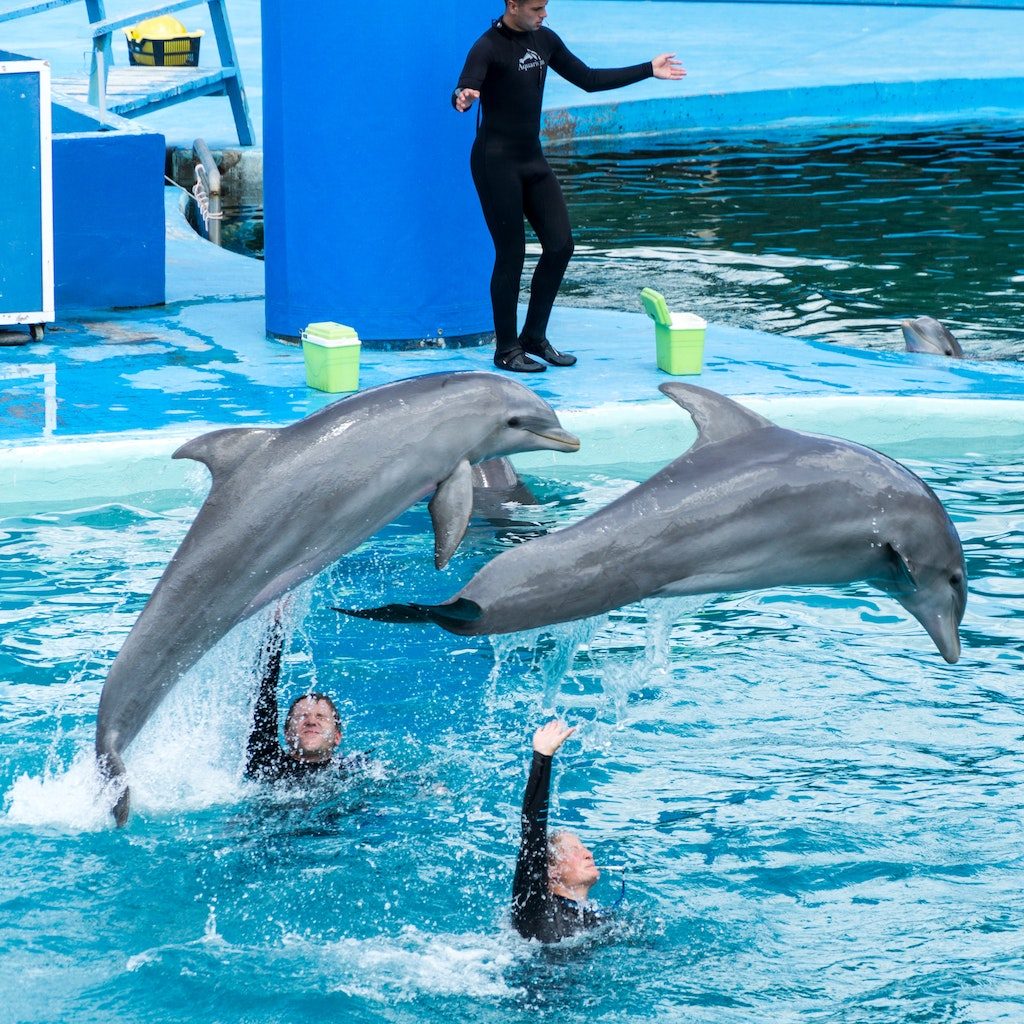
SeaWorld has reported an average lifespan of just 17 years for orcas held captive, which significantly lowers their chances of living beyond 30 years. The confinement deprives these magnificent creatures of the possibility to mimic their natural habitat and surroundings. The tanks they are kept in are only a fraction of the vast open waters where orcas can swim up to 62 miles per day, and some even travel over 5075 miles in just 42 days. Moreover, the captivity of orcas and dolphins deprives them of their family unit and important social interactions, which are crucial to their overall health and well-being.
Wild dolphins should not have to live in artificial environments where humans manipulate, control, and restrict their movement, diet, social structure, behavior, and entire way of life. Wildlife Matters strongly advocates for the protection of these magnificent creatures in their natural habitats.
If you enjoyed this blog, please check out more of our wildlife blogs here, or you may prefer to listen to the Wildlife Matters Podcast here.
If you want to support our work
Please click on the Wildlife Matters Patreon Community.
Please click to join the Wildlife Matters Substack Community.
You can donate here.