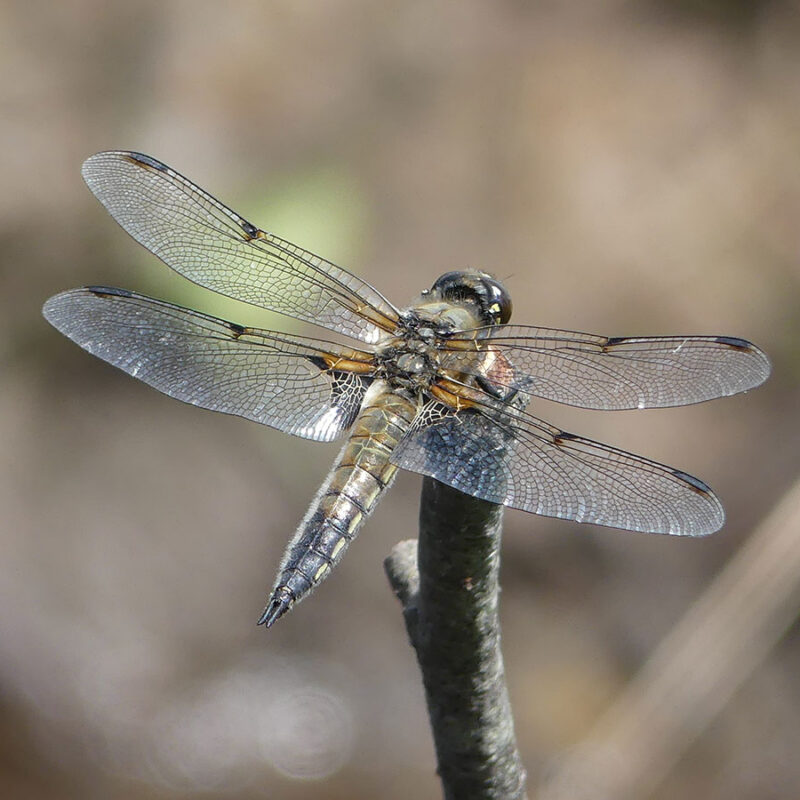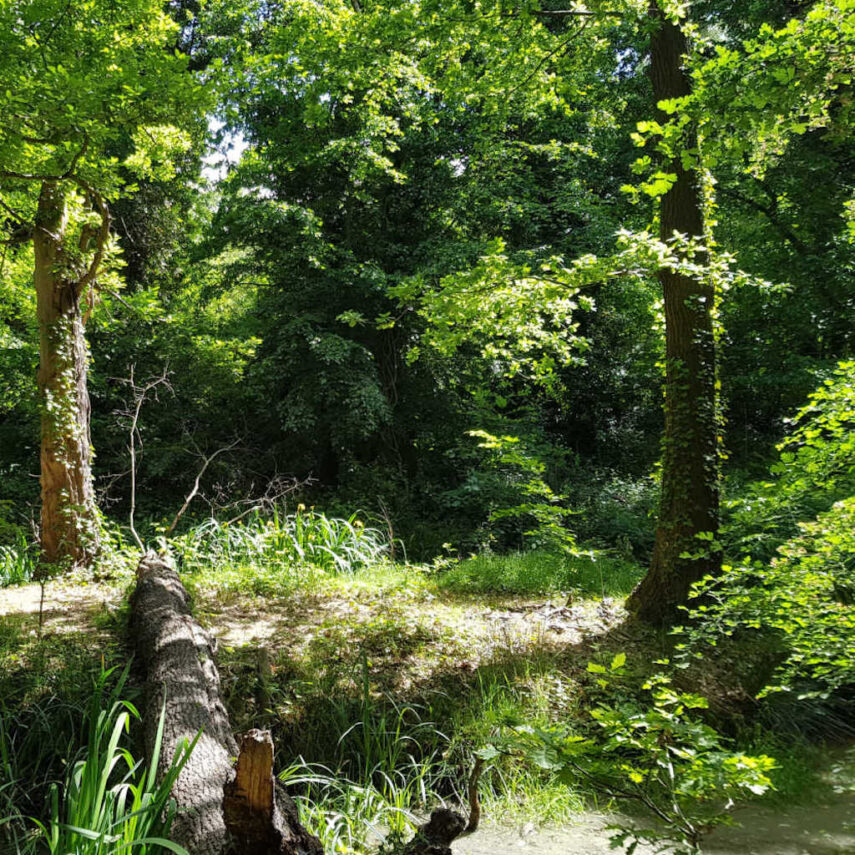
London’s Wildest Places is a new series exploring the wildest places in the capital to see wildlife and nature. London is one of the greenest cities in the world, with some famous parks and green spaces, but there are also some wild places where you can escape the hustle and bustle of the city and immerse yourself in less well-known nature.
Wildlife Matters has worked with wildlife and greenspaces in London for nearly twenty-five years. When you mention wildlife in London, most people look blankly at you and say, “Is there any?”
Some may mention pigeons, squirrels and maybe even foxes, but there is so much more to London’s wildlife – from peregrine falcons to grass snakes and red deer to tawny owls, there’s plenty to see in town.
So, join me as we run through some of my favourite places in London to see wildlife and enjoy being in nature.
We begin our wild London adventure in the ancient North Wood – known today as
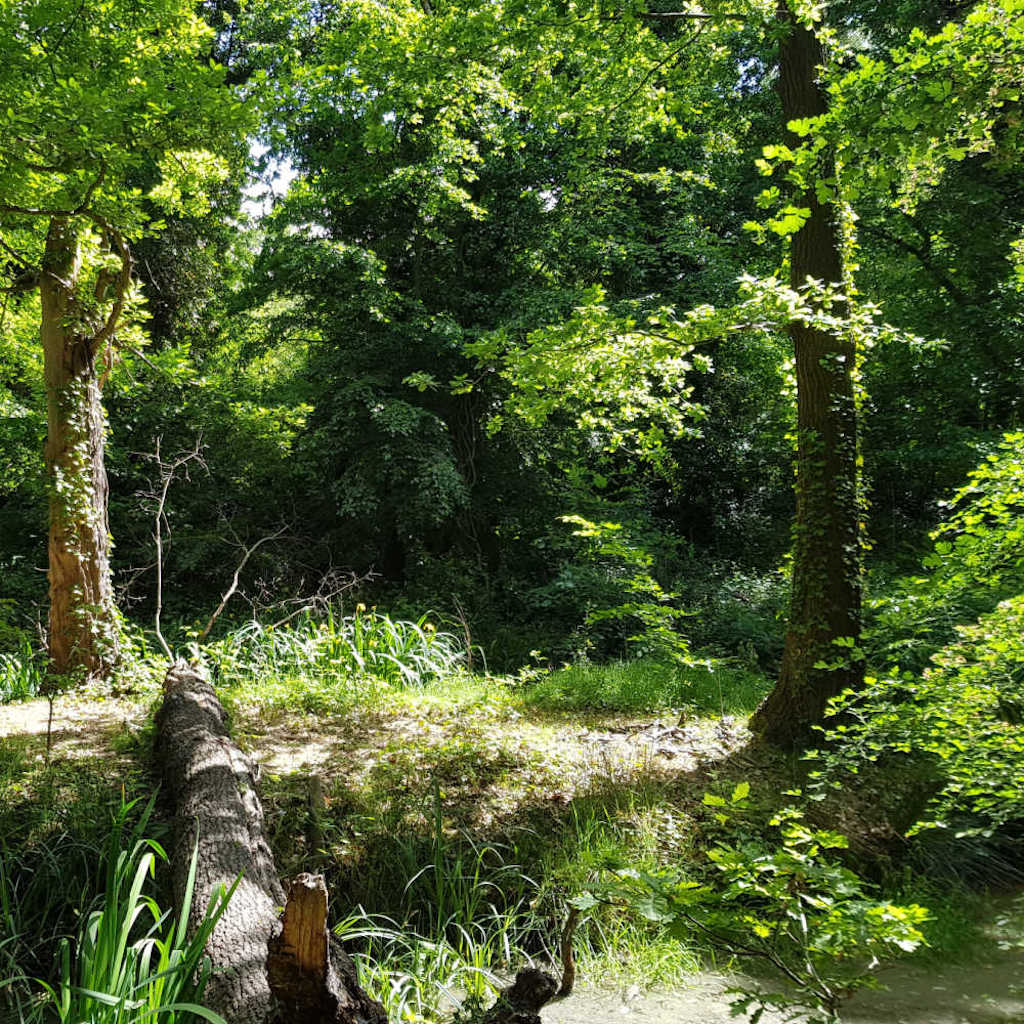
Sydenham Hill Wood
Getting There: Crescent Wood Road, London SE26 6RZ. Bus 202, 356, 363. Sydenham Hill rail station, walk up steep Low Cross Wood Lane and turn left on Crescent Wood Road. Free parking: Crescent Wood Road.
Sloping down from one of London’s highest points to Selhurst, Sydenham Hill wood is the last remnant of the ancient Great North Wood that once stretched from the River Thames to Croydon.
Sydenham Hill wood is home to rare fungi, insects, birds, mammals, and more than 200 tree and plant species.
There are plenty of fallen trees, branches, and logs to climb, swing from, or sit on. The dense tree cover blocks out the city’s sounds and sights.
There are also some historic gems to investigate, such as the railway tunnel that took Victorians to the Crystal Palace, a folly, a memorable bridge, and a spectacular view of central London landmarks.
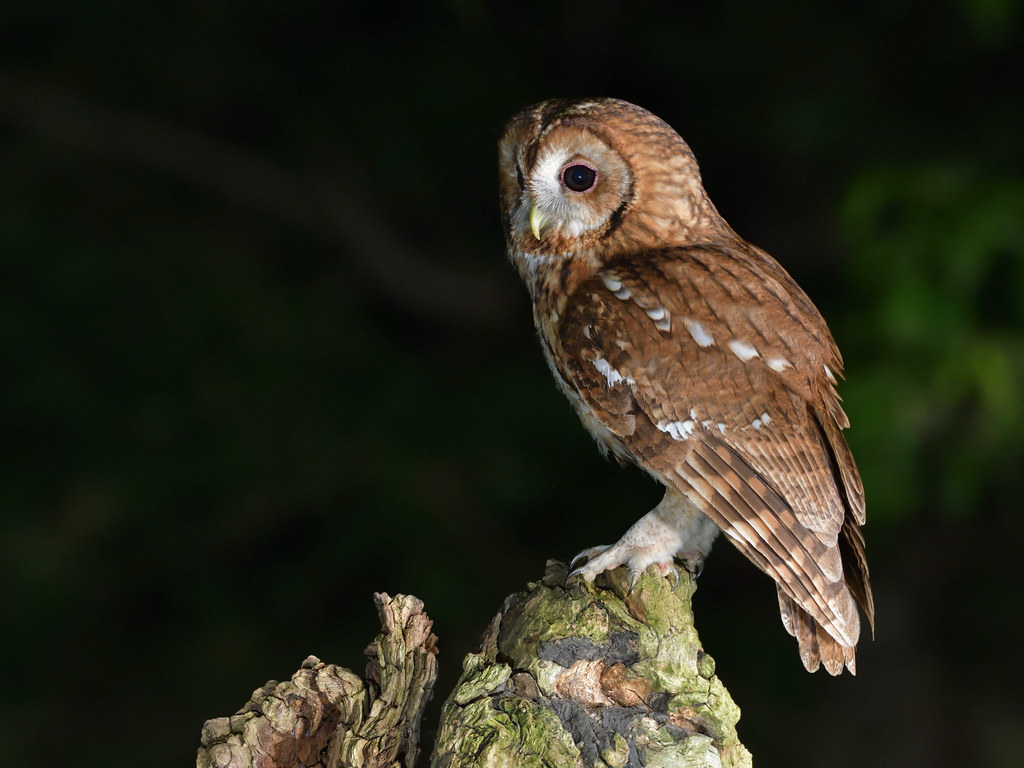
Walking in Sydenham Hill Wood has always been a great pleasure; there is always lots of wildlife to see. I’m here just after sunrise this morning and have been lucky to start my day by sighting a pair of Tawny Owls who were busy communicating with each other.
Tawny’s have a wide range of calls that go way beyond and are far more sophisticated than the infamous ‘Twit-Twoo’ most of us are aware of
I recall reading a science paper which I will reference later (Appleby & Redpath 1997, Galeotti 1998, Galeotti & Pavan 2008, Redpath et al. 2000). In summary said that Tawny owls based on the harshness, length and pitch of a call and relative proportions of particular syllables, they can tell which individual owl is calling, it’s sex, it build and weight, its health, level of aggression and the probable quality of its territory. No two tawny owls sound the same; they have regional accents like us, and since reading this, I have become aware of two pairs of Tawny near my home and can now identify which of them is calling. I’m not the next Dr Doolittle, though – many people who spend time with owls will tell you the same thing.
The next bird I saw today was the stunning Kestrel. It was hovering in the classic Kestrel style; it is the only hawk that can hover for longer than a few seconds as it scans the ground searching for its breakfast, its white tail edged with brown and black feathers fanned out as it holds its position. It hovered for twenty, maybe thirty seconds, allowing me time to study its sleek body and long tapered wings before it dropped from the sky. It returned without breakfast and made that beautiful ‘kes’ ‘kes’ call that gave it its name.
The next bird to share with you is the tiny but spectacular-looking Firecrest. The Firecrest competes with Goldcrest for the UK’s smallest bird title. Once a seasonal visitor, the firecrest can now be found breeding in woodlands in London and south England.
These little birds are similar in size and shape to the goldcrest but have a rich olive-green top coat with a buff-white underside. Males have a bright orange crown edged with black, while the female’s crown is yellow. The firecrest’s most distinctive feature is a bright white line above the eye, which is not present in goldcrests.
Firecrests were first recorded breeding in the UK in Hampshire in 1962 and are now found in coniferous woodlands and plantations throughout much of southern England.
London is well known in wildlife circles for being a great place to spot Stag Beetles, and Sydenham Hill Wood is one of the best places I know to find them. There is a lot of fallen wood that has been left to rot down over many years, and this is the perfect habitat for the larvae of stag beetles, who will spend up to six years as larvae in a decaying branch or stump of a dead tree before emerging as an adult stag beetle and, living fast and furious for one summer. It won’t eat but will mate as often as possible before dying with the first frost of autumn.
Whilst we are talking about insects, there are lots of butterflies around today; I’ve already spotted a red admiral, a peacock and a Comma, any of which would have been the subject of much discussion just a few years ago, but all of which are seen more often as they increase their population and spread across Britain.
I have seen a Brown argus feeding on some crane’s bill. Although not rare, I am surprised to see this in woodland as it’s more associated with the chalk grassland that lies about thirty miles south of here.
Just nearby, basking in a small area of sunlight that has come through the woodland canopy, is a speckled wood butterfly, something I would expect to see here. It isn’t rare but attractive with its brown wings and golden-orange to yellow speckles that look like eyes staring back at you.
A little further along, my nose draws me to find the source of a foul smell. It is a group of fungi growing from a tree’s fallen bough. I looked closer and found Gymnopus Foetidus, the Fetid Marasmius. The Foetidus or fetid part of the name refers to these mushrooms’ potent and sour smell.
Their red-to-brown appearance reminds me of a jellyfish, maybe because they lie flat on the ground and have pleated edges.
Once your eye is in for fungi, you begin to spot them more often, and along is a small patch of Cortinarrius, the largest group within the agarics with something like two thousand species worldwide. In Britain, we don’t have anywhere near that many, and whilst some of these distinctive fungi all have a cortina or veil on the cap – hence the name – some of the species are toxic, and a couple are deadly, so as a general rule, they are not for the forager.
Walking deeper into the woodland, a small ring of large white mushrooms comes into view in a small grassy clearing to the path’s edge. I walk over to investigate. The fungi I had found were in a perfect fairy ring and standing tall—75mm or three inches.
The gills and stems were white, and the cap was white with a stipe but no ring. Once again, though, the smell- an unpleasant blend of radishes and honey – really – told me I had found the White Knight or Tricholoma Album.
Oak trees find these fungi as they have a symbiotic mycorrhizal relationship. Despite the name, the white knight is not edible and is said to have a bitter and acrid taste. I have never been tempted to have a nibble.
These fungi work with sessile oaks here in Sydenham Hill wood. Although a spectacular and tall tree, the Sessile oak is less well known than the English or pedunculate oak.
The Sessile oak can grow to 40 to 50 metres and is mainly found in semi-natural woodlands. It got its name because its acorns are not held on stalks like those of the English (Pedunculate) oak but are attached directly to the outer twigs. If left to grow, it can form dense, single-species woodlands.
Sessile oak timber is less highly regarded than English Oak, but it has been used for barrel and cask-making for centuries and is said to enhance the flavour of wine and spirits.
In addition to the oak species, the main tree species in Sydenham Wood is the hornbeam. The Hornbeam is a common tree in Southern and Eastern England, although it is less well-known than other woodland species, mainly because it is a critical species in ancient woodlands, which are, sadly, rare.
Its large catkins appear in late spring, and its large, winged seeds can be seen in autumn as the wind disperses them. The wood of the Common Hornbeam is demanding and challenging to work with, which is why it is also known as ‘Hardbeam’.
The Common hornbeam has a smooth, grey, ‘twisting’ trunk, toothed-edged leaves, and three-lobed seeds. It could be mistaken for the Common beech, but its leaves are deeply veined and have spiny edges.
Hazel leaves provide food for moth caterpillars, including the large emerald, small white wave, barred umber, and nut-tree tussock.
In managed woodland where hazel is coppiced, the open, wildflower-rich habitat supports species of butterfly, particularly fritillaries. Coppiced hazel also shelters ground-nesting birds, such as the nightingale, nightjar, yellowhammer, and willow warbler.
Hazel has long been associated with the dormouse, often called the Hazel Dormouse. Not only are hazelnuts eaten by dormice to fatten up for hibernation, but in spring, the leaves are a good source of caterpillars, which dormice also eat.
Woodpeckers, nuthatches, tits, wood pigeons, jays and small mammals also eat hazelnuts. Hazel flowers provide early pollen as food for bees. However, bees find collecting difficult and can only gather it in small loads. This is because the pollen of wind-pollinated hazel is not sticky, and each grain repels against another.
The trunks are often covered in mosses, liverworts and lichens, and the fiery milkcap fungus grows beneath the soil.
I have helped with the Dormouse surveys here, and there is a solid population in the woods. Dormice are complex to find and challenging to survey.
Several methods are used. Nut hunts Wood mice, bank voles, and dormice feed on hazelnuts by gnawing a round hole in the shell, and each leaves distinctive marks.
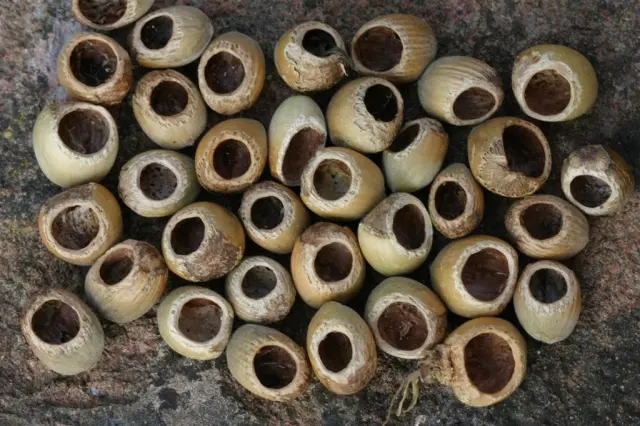
Anyone can look for dormice by carrying out a nut hunt. A nut hunt is straightforward and makes an ideal family expedition. The only extra equipment you will need is a magnifying glass. The best time to carry out the survey is during the autumn and winter when no leaves are on the trees, and the discarded nut shells are easiest to find on the woodland floor.
Nest Tubes are suitable for detecting dormice where nut searches are unlikely to be effective and are usually used by ecologists. Nest tubes are an excellent tool for surveying rather than long-term population monitoring. For surveying, small numbers of tubes are likely to miss dormice, even where they are known to be present.
Natural Nest searches are helpful when other signs of dormice are absent. Nests are grapefruit-sized, usually in brambles and low-growing shrubs, typically a meter above ground. They’re also found in nest tubes and nest boxes. Nests are traditionally made from grass, leaves, and honeysuckle bark.
Sydenham Hill Wood is a mustelid hotspot, with at least four species calling the wood home.
One of Britain’s most iconic mustelids is the Badger. With their stocky build, grey and white fur, long snout, black stripes across their eyes, and distinctive ‘wobble’ as they run, badgers look very different from the other mustelids.
Badgers are the largest mustelid in the UK, measuring between 60 and 85 cm long. They are mainly active from dusk until dawn and usually head to open ground to sniff out worms and grubs in fields and meadows.
Badger families have used the same trails with many setts, a badger’s underground home, and trails used by multiple generations of badgers. The Setts in Sydenham Hill Wood are well established and have a thriving population of badgers that can be seen at dawn and dusk.
From the largest mustelid in the UK to the smallest – the weasel
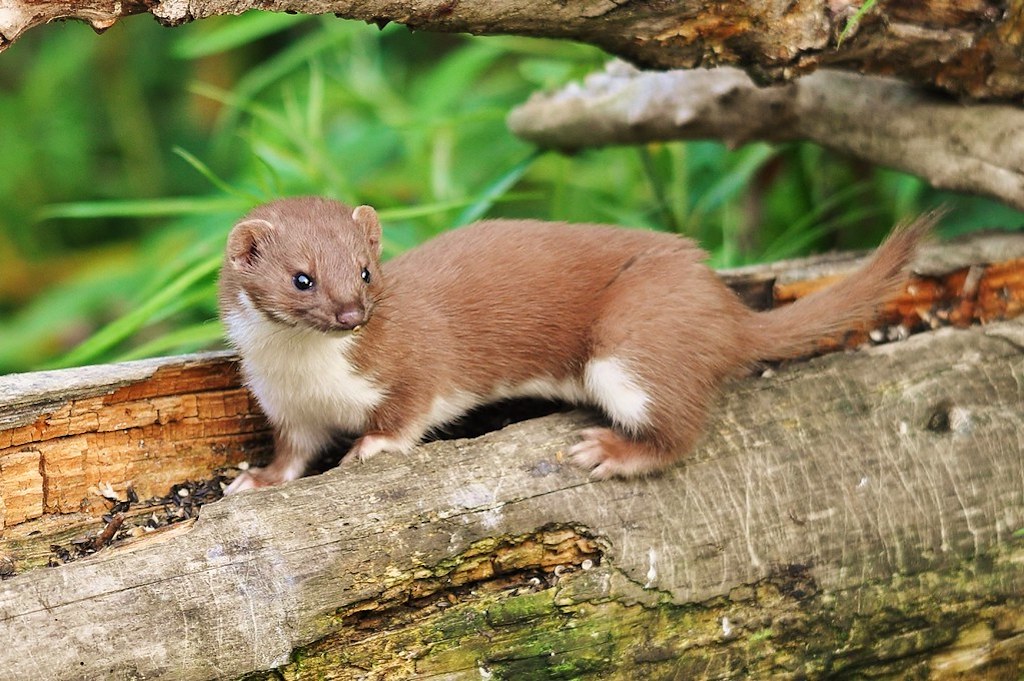
Both are present in Sydenham Hill Wood. An adult Weasel is a maximum of 20 cm, and it moves quickly, making it challenging to spot.
Weasels have a chestnut-brown back, side and face and an off-white underside. Their tails are short, straight, chestnut-brown.
Weasels often appear unexpectedly out of long grass or beneath a hedgerow. Weasel’s coats can change colour in colder winters to white. Although incredibly rare in South Britain, this fur colour change allows them to blend in with snowy surroundings, making them less vulnerable to predation from hawks and owls.
The Stoat is a close relative and often confused lookalike to the Weasel, which can also be seen in Sydenham Hill wood.
To tell the difference with a quick glimpse – look for a black tip – often called a paintbrush tip on the Stoat tail. Stoats are also visibly larger, up to 30cm long, and their tails are more extended.
Like weasels, stoats can be active during the day, particularly when hunting for rabbits and voles.
Stoats will attempt to hunt animals that can be three times their size. They inhabit many habitats, from woodland to moorland or even hedgerows. But, like weasels, stoats love areas with old dry-stone walls and mounds of rocks, which provide good cover for them and the prey they need to hunt to survive.
The fourth mustelid at Sydenham Hill Wood is the American mink.
Primarily living along rivers across much of the UK after many escaped, or were released, from fur farms in the 1960s and 1970s.
American Mink are much smaller than the native otter and have a dark brown to black coat, small ears, and a floppy black tail, which is very different from an otter’s tail, which is always very pointed.
Minks are active during the day and night; they can show up anywhere, but it is usual to see them when exploring canals and small streams. Minks are the centre of controversy with conservationists and are now considered an alien species in the UK. That said, their presence in the woods shows that they are highly adaptable as a species and are likely to be so well-established that they are here to stay.
The Sydenham Hill Wood is home to several man-made attractions that add to its rich history.
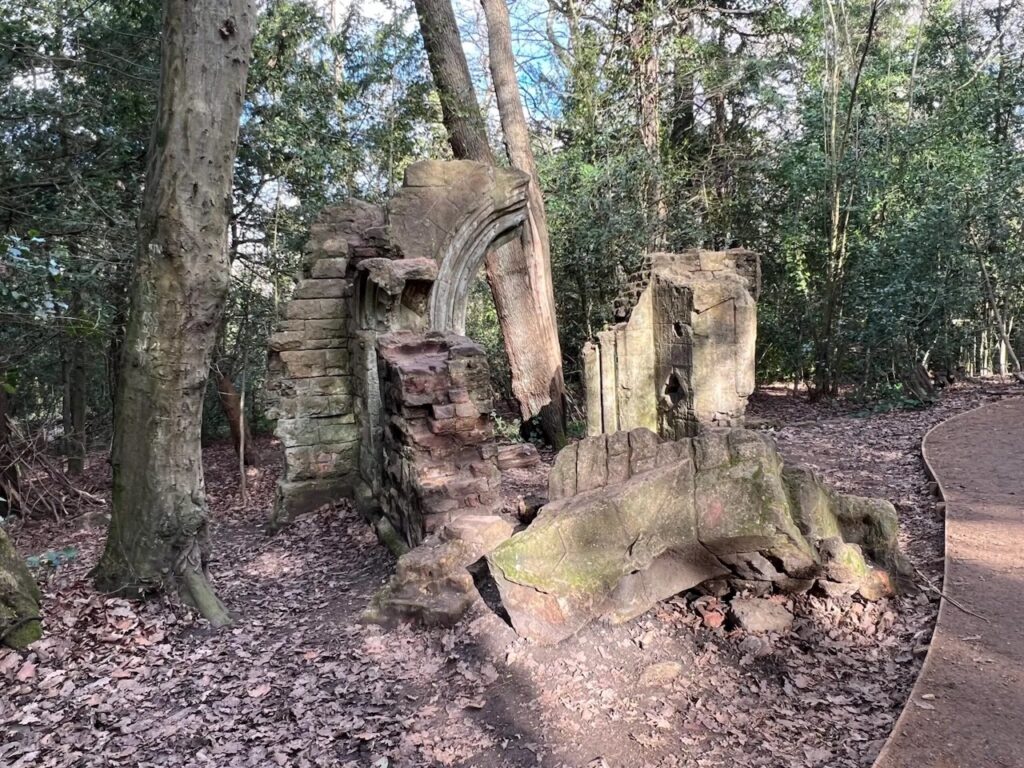
One of these attractions is the Folly or the Ruins. The ruins used to be a feature on the grounds of Fairwood, a grand villa built in the early 1860s for David Henry Stone (1812-1890), a prominent businessman, attorney, and solicitor.
This area of London was a popular destination in the mid-19th century after the relocation of the Crystal Palace. Sydenham Hill became home to many distinguished family residences during this time.
Only the Folly remains today, but some claim to have caught glimpses of Fairwood hidden beneath the thick holly, brambles, and bracken.
The second feature is the Cox’s Walk footbridge, built for pedestrians to cross the new railway line to Selhurst and the Crystal Palace.
Cox’s Walk footbridge was built around 1865 and was fully restored to its original design, using teak and iron, in 1906. The railway line was closed in 1954, and the bridge fell into disrepair. Today, the bridge is part of the Green Chainwalk and is undergoing significant restoration by the Southwark Council. It was not open when we visited in June 2024.
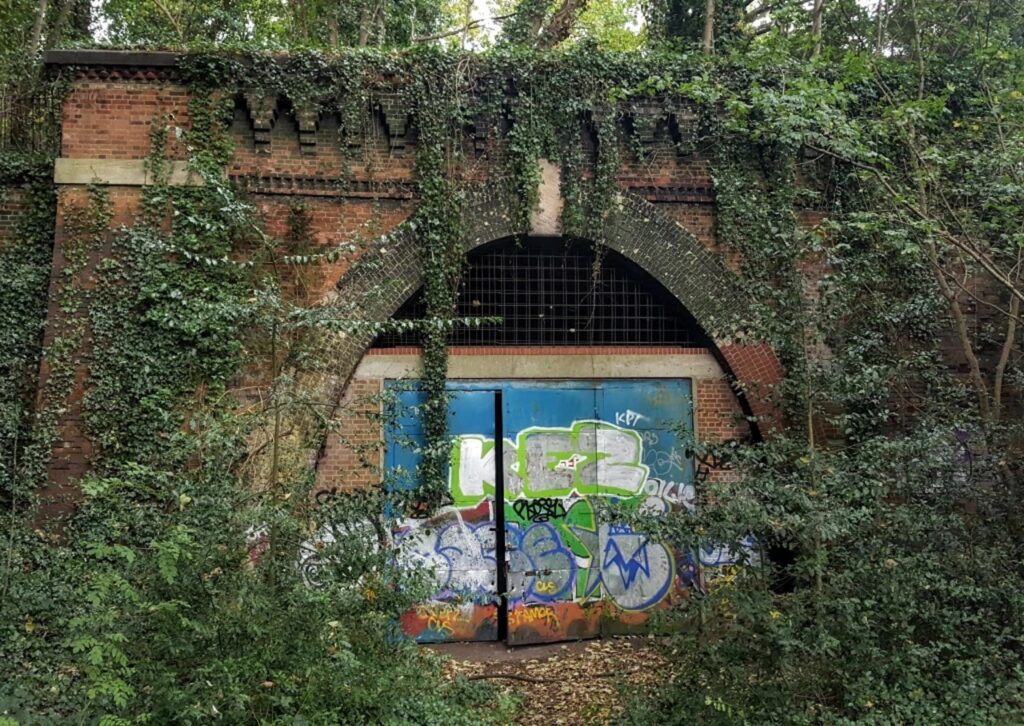
The Crescent Wood Tunnel, also known as Upper Sydenham Tunnel, was located adjacent to the station of the same name.
The 400-yard, double-bore tunnel was built between Sydenham Hill woods to the north and the proposed site of Upper Sydenham station to the south. Constructed by the Crystal Palace and South London Junction Railway, the tunnel served the Great Exhibition when it moved from Hyde Park in 1852 and opened on 1 August 1865.
The tunnel was bricked up in the 1980s, and it has since become an important bat hibernaculum managed by the London Wildlife Trust.
Wildlife Matters helped carry out two bat surveys during 2023 in Sydenham Hill Wood, which recorded high numbers of common and soprano pipistrelle bats and smaller numbers of Noctule, Serotine, and myotis or mouse-eared bats.
Subsequent surveys by the local bat group recorded species such as the Leisler, Whiskered, Alcathroe, and Brown long-eared bats. Observing the bats leaving the tunnel and flying above without recording equipment was a delightful way to end a day at Sydenham Hill Wood.