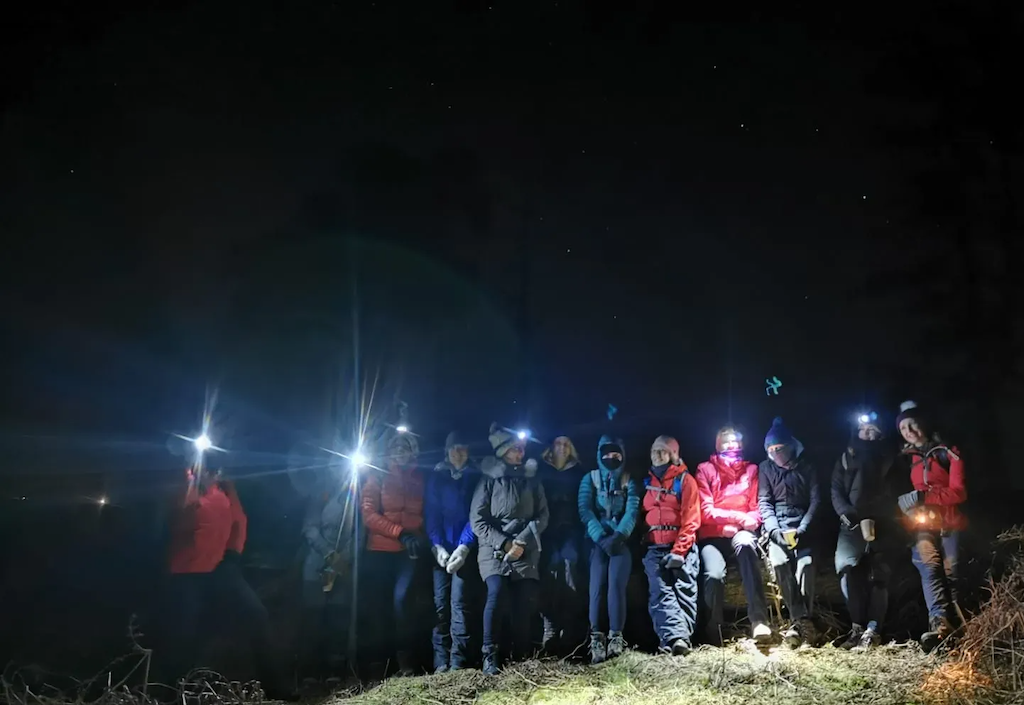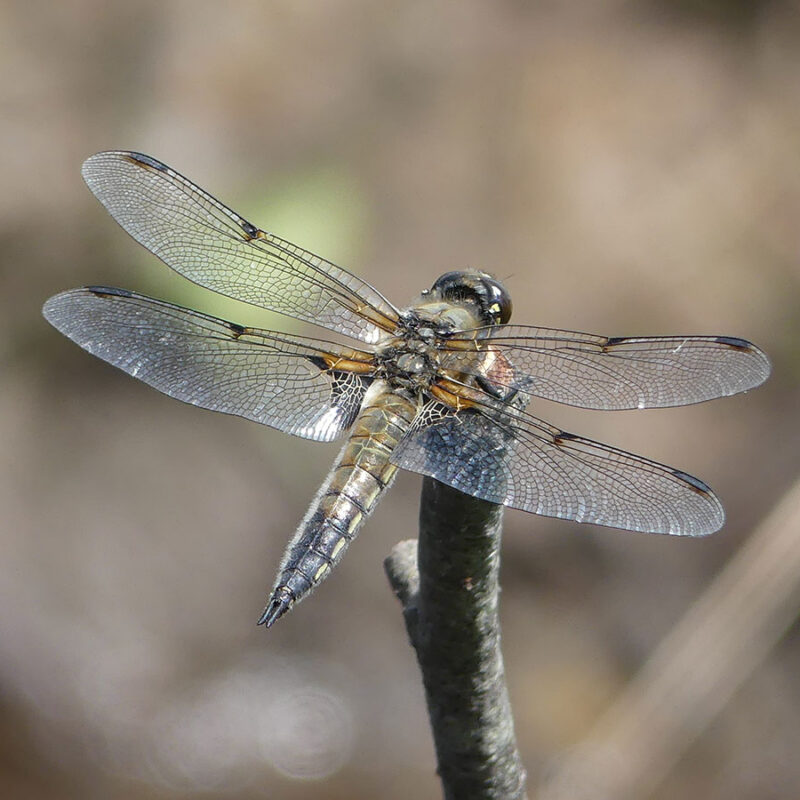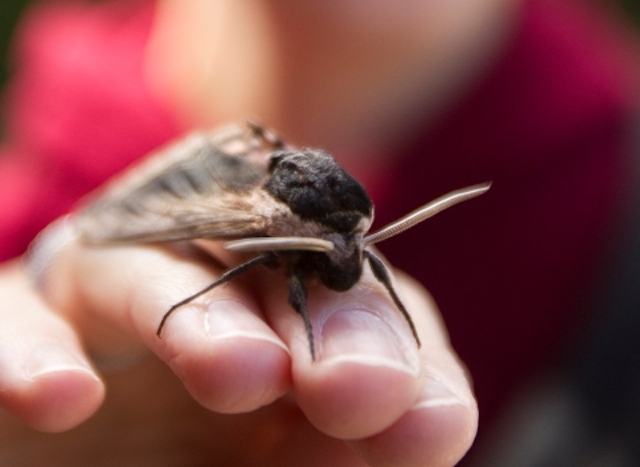
This week, join Wildlife Matters for a Midsummer Moth Walk. June is heading towards the peak of moth activity and a great month to find some fabulous moths. June’s specialities include the Hawkmoths, which are colourful, big, impressive creatures.
We hope to see some of these amazing moths.
With the moth trap set up, we’ll head out for a walk around the woodland and its wildflower meadows, enjoying the evening bird chorus and searching for one of the main predators of moths – Bats!
Several species of these winged mammals call the woodland home, with the Common Pipistrelle, Noctule, and Brown Long-Eared bats all previously recorded. We are excited to see if we can add any more species to our list. Our bat detector should help us find these nocturnal flyers, and we’ll enjoy the sight and sound of these fantastic creatures as they go about their nightly business.
Whilst out, we’ll keep an eye and ear open for other nocturnal animals that call this area home, such as Badgers, Roe Deer, and Tawny Owls, before returning to refreshments and starting the Moth survey.
It’s a warm summer evening. It’s still above 20 degrees, and it’s around 7:30 p.m. We, a group of around twenty people, have gathered for a moth survey and an evening walk around the woodlands and wildflower meadows.
I have my magenta bat detector with me, set at 45 kHz, which is where you will find the common pipistrelles, the most likely bats to be found throughout most of the UK.
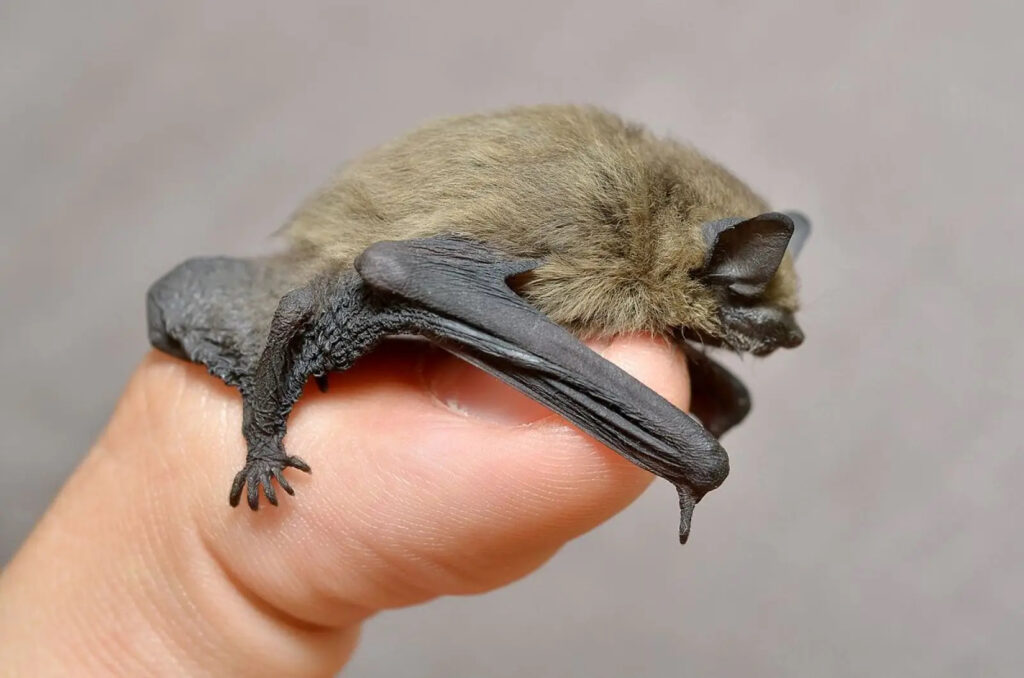
The common pipistrelle is a small brown bat with a dark face. It has a wingspan of 18–25 cm, a head and body length of 3.3–4.8 cm, and weighs approximately 5 grams, which is comparable to the weight of a 20p piece.
Common Pipistrelles have an erratic flight pattern, often flying around or just above human head height. They are known as hawkers, which means they catch and eat insects in flight.
The sounds produced by common pipistrelles are above the range of human hearing, except for some of their social calls, which may be within the hearing range of some children and adults with good hearing.
Through a bat detector, a common pipistrelle’s calls sound like a series of clicks towards the top of this range, which can reach 75 kHz, transitioning into what sounds like a wet cloth being slapped onto a draining board, which can be heard around 45 kHz, which is the peak intensity of the call.
Now, at the height of summer, the females will be in their maternity colonies, where they give birth to a single young in June or early July.
For three or four weeks, the young are fed solely on their mother’s milk. Then, from around the end of July, the young can fly, and by mid-August, they can forage for themselves.
In the summer, the Male bats will roost singly or in small groups. During the main mating period from July to early September, males will defend their territories as mating roosts, attracting females by making social calls known as ‘song flights’
This maternity group often alternate their maternity roost between the old pump house of the mill building, which is hung with tiles on the upper part of the walls that adjoin the roof, and within tree holes in the woodland. They primarily feed in the meadow area, where insect life is at its peak. Currently, the female is feeding her young with milk and catching insects for her sustenance.
As we walk on, I lower the frequency of my detector to 25 kHz. This is one of the lowest or deepest sounds made by a native bat species, and as is often the case in nature, the lower the sound of the call, the larger the animal that makes the sound, and that is precisely the case with the following bat species we are looking for.
The Noctule bat is the largest bat species found in the UK, with a body length of up to 4.8 cm and a wingspan that can extend to 40 cm.
Like many native bat species, the Noctule will have a single pup, usually in June. Currently, around midsummer, the females will be in the maternity roosts with their pups.
Noctules roost in tree hollows and feed just above the tree canopy. I bring the group to an open clearing where we can follow the Noctules as they feed, using the sounds from the bat detector and my thermal imaging scope. Some members of the group eagerly watch the red and yellow images of the bats’ heat map as they feed.
Tonight’s bat walk is going well, and we set off to find our third species for the night when I hear a call and ask the group to stop and stay still and silent. They do as asked, and I ask them to listen.
What we can hear is the rather shrill communication between two tawny owls that are still at roost but who will soon be setting out to find food.
This would be a pair with their young fledglings, which will still be at least partially dependent on their parents for food. Notably, the bats have gone quiet, as Noctules will be on the Tawny owl’s menu, and they share a very similar habitat.
Most people think of Tawny owls as predators of small rodent species, which they are, but Bats are certainly a large part of their diets, as are larger moths and dusk flying insects.
Tawny owls are incredibly adaptable as a species and will find food within most environments. They are territorial and will often live within a single woodland for their entire lives.
This woodland is one of the largest in southern England, spanning over 160 hectares, and it boasts a substantial population of tawny owls.
The third bat species we hope to find tonight is one of the most challenging to locate using a bat detector, as it does not echolocate to the same extent as other species, and when it does, the echolocation is always quiet.
Brown long-eared bats feed on moths, beetles, spiders, earwigs and flies. They can take their prey from leaves on trees or even swoop down to take them from the ground. They eat small prey mid-flight but take bigger prey to a perch where they eat upside-down.
They roost in open spaces, often in the roof space of older buildings, but here they also roost in trees. In this case, the Hibernation roost is underground in an old charcoal pit that has been covered for a century or more.
I glance at my watch as we begin to head back to base camp and the purpose of tonight, which is a moth survey but decide to take a chance and see if we can find a scarce bat species that is known to be on this site, I slip my detector to 50kHz more in hope and curiosity than with any expectation of picking up any calls.
We pick up some Natterer Bats nearby, but then I hear the call I had only hoped for.
You associate these bats with ancient woodlands, a rare habitat in the UK, but this is an ancient woodland and one of only two places I know of in Sussex where Bechstein’s bat can be found.
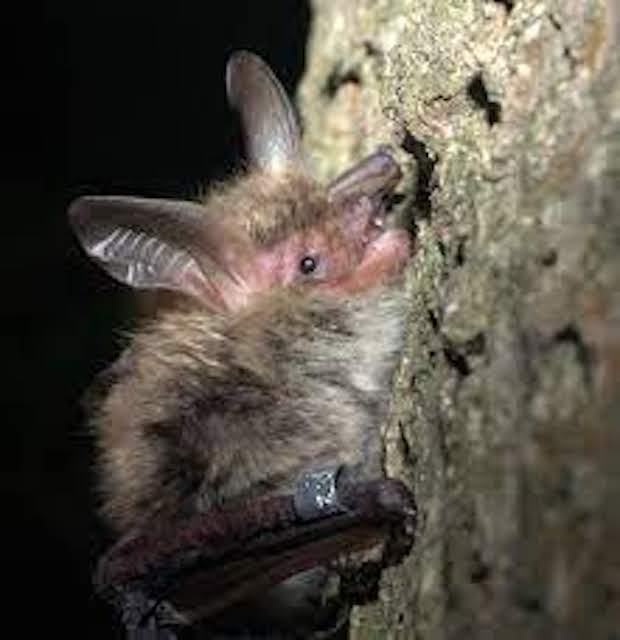
Bechstein’s bat is a medium-sized bat characterised by its distinctive pink face and a pointed, fox-like snout.
It has light to reddish-brown fur above and pale fur underneath. Fossil records from Sussex indicate that Bechstein’s Bats were common in the ancient wildwoods before they were cleared for agriculture.
Today, they are one of our rarest bat species, which is why it is such a thrill to deliver a sighting for this group tonight.
We return to the main camp for refreshments before beginning the moth survey. My guiding is finished for the night. I am now keen to learn more about moths, which I sadly know very little about.
After enjoying a tasty homemade summer sweet potato soup and a coffee with oat milk to keep me alert, I moved over to the survey area, where Kevin had set up a Skinner moth trap. I was told that it can attract more than 500 moths on a good night.
The main benefits of this type of moth survey trap, Kevin tells me, are its portability and the ability to survey and record moths while the trap is running.
Skinner Traps collapse down quickly and efficiently when not in use, making them very easy to store and transport. Kevin’s setup uses what are known as actinic lamps powered by a pair of car batteries.
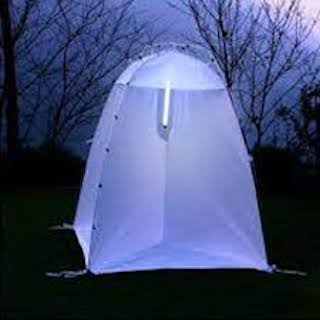
Kevin also incorporates a Moth Collecting Tent in his survey kit, which he tells me is ideal for educational use or group trapping events. It is a large white fabric structure that reminds me of the EnviroMesh I use for my vegetable beds, as well as another battery-powered UV light source.
Moths that are attracted by the light settle on the white fabric and can be observed or collected for study. As the collecting area is large and accessible, it is easy for many individuals to view the specimens simultaneously, unlike traditional box-type traps.
I have been assigned to work with Mike on the moth tent, as they expect this to be a busy night. My purpose is to collect the moths in the cardboard pots and take them to Mike for identification, while other team members record the species and details for the survey.
The first moth I take is silver-grey with a hint of yellow and a wingspan of around 40mm. Mike tells me it is a Mottled Beauty, or Alcis repandata
It is a widespread species that can be found throughout Britain, with several races and intermediate forms.
Mike tells me it is a regular visitor to light, and flies in June and July. It is mainly found in woodland, but can be found in suburban gardens and parks with shrubs and bushes. The larval food plants are a number of different plants and trees.
I look at the mesh and the wide range of moths that are climbing on it, and decide to take a long, golden orange-looking moth that I don’t think I have seen before.
Mike tells me I have found an Orange Spotted Yarrow Moth, or Dichrorampha vancouverana, which he informs me is a widespread species in the south east and west, up to the Midlands, but is becoming scarcer in northern England, Wales, and Scotland.
They are found in dry grassy places. The larvae feed on the rootstock of yarrow (Achillea millefolium) and tansy (Tanacetum vulgare). The adults fly in June and July, but are more often seen during the afternoon and towards sunset, not at night.
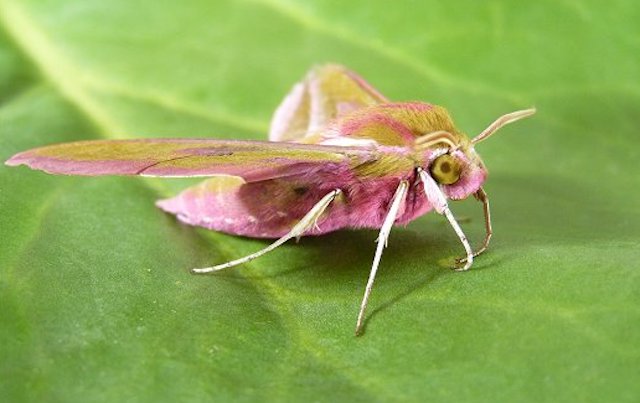
My third moth of the evening was one I did recognise, but I took it to Mike for a real expert’s opinion. It was an Elephant Hawk-moth, or Deilephila elpenor, with its stunning olive green and contrasting pink colouration.
Mike said it gets its name from the caterpillar’s resemblance to an elephant’s trunk. The adults fly from May to July, visiting flowers such as honeysuckle (Lonicera) for nectar, whilst the larvae feed mainly on rosebay willowherb (Epilobium angustifolium), but also on other plants, including bedstraw (Galium).
It is a common species in most of Britain, including Scotland, where its range has expanded in recent years.
Back to the mesh tent, and my eye was drawn by a stunning buff white moth with a mottled brown and black shoulder area and trim to the wing.
Mike smiled and said Ooh, nice – a Royal Mantle, which is found in southern England and parts of Ireland and Scotland, but is rare throughout most of the UK.
It likes open woodland, limestone downland and lower mountain slopes. It is known as a single-brooded species, which means it has one generation that goes through all three life stages: emergence, reproduction, and egg laying in spring and early summer. The larvae feed on bedstraw (Galium) species.
My next find had Mike fairly excited. Now, that’s a rare one,” he said with a smile. I said I was excited, as it appeared to have a mossy-looking feather boa around its neck and some distinct, symbol-like cream markings on each wing.
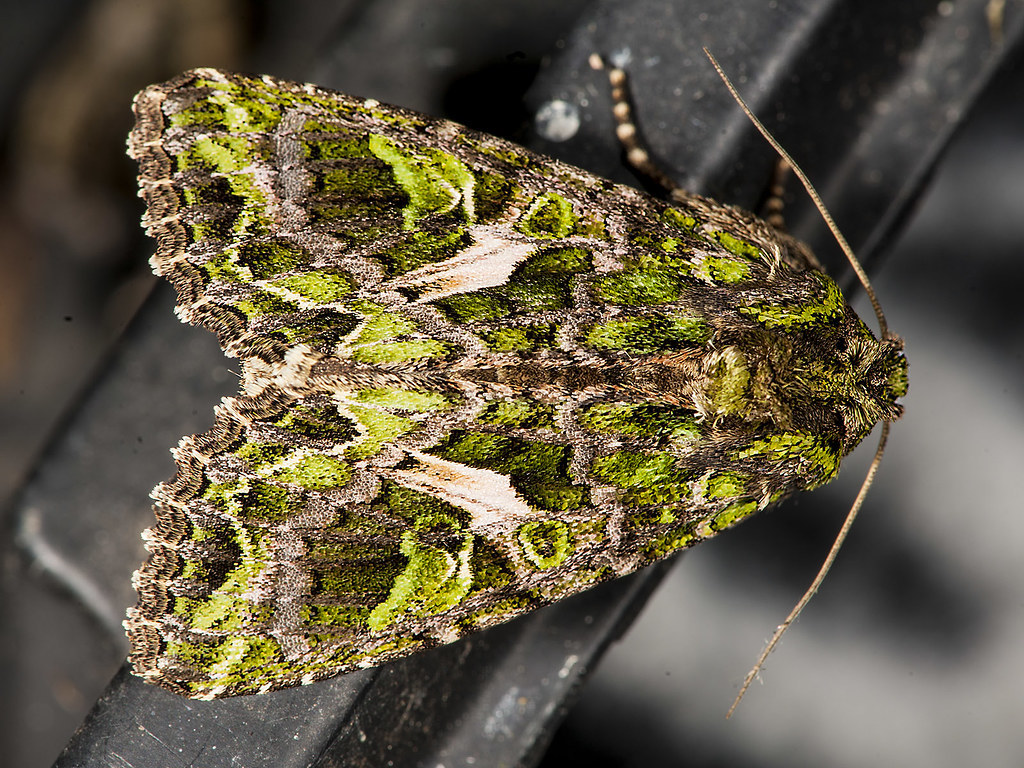
It’s an Orache Moth Trachea atriplicis, which was formerly resident in Britain, but became rare after about 1895 and soon afterwards became extinct here. It has been a visitor from mainland Europe for many years and is known for making the journey in a single flight, which is a notable achievement over the Channel when you are that size, said Mike.
Interestingly, this is the sixth consecutive year we have recorded it here, and it may return as a UK resident. We can’t say that yet with any certainty, but they do seem to like it here. You will do well to top that one tonight,” he said as he sent me back to the mesh tent, where I spotted a small moth that attracted my attention because it appeared to have large eyes on the sides of its head. However, I thought they would be markings, so I put it in the cardboard bowl, added the clear top and took it to Mike.
Well, you have peaked for the night, now, he said. This one is rare, and he called David and Charles over to take a look. All three were quickly in deep conversation before deciding that they would be retaining this moth to share with the local records centre.
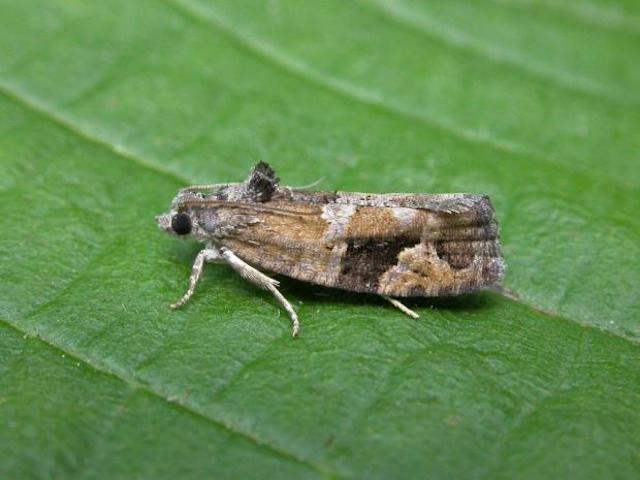
Mike said they were confident it was an Apple Marble Moth, Eudemis porphyrana, which is very similar to the more commonly recorded Oak marble but has fewer or less obvious strigulae in the basal half of the wing, and the pale blotch on the dorsum is more deeply indented.
It was thought that they only fed on apple trees, but they had also been recorded in bird cherry and wild cherry trees. They are part of the Tortrix group of moths, which means they wrap their larvae in a leaf and bind it in silk for protection before emerging as Adults in July and August. They are known to come to light.
I was feeling pleased with my finds for the night. Of course, I had no influence on the moths that were being drawn to Kevin’s mesh tent, and I may have missed many more unusual findings, but I went with those that caught my eye or looked just a little different from the majority.
Just after midnight, Kevin shut down the lights, and the core team began dismantling the lights and equipment.
Most of the group of over thirty people had gone, but I stayed to help them walk the equipment back to the car park, as I had enjoyed my first moth survey and was eager to get back to Raven. My campervan was parked at the dark woodland edge car park. I reflected on a good evening, during which I found some unusual moths, and the excitement of Charles, David, and, of course, Mike at the Apple Marble Moth.
Mike was very knowledgeable on Moths and was an excellent host, and I was pleased to do the walk and talk in exchange for a night’s moth surveying, and I couldn’t help smiling to myself at having found the Bechstein’s bats with the group earlier in the evening.
If you enjoyed this blog, please check out more of our wildlife blogs here, or you may prefer to listen to the Wildlife Matters Podcast here.
If you want to support our work
Please click on the Wildlife Matters Patreon Community.
Please click to join the Wildlife Matters Substack Community.
You can donate here.
Further Reading
Butterfly Conservation – Moths through the Seasons
Woodland Trust – Day Flying Moths
Wildlife Trusts – Identifying Moths