Welcome to this week’s Wildlife Matters main feature. Join us as we continue exploring London’s wildest places. Today it’s Epping Forest, where nature, history, and wildlife meet.
Epping Forest is London’s largest open space. This 6,000-acre woodland links the city with the Essex countryside.
Epping Forest offers 176 miles of trails and 55,000 ancient pollard trees. The forest is alive with fallow deer moving quietly, rare amphibians hiding in ponds, and adventure waiting at every turn.
Epping Forest stretches from Manor Park in East London to north Essex, providing a refuge for people and wildlife. Its grasslands, woodlands, and ponds are alive with birdsong and the gentle hum of insects.
Epping Forest was protected long before the UK’s National Parks. The 1878 Epping Forest Act entrusted it to the City of London, and Queen Victoria dedicated it for ‘the enjoyment of my people forever’.
Much of the Forest is important for conservation in the UK and beyond. Two-thirds is a Site of Special Scientific Interest (SSSI) and a Special Area of Conservation (SAC).
These designations reflect the forest’s many ancient trees, which support a wide range of wildlife like wood-boring beetles and fungi. Its old grasslands, heaths, and ponds add even more value.
Epping Forest has 55,000 ancient trees, more than anywhere else in the country. Some are centuries old, possibly dating back to Anglo-Saxon times, making them among Europe’s oldest living plants. They are rare and irreplaceable.
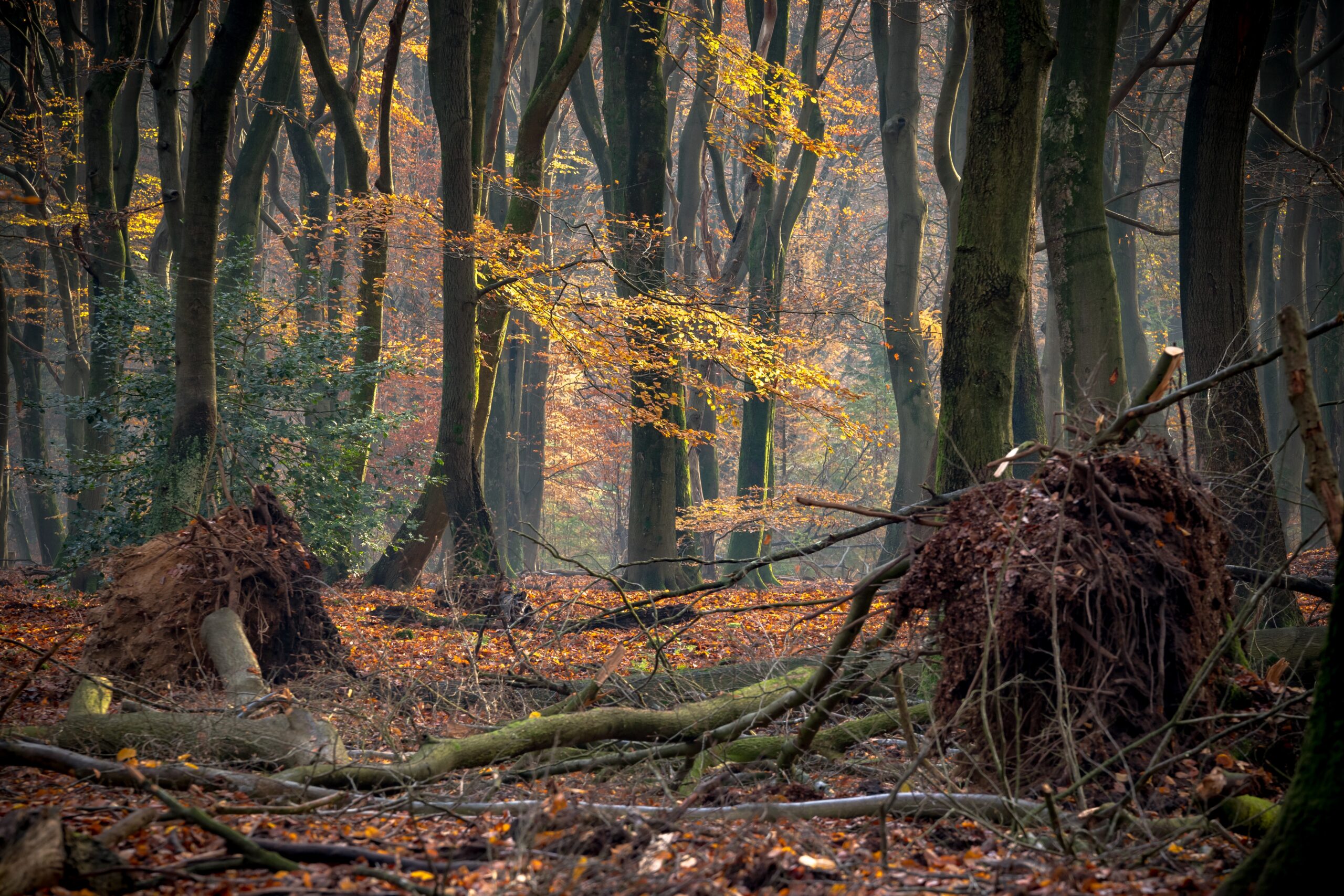
The Forest is rich in biodiversity, heritage, and culture. It has likely been heathland and woodland since trees returned after the last Ice Age, more than 10,000 years ago.
Epping Forest is called ‘ancient woodland’, but people have shaped it for centuries. It was used for grazing and firewood, later became royal hunting grounds, and was made a Royal Forest by Henry I in the 12th century.
Some traditional rights still exist today, managed by the Conservators of Epping Forest under the Epping Forest Act of 1878.
Epping Forest offers more than wildlife and ancient trees.
You’ll find Iron Age earthworks like Ambresbury Banks and Loughton Camp, the Queen Elizabeth Hunting Lodge from the 1500s, the Greenwich Meridian line, and hills with sweeping views of London.
Epping Forest combines history, peace, and natural beauty, offering something special for every visitor.
Around 2,000 years ago, small-leaved lime trees were the main species in the forest.
Studies in the 1970s found that over 90% of pollen in the Lodge Road bogs came from these trees before they vanished around the 1st century AD. As the climate changed, other trees gradually took their place.
For centuries, oak, hornbeam, and beech have been the main tree species in the forest, and this is still true today.
Birch trees don’t live as long as other species, but they now thrive on open plains and heaths because the wind spreads their seeds easily.
Sallow, hawthorn, and blackthorn are common shrubs beneath the trees and along the edges of plains and clearings.
Other native trees include field maple, ash, and the rare wild service tree.
A Winter Wildlife Walk in Epping Forest
Walking through Epping Forest in winter feels magical. The cold air is refreshing, frosted leaves crunch underfoot, and the bare trees reveal views usually hidden.
On this walk, I set out to discover what wildlife and surprises the old forest holds during its quietest season.
Each step echoed in the quiet as frost cracked beneath my boots.
Robins darted through the bushes, their red chests bright against the grey winter backdrop.
With most people at home, the trails belonged to deer, birds, and a few lucky visitors willing to brave the cold for a taste of wild beauty.
If you start at the car park behind the Kings Head pub, you can follow a path up to Pole Hill’s summit.
At the top, you’ll find stunning views over the Lea Valley. There’s a stone obelisk for T.E. Lawrence (of Arabia), who once bought land here hoping to build a house and print studio for his book, The Seven Pillars of Wisdom.
The house was never built, but a hut and pool stood here until 1922, where his friend Vyvyan Richards lived.
As you walk through Hawk Wood, the scenery shifts to fields of buttercups with wide views down the Lea Valley and across the Northern Heights.
Hawk Wood was once part of an old parish and has a long history. Even its name hints at hidden spots and secret places to find.
In 1498, William Jackson of Chingford Halke owned land near Hawkwood and was a member of the Swainmote Court.
Hawkwood was once part of the Chingford St. Paul’s Manor estate, which St Paul’s Cathedral owned for 500 years.
In 1544, Henry VIII took over the manors of Chingford Earls and Chingford St. Paul’s to expand his deer park. After his death in 1547, the park closed a few years later, in 1553.
Today, I’m walking the Beech Trail, a marked path winding through old woodland. Along the way, you can spot Iron Age earthworks and watch how the forest changes with each season.
Even in winter, life is everywhere. In a sunny clearing, I watched a grey squirrel run across my path, dig up an acorn, and look at me curiously before climbing the nearest tree.
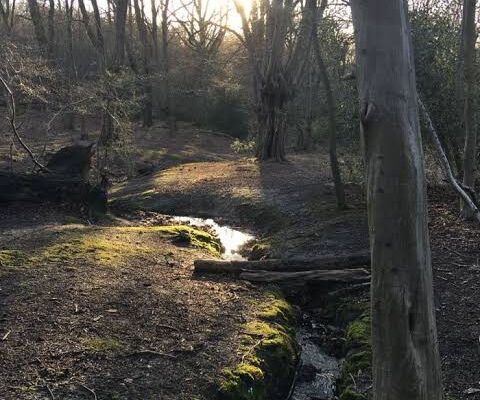
The forest is dotted with ponds, some permanent and others seasonal. At one pond covered with a thin layer of ice, I saw a moorhen quietly slip into the reeds, as if surprised to see someone braving the cold.
Beneath the pond’s calm winter surface, many creatures are hidden, hibernating or lying dormant.
Although the surface looks peaceful, amphibians and insects rest below and in nearby plants, waiting for spring to return.
Frogs hibernate at the bottom of the pond.
Frogs spend winter at the bottom of the pond, while toads and newts hide in piles of logs or thick plants nearby.
Sometimes, grass snakes, slow worms, and adders curl up together to stay warm, and water boatmen and diving beetles burrow into the pond’s depths, lying dormant through the winter freeze.
Winter’s quiet makes every sense feel sharper.
Ancient beeches, bare after losing their summer leaves, reach up toward the pale winter sky. They look stark and magnificent. I pause and listen to the distant tapping of a woodpecker, the chatter of long-tailed tits, and the soft gurgle of a hidden stream.
When winter comes, the cold seems to bring the forest’s stories closer. The land quietly shares its history with anyone willing to listen.
Sometimes, the best part is stopping with hot tea in hand, sunlight breaking through the mist, and feeling truly alone in London’s wild heart.
In winter, Epping Forest reveals its secrets. You can spot animal tracks in the mud and see ancient earthworks lit by the low sun. Every walk here reminds you that nature’s beauty doesn’t vanish in the cold; it just changes. If you brave the chill, you’ll find the forest’s best treasures are often the quietest ones.
The trail winds gently through the woods, with Hill Wood on your right. Soon, the path opens up, with North Long Hills to the left, Whitehouse Plain to the right, and Almshouse Plain straight ahead.
Here, the ‘plains’ are open areas with wide views that show just how large the forest really is.
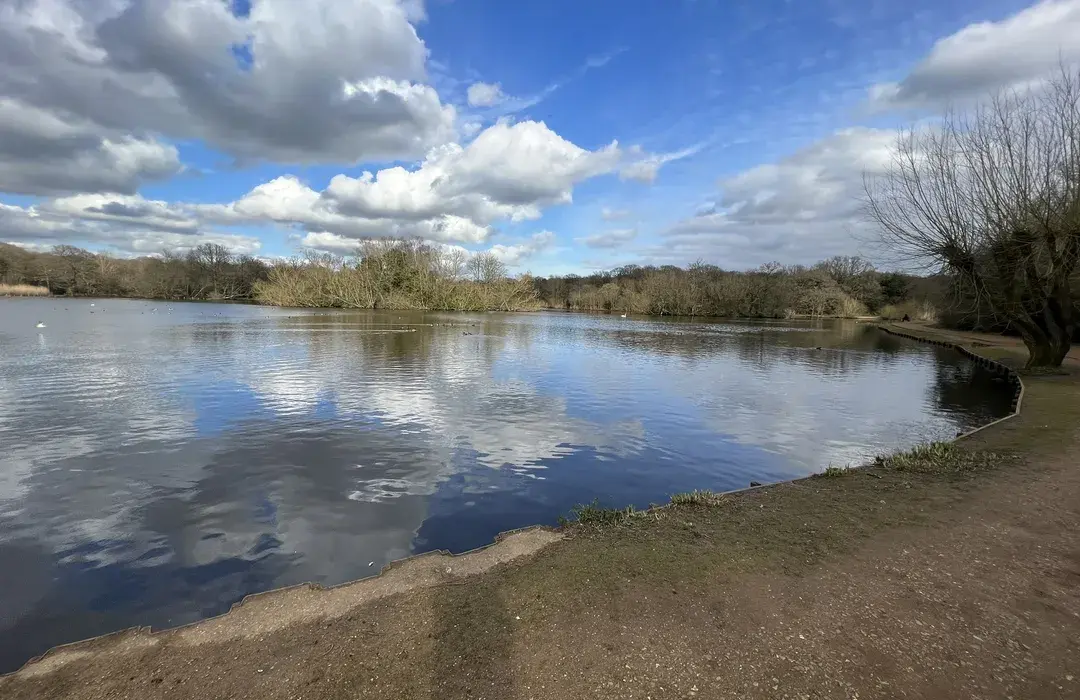
We turn left toward Ludgate Plain and follow Cuckoo Brook to the calm Connaught Lake, where water birds glide across the still water.
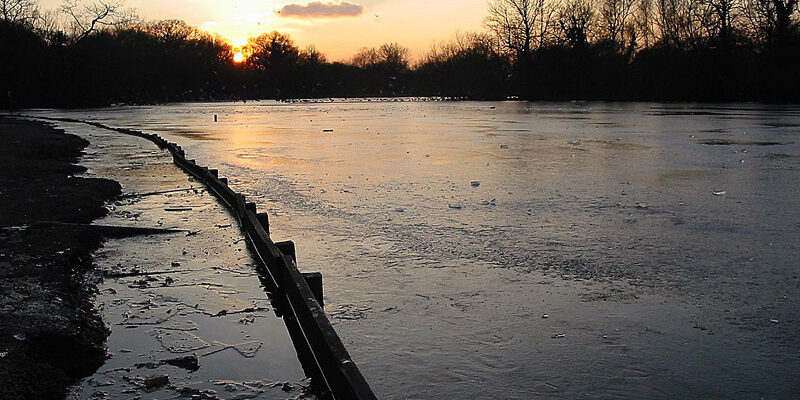
Swans, geese, and many kinds of ducks, from Mallards to Mandarins, live at this lake. Local birdwatchers have spotted over 100 species here.
If you arrive at dawn, you’ll see a breathtaking scene, even in the middle of winter.
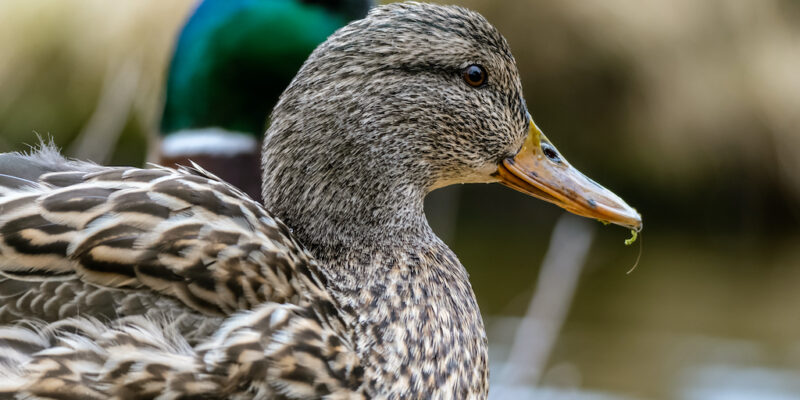
Mallard ducks are a common sight, but in winter they pair up early and eat seeds and nuts to prepare for the colder months. Most Mallards stay here all year, but some fly south to avoid the coldest weather.
Amazingly, they maintain a body temperature of 104°F (40°C). Mallards have a clever adaptation: their bodies send cooled blood to their legs and feet, acting like a heat exchanger to prevent freezing and minimise heat loss in icy water. When winter nights get cold, ducks fluff up their waterproof feathers to keep in body heat and stay warm.
Many people enjoy feeding ducks, but giving them bread actually does more harm than good. Bread fills them up but doesn’t give them the nutrients they need, so they can end up undernourished.
If you want to give ducks a treat, try offering dried oats, peas, or sweetcorn. These are healthy snacks that fit well with their natural diet.

Male Mandarin ducks show off their bright feathers in the middle of winter, hoping to attract a mate for spring breeding.
On cold days, they often seem sluggish as they save energy. Like Mallards, they enjoy eating seeds and acorns.
Mandarins often leave the water to explore the damp woods around lakes. They prefer calm spots instead of fast-moving rivers.
As I look across the lake, I spot several pairs of Gadwall ducks, which are a bit smaller than Mallards.
Males and females look very similar, but if you look closely, you can see the male’s breast has detailed patterns called ‘vermiculations.’
Tufted ducks are some of the most striking birds I have seen.
The males have a long, tufted crest and look like they’re wearing a black-and-white tuxedo. Most stay in the UK all year, but some head south for warmer winters.
We keep walking toward High Beech along a straight path next to Fairmead Road. We pass fields where English Longhorn cattle, which are part of the Forest’s conservation grazing herd, often graze.
At the end of the track, we head into some ancient woodland, one of my favourite habitats due to that feeling you get from being in and among these beautiful old trees.
You can almost feel the ancient spirit of the forest here. More people are starting to notice how much good there is in spending time among the trees.
Consider shinrin-yoku, the Japanese practice of ‘forest bathing’. While this term describes what nature lovers have always felt, new research now proves its many benefits.
Trees release compounds to protect themselves. Some, like salicin from willow bark, inspired medicines such as aspirin.
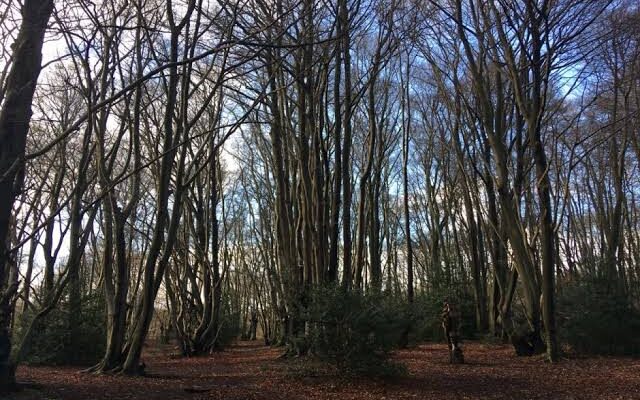
Evidence now shows that just breathing in these forest compounds can also boost our health.
One study found that spending just three days forest bathing improved immune function for a week or longer in people with weaker immune systems.
Spending time in the woods lowers blood pressure, reduces stress hormones, and measurably boosts mental health. This confirms what many people have always believed.
With Epping New Road nearby, it’s clear the outside world is never far away. We keep going, with Mount Pleasant on our right and Little Monk Wood on our left.
The path winds toward Great Monks Wood, where the trees become thinner on our left. The atmosphere changes and feels different from earlier in our walk.
We follow a few gentle slopes and dips as we continue.
Great Monk Wood is a peaceful, ancient woodland in the heart of Epping Forest. It is known for its tall beech pollards and wide variety of wildlife.
Great Monk Wood has been mentioned in written history since the 13th century. Its name is connected to Waltham Abbey and Stratford Langthorne Abbey, both of which once felled trees here.
For centuries, the landscape has changed very little. Tall beech pollards grow next to oaks, hornbeams, and birch trees, giving the woodland its unique character.
At the northern edge, the woodland gives way to Deershelter Plain. This area was once heathland and was named for the shelter where deer were fed during harsh winters.
Today, herds of fallow deer still roam here. In the past, roe and red deer also lived in Epping Forest.
Red deer disappeared in the early 1800s. Efforts to bring back both red and roe deer were unsuccessful. Red deer were considered dangerous and taken away, and roe deer were gone by the 1920s.
In recent years, the Forest has become known for its wild fallow deer. They were probably brought here by the Normans, but they might have arrived even earlier.
Many books say these fallow deer are unique to Epping Forest, but that is not completely accurate.
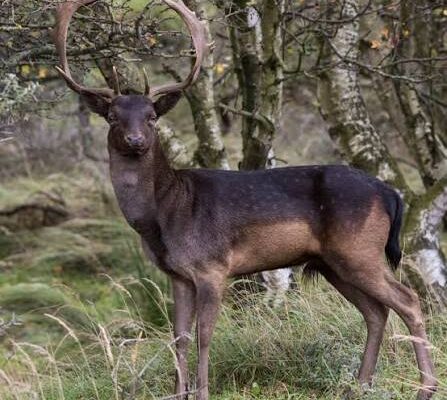
By the late 1800s, dark, or ‘black’, fallow deer became the main type in Epping’s herds. This kind is not unique, since small numbers live elsewhere, but it is rare to see so many outside the Forest.
During the 20th century, fallow deer were common, and their grazing helped shape the grasslands. However, after many road accidents and disturbances in the 1960s, their numbers fell quickly.
Both spotted and dark fallow deer are now thriving in the countryside northwest of the Forest, where people often see them. Only a few deer still roam inside the Forest itself.
To keep the deer safe, a sanctuary was established on part of the old Birch Hall estate at Theydon Bois. Now, more than 100 fallow deer live safely on 90 acres of woods and grassland. You might see these deer from the north corner of Birch Wood.
Walk quietly up to the high-wire fence, and bring binoculars if you have them. If you don’t spot any deer, try moving slowly southeast along the fence for a better view. Please note that the sanctuary is not open to the public.
Muntjac deer come from Southeast Asia. They escaped from Woburn Abbey in the 1920s and soon spread across much of southern England.
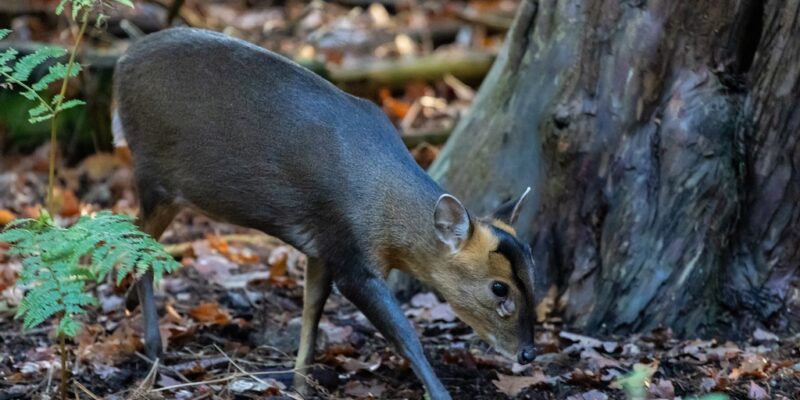
They first showed up in Epping Forest in the 1960s, except for one earlier release in 1958. Now, they live wherever the woods are thick enough.
Muntjacs are shy and usually keep to themselves, so seeing one is a matter of luck. They are small, about the size of a dog, with rounded backs and standing just two feet tall. People don’t always realise they are deer, and they are known for their loud bark, especially during the rutting season.
In summer, Great Monks Wood is full of nightjars, tree pipits, and redstarts. In winter, colourful native birds such as the nuthatch continue to brighten the woods. Winter is perfect for watching nuthatches at work: they wedge seeds into bark and hammer them open with sharp bills.
Nuthatches also store food by hiding seeds to eat later. They hide seeds under loose bark and cover them with bark, lichen, moss, or even snow. As winter goes on, nuthatches come back to these hidden stores. This caching helps them keep a steady food supply during the cold months.
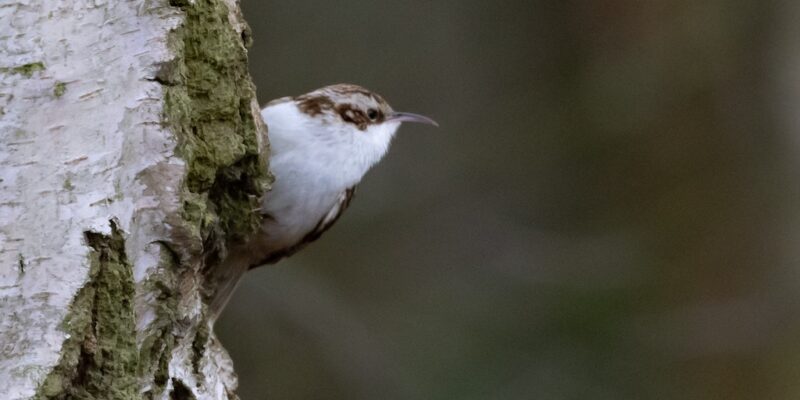
A small bird darts down the tree trunk to my right and slips out of sight. I stop and stay quiet. After about thirty seconds, its curious head appears from behind the bark.
It’s a treecreeper, one of our smallest birds. It weighs only 10 grams, just a bit more than a £1 coin. Despite its tiny size, it manages to live here all year round, although it does struggle to survive during cold winters, especially when a freeze occurs after a spell of wet weather.
That’s why treecreepers are listed as Green, which means they are not currently of conservation concern.
During cold spells, these usually solitary birds gather at communal roosts. Sometimes, a dozen or more huddle together for warmth.
This woodland is home to tawny owls, which are now roosting high up, so it’s unlikely I will see them during the day. I did spot a surprising resident here: the green woodpecker.
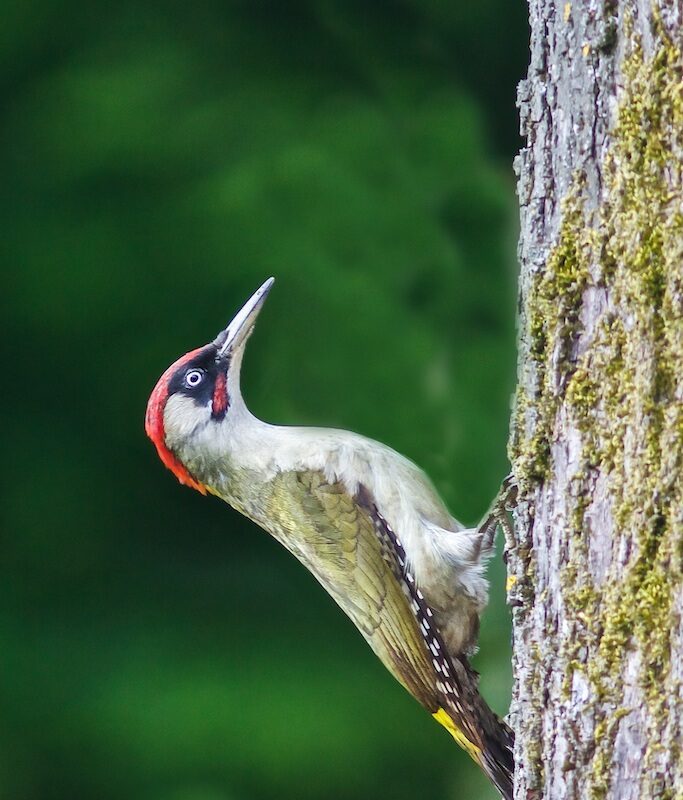
In winter, green woodpeckers have trouble finding ants in the frozen ground, so they change how they search for food. They adapt by eating insects hidden in bark, as well as berries, fruits, and pine seeds. Sometimes, you might see them at garden feeders during the coldest months.
Another unusual adaptation is that established pairs often separate for the winter, with each bird living alone in a tree hole or cavity. This helps them save energy and keep warm.
Loughton Camp is one of the most magical sites in Epping Forest. Built around 500 BC, this Iron Age earthwork, along with Ambresbury Banks to the north, was probably used by the Trinovantes and Catuvellauni tribes to keep livestock and as a refuge.
By the time Julius Caesar invaded in 55 AD, the Trinovantes were the most powerful Celtic tribe in Britain. Later, they joined Boudica and the Iceni in the well-known uprising against the Romans in 61 AD.
Although excavations have proven that the Romans were in the forest, the legend that Ambresbury Banks was the location of Boudica’s defeat has been dismissed by historians.
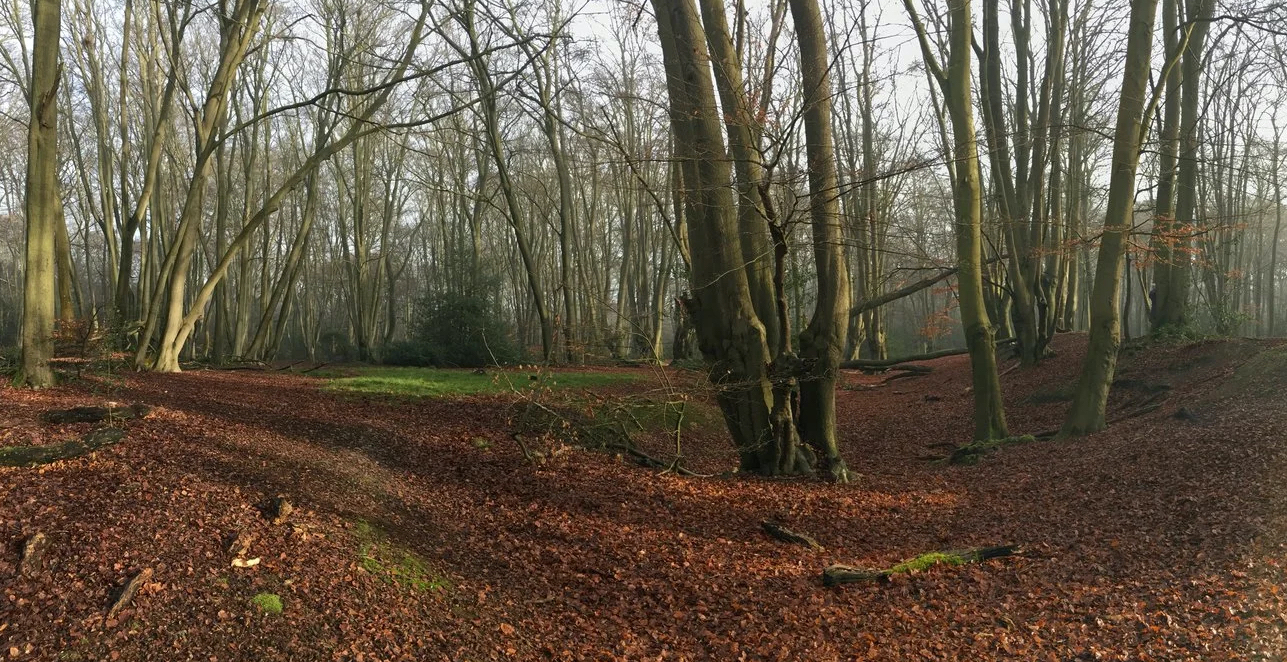
Loughton Camp is hidden off the beaten track in Great Monk Wood, on the edge of a high ridge approximately 110m above sea level.
The 10-acre camp is now full of trees, but it used to have wide, open views. The banks were three metres high, and deep ditches ran around the site.
Fast forward two thousand years, and legend has it that the highwayman Dick Turpin hid at Loughton Camp in the 1700s. Because of his fame, people invented ‘Turpin Traps’, wooden flaps at the tops of stairs that turned homes into early panic rooms.
Today, trees grow along the roadside, but in Turpin’s time, the woods were kept clear to stop robbers from ambushing passing carriages.
I hope you enjoyed this first look at Epping Forest. It really is one of London’s wildest places.
There’s still so much more to discover in Epping Forest: hidden glades, ancient earthworks, secretive wildlife, and stories waiting to be found under the green canopy.
Whether you visit often or are planning your first trip, Epping Forest offers something new every season.
We’ll be back soon to share more, and we hope you’ll join us for the next adventure in Epping Forest, which really is one of London’s wildest places.
If you enjoyed this blog, please check out more of our wildlife blogs here, or you may prefer to listen to the Wildlife Matters Podcast here.
If you want to support our work
Please click on the Wildlife Matters Patreon Community.
Please click to join the Wildlife Matters Substack Community.
You can donate here.
Further Reading