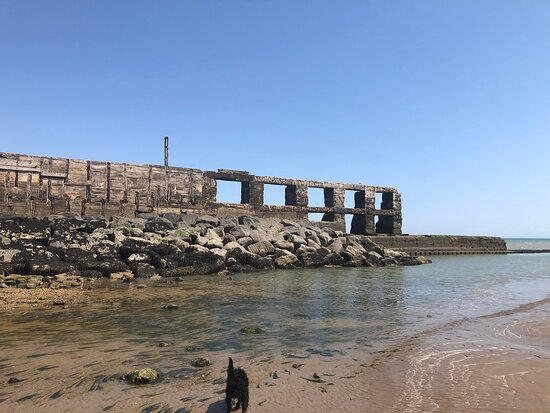
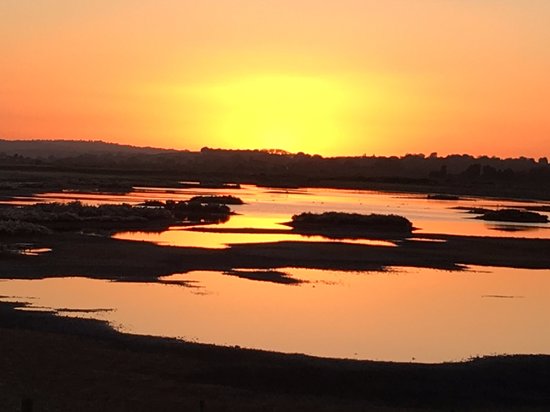
Today you join me for a spring walk around the Rye Harbour Nature Reserve in Sussex. It is a beautiful, warm day here on the south coast.
You can reach Rye Harbour Nature Reserve by car from the east, with free parking, but please consider taking public transport or bringing a bike to explore the whole reserve and the wider area. Rye Harbour is just over an hour from London by train, with good access from nearby Brighton.
As you set off, you’ll almost immediately see Martello Tower No. 28, also known as the Enchantress Tower, right next to the main village car park at the entrance to Rye Harbour Nature Reserve.
Built over 200 years ago during the Napoleonic Wars to defend the coast against potential invasion, it features a raised entrance door that originally used a drawbridge, surrounded by a walled moat. It also marks where the shoreline was located back in 1808.
I take in the salty air and fresh scent of new growth. Birds called all around, and the land seemed to stretch across the horizon until it met with sea and sky. Shingle ridges, silver lagoons, and saltmarshes spread under the sky, each alive with its own unique energy and the excitement and promise of spring at its height.
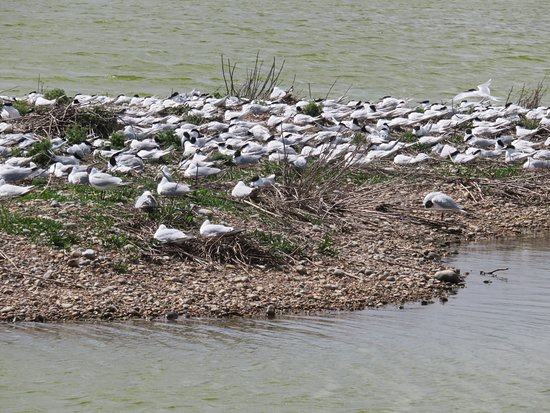
Soon, Little Terns, Common Terns, and Sandwich Terns circled and called above the shingle, their wings shining in the morning light as they looked for places to nest and food.
Along the grassy shoreline, Avocets moved carefully with their upturned bills, and a quick flash of black and white showed an Oystercatcher searching for breakfast in the mud flats.
Everywhere, Ringed Plovers, Lapwings, Redshanks, and Wheatears were busy with their spring routines, showing how much of a sanctuary this place has become for wildlife.
Careful habitat management and conservation measures, supported by a proactive team of volunteer wardens, have made this possible.
So far, more than 280 bird species have been recorded on the Reserve, of which over 90 have nested. Beyond the breeding birds, Rye Harbour is also a good place to observe bird migration, and in winter large numbers of wildfowl and waders gather to take full advantage of the relatively undisturbed Reserve area.
The Sussex Wildlife Trust Rye Harbour Discovery Centre offers a unique natural history experience and a chance to connect with this special 475-hectare biosphere living sanctuary.
The Discovery Centre tells the 700-year story as a historical tapestry of the changing coastline. It explains why it is vital to preserve, study, and protect 4500 plants and the wildlife in the rich mosaic of habitats on this exposed, weathering coastline, which is a Special Area of Conservation.
You can enjoy birds all day, every day, along many miles of path, with five birdwatching hides accessible to wheelchairs, pushchairs and mobility scooters. The map shows a 4.5 km walk, but you can explore many different paths.
After just a few hundred metres’ walk toward the sea from the main Rye Harbour car park, past the Rye Harbour Discovery Centre, you will see the path to Gooders Hide, which is flat and well surfaced, giving easy access for wheelchairs and pushchairs. The hide itself is fully accessible.
Named in honour of John Gooders, a former chairman of the Friends of Rye Harbour Nature Reserve, wildlife author, and television presenter, it offers wonderful views across the coastal pools and marshes, making it a popular spot for birdwatching.
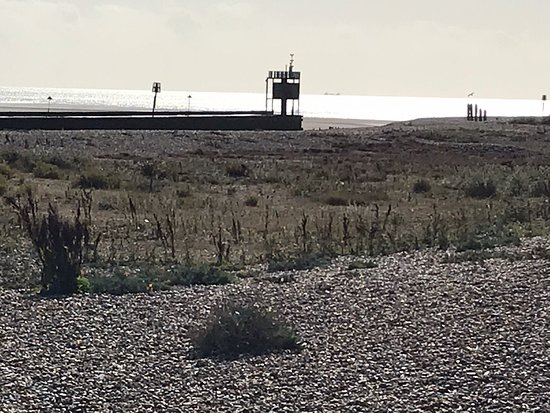
Spring on the Shingle: Nature in Bloom
As I walked along the shingle ridges, what first looked like a bare, stony place soon revealed its hidden colour and vibrant life.
In May, the shingle comes alive, turning into a bright display that rewards those who look closely.
Sea Kale stands out with creamy-white, fragrant clusters that attract bees and butterflies. I stopped to enjoy the sweet scent and admired how these plants not only survive, but thrive where few others can.
Its purple shoots, thick green-blue leaves, honey-scented white flowers, and pea-like seed pods make sea kale a kaleidoscope of colour and a unique feature of this habitat.
In Britain, sea kale has had a mixed time, declining in some areas while increasing in others, and is not currently considered rare.
Here in the south of England, it has declined quickly, mainly due to gravel extraction for building. Given the unique habitat in which it grows, it doesn’t surprise me that this stunning plant is declining on the busy, commercial beaches of the south coast.
One Sea Kale colony I know was badly damaged by a winter storm a few years ago and has struggled to recover. More recently, it has recovered and is now bigger than ever, with more young plants.
Sea kale grows on substrates rich in organic matter and nitrogen compounds from decomposed seaweed at high drift lines. It can also grow in poor and saline soils.
The florets, the unopened flower heads, make good wild forage to eat in June and July. Sea kale seed pods are generally only worth eating for a very short period of succulence, which can be as little as two weeks, after which they become too hard to eat. Roots are available year-round, but are hard to spot when they don’t have leaves.
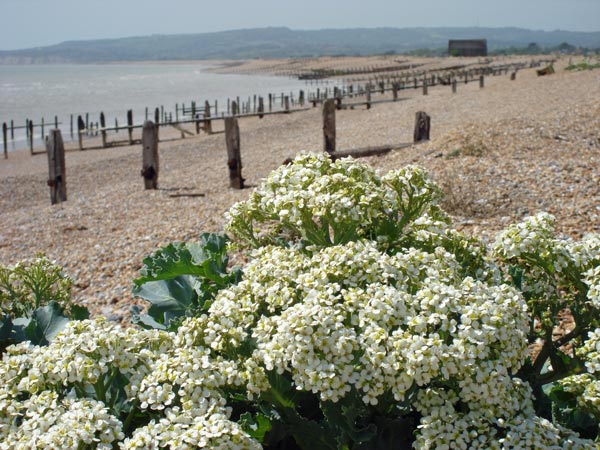
Sea Kale thrives best on shingle and coarse sandy beaches, occasionally rocky shores, on stable substrates above the high tide line. It very rarely spreads inland, though some have likely escaped from gardens back into the wild in some locations.
Sea kale produces hermaphrodite flowers that can both self- and cross-pollinate. Insects, including flies and bees, pollinate it, and a colony of mature sea kale in full flower buzzes with life, even in windswept locations that tend to have fewer insects. Fully grown plants can produce 1000 to 10,000 seeds per year.
Taproots are remarkable for reproduction and renewal. Their extensive root and rhizome systems are like living reservoirs, providing the essential resources for new growth. Even if erosion occurs, these plants can bounce back because they can regenerate from fragments of the plant itself.
Traditionally, piling shingle and seaweed over young shoots, much like forcing rhubarb, encourages longer, paler, and more tender stems within a few weeks. These ready, tender, and tasty shoots will naturally grow longer later on, especially in the shade of the older leaves. It’s also a good idea to carefully pick flowers and seed pods, and keep an eye on how many plants you have to help everything thrive.
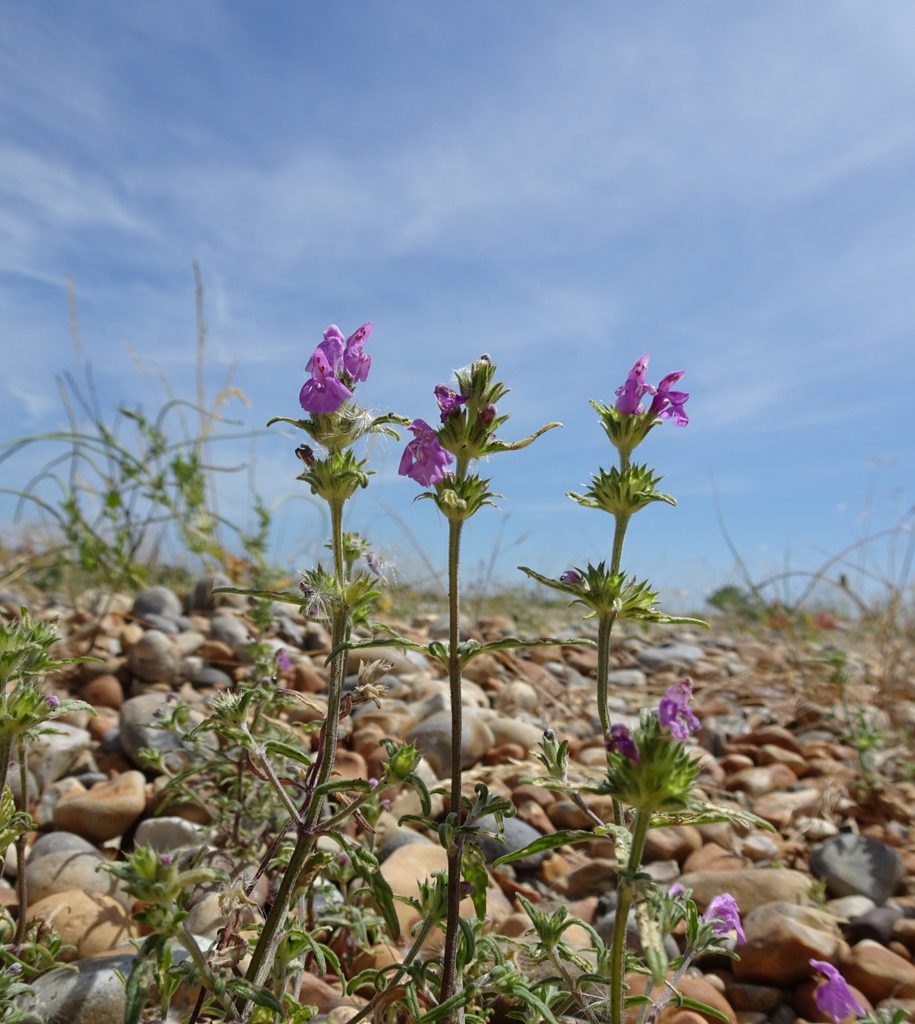
I lowered myself to the ground and took a closer look at the delicate pink flowers of Sea Pea, a rare gem along Britain’s wild shores. Its beautiful blue-green leaves and vibrant purple-pink blossoms create a charming, hidden mat over the stones.
Sea Pea thrives in this small, special spot near the salt marshes behind the shingle spits. It grows in a cosy patch where the shingle meets the mainland. During its flowering season, typically from June to July, the Wildlife Trust sometimes fences off the area to protect ground-nesting birds like Ringed Plovers and Terns.
If you’re hoping to photograph the Sea Pea, bringing a long lens can be really helpful. The flowers are purple but tend to turn a lovely shade of blue as they age. After blooming, the pea pods develop. They start off green and turn brown when they’re ripen.
Herb Robert grows in hedgerows, woodland edges, wasteland, and crop field margins;
it also colonises stony verges and motorway central reservations, but there is a form, Geranium robertianum ssp. maritimum, which you can find here, growing in sandy gravel along the coastal shoreline.
In Britain and Ireland, Herb Robert usually blooms from April to November, but in very sheltered spots, and depending upon where you live, you might be able to enjoy its flowers all year round, unless a very harsh winter arrives.
While Herb Robert’s blooms are most vibrant in July and August, its striking bright red seed capsules bring a cheerful splash of colour to hedgerows in autumn, even when most wildflowers have already faded.
The genus name Geranium comes from the Greek word ‘geranos,’ meaning Crane, inspired by the crane-like beak shape of its seed capsules.
As for the specific epithet ‘robertianum,’ thought to honour someone named Robert, although no one can say for sure who that person was. Legend has it that Saint Robert, a French monk around 1000 AD, used this plant to help treat various ailments. Alternatively, the name may come from the Latin word ‘ruber,’ meaning red, inspired by the plant’s vibrant colour.
Some people enjoy adding fresh Herb Robert leaves to salads, and historically, both the leaves and flowers have been used to make tea. When crushed, the fresh leaves emit a spicy, burning aroma, sometimes unfairly compared to the smell of tyre rubber, and rubbing it on your skin is believed to help ward off mosquitoes.
In fact, traditionally, the plant has many herbal uses, including treating toothache and nosebleeds, and for covering open wounds to aid healing.
Just a short walk later, I was delighted to see the soft mauve flowers of Salsify gently opening in the warm morning sun. By afternoon, they would close again, making this fleeting moment feel even more precious and a lovely reminder of nature’s gentle rhythms.
The local Council created the Rye Harbour Local Nature Reserve back in 1970, following the National Parks and Access to the Countryside Act of 1949.
In 2011, the Sussex Wildlife Trust took over the management of this beautiful area. Covering 465 hectares (1,149 acres), most of it is flat and gently sloping, with no natural features rising above six metres. This wonderful reserve is entirely within the Dungeness, Romney Marsh, and Rye Bay SSSI, making it a cherished part of the local landscape.
The high points are the crests of shingle storm ridges, built up over hundreds of years by the combined action of tides and storms.
The low points are the sheltered areas between the ridges, where saltmarsh developed on land regularly inundated by water.
Rye Harbour is perfect for discovering the UK’s fascinating wildlife in a beautiful mosaic of coastal habitats. From shingle and saltmarsh to saline lagoons, coastal grazing marsh, freshwater gravel pits, and reedbeds, there’s so much to see.
Take a leisurely stroll along the changing coastline, learn about its rich military history, or simply enjoy a relaxing walk by the sea. Rye Harbour forms the second-largest area of vegetated shingle habitat in southern England, surpassed only by Dungeness.
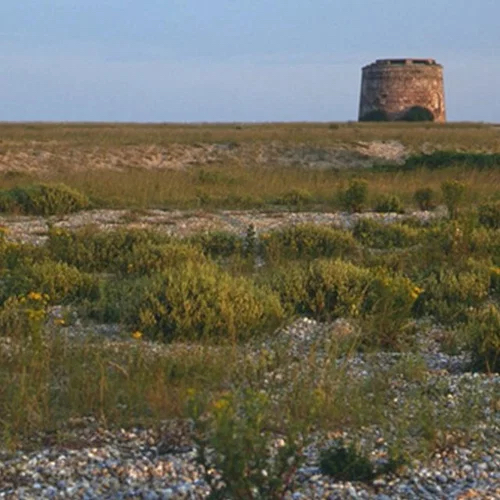
Coastal vegetated shingle is a habitat found on shingle beaches, which are made up of pebbles and stones instead of sand. Waves and storms constantly shape these environments, making them harsh and dynamic, with few plants able to survive.
Vegetated shingle develops when tough plant species like sea kale, yellow horned poppy, and sea pea grow on the shingle, emerging from a thin organic layer. Their roots stabilise the shingle and help create a more welcoming environment for other plants and wildlife.
Sea Campion forms low, cushion-like clusters of waxy grey-green leaves, accented by white, inflated-tube flowers.
If you’re near rocky areas such as sea cliffs, shingle beaches, or gravel paths in summer, you’ll likely encounter sea campion.
It typically grows alone, though it occasionally appears in small groups. Each flower features a calyx with pink and purple veins and five white, bi-lobed petals.
Historically, sea campion has been called ‘dead man’s bells’, ‘witches thimbles’, and ‘Devil’s hatties’. Folklore warns against picking it, as doing so is said to bring death.
Rock Samphire is a hardy, aromatic perennial with fleshy, divided leaves that flourish in coastal environments. It belongs to the umbellifer family, related to carrots, parsley, and fennel, and often grows on stony beaches and cliffs, sometimes emerging from rock crevices.
The plant features flat clusters of greenish-yellow flowers and fleshy leaves that emit a strong, pungent scent when crushed. Its aroma has been described as similar to varnish or turpentine, with a pronounced note of raw carrot.
What Does ‘Samphire’ Mean?
Because this plant often grows directly out of rock, it was called St Peter’s Herb; the French name is Herb Saint-Pierre, which eventually became Herb Samphire. The reason for this change is unclear, as the closely related Marsh Samphire was named due to its resemblance and similar uses, even though it is not closely related botanically.
The plant is at its best in spring to early summer; later on, you can still use it, but gather only the crisp, fresh green growth and avoid older material that may have become stringy or woody. Side branches should snap off easily by hand; if they’re difficult to break, the plant is too old to be good eating.
Rock Samphire is a charming coastal plant commonly found along shingle beaches and rocky cliffs in Southern Britain. Its historical popularity was so high that some daring foragers took significant risks to gather it, even risking falls from cliffs in the process.
While its popularity has waned over time, many still enjoy collecting it for a fresh, healthy, salty burst of flavour.
Coastal vegetated shingle develops on and above the berm, which marks the high tide line. It can survive here because it is out of reach of the waves during the normal tidal range.
Some of the highest tides might still reach the plants just above the normal high tide berm, and the beach in this area can still move and change fairly often. Therefore, annual plants, which complete their lifecycle within one year, typically grow there.
Once damaged, shingle recovers slowly. Trampling can be damaging, and the more frequent it becomes, the more likely it is to cause a complete loss of vegetation.
If a beach is wide and more stable, storm berms form further from the sea, and perennials, which grow and reproduce over two or more years, can establish.
Therefore, on some very wide beaches, an incredible transitional plant community develops across the beach. In the landward areas of the shingle, where conditions are more stable, grassland, scrub and heath communities can form, supporting a range of lichens, mosses, rare clovers and succulents.
Sussex’s vegetated shingle not only showcases stunning beauty but also serves as a vital home for a variety of unique plants and animals. Besides the plant species we’ve mentioned, many others that can’t thrive elsewhere find a safe haven here.
This habitat is especially important for specialised insects like the Whelk-shell Jumping Spider, which cleverly makes its home in empty whelk shells washed up by storms.
Pollinators like the Large Garden Bumblebee also thrive here, supporting the local ecosystem.
Saline, brackish, or hypersaline water areas are partially separated from the sea, holding water at low tide, a charming feature that enriches the region’s ecological diversity.
There are four main types of lagoons here on the south coast: the small rivers blocked by shingle bars and occasionally overtaken by the sea; pools enclosed within shingle beaches; shallow pools on clay trapped behind shingle ridges fed by seepage of seawater; and bodies of water behind sea walls nourished by rain, seepage, sea spray, or sluice gates.
Salinity levels vary widely within and between sites, creating a wide range of conditions that support unique communities of specialist species. These often form part of a broader coastal mosaic that includes vegetated shingle, saltmarsh, and coastal and floodplain grazing marsh.
Saline lagoons are home to a range of specialised invertebrates that are rarely found in other habitats across Britain.
The unique mix of salinity, water chemistry, and structural diversity in lagoon environments ranging from nearly freshwater to hypersaline conditions creates numerous ecological niches for species that cannot survive in fully marine or freshwater settings.
Among the fascinating creatures inhabiting Rye Harbour’s saline lagoons are the Lagoon Sand Shrimp, Starlet Sea-anemone, Lagoon Cockle, and mud snails of the Hydrobia genus.
Most of these unique invertebrates are concentrated along the Sussex coast, helping make the area’s habitats truly globally significant. Because these species are rare and highly specialised, they are often limited to just a few sites across Britain.
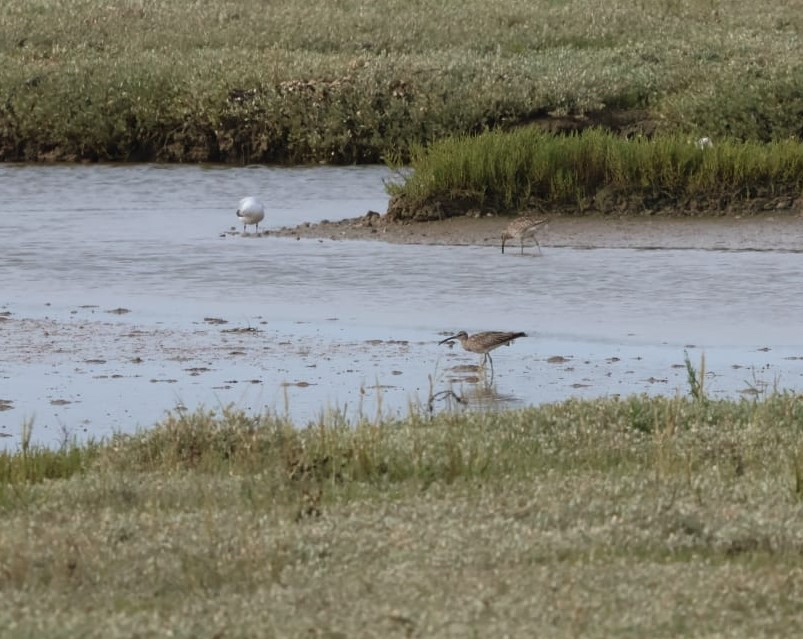
Saline lagoons are vital for conservation, their ecological importance far exceeding their small size.
The margins of lagoons are equally important, supporting specialist invertebrates including the Fancy-legged Fly and the Bearded Stonewort, a rare charophyte algae associated with shallow, clear, brackish water.
Saline lagoons are also important for birds, particularly waders and wildfowl that use them for feeding and roosting.
Their position within a broader coastal mosaic alongside saltmarsh, vegetated shingle, reedbed and grazing marsh significantly amplifies their ecological value, as species move freely between these habitats depending on tidal state, season and food availability.
A Haven for Nesting and Migratory Birds:
Terns are slender, graceful seabirds in the wider gull family, known for their sharp, forked tails and incredible plunge-diving skills. They have slender bodies with soft grey upperparts, white underparts, and during the breeding season, a striking black cap.
The Sandwich Tern is an unmistakable highlight during the breeding season, especially along Britain’s coastlines. Larger than many other terns, they nest in bustling colonies scattered across sandy and shingle beaches, as well as on islands.
With striking looks, Sandwich Terns are easy to identify: their plumage is pale grey above and pure white below, topped with a dramatic black cap that turns white on the forehead in winter, plus a distinctive shaggy crest. Their short, black legs and long, slender black bill, tipped with yellow, complete the picture. Unlike some of their relatives, their tail ends in a neat, square tip rather than trailing streamers.
These agile birds are masters of the dive, plunging into the water to catch small fish like sandeels, sprats, and whiting.
Their presence is a sure sign of healthy coastal waters.
Named after Sandwich Bay in Kent, the Sandwich Tern shares its place-based naming heritage with the Kentish Plover and Dartford Warbler. Spotting them wheeling and calling above the reserve is one of spring’s real delights.
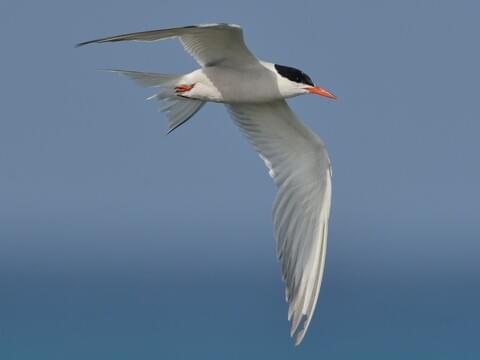
Common Tern
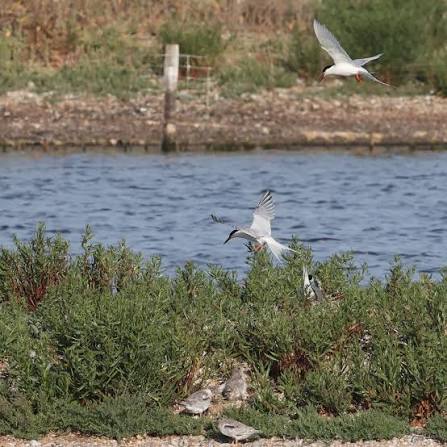
The Common Tern is a beloved sight at Rye Harbour in spring and summer. As I stroll along the edge of the reserve, their lively calls fill the air, blending with the gentle breeze. Graceful and lively, these medium-sized terns glide and hover over the lagoons, with sharp eyes watching the water below before they dive swiftly to catch a glimmering fish.
Unlike many seabirds, Common Terns feel at home both along the coast and inland. They nest in lively colonies on shingle beaches, rocky islands, and even along the gravelly edges of inland lakes and rivers.
Watching them fiercely defend their nests by diving at larger intruders, including humans, reveals just how spirited and brave these birds are. My friendly tip: wear a hat and sunglasses, just in case you wander into their nesting area.
It can be a little tricky to tell Common Terns apart from their close relatives, the Arctic Terns, but a close look helps. Common Terns tend to have whiter underparts, shorter tail streamers, and a longer, bright orange-red bill tipped with black. Their shiny silvery-grey backs, neat black caps, and short red legs give them a tidy, attractive look.
With their elegant, flowing tail feathers, they’ve earned the charming nickname ‘sea-swallow.’ Watching them circle and dive over Rye Harbour’s sparkling pools is a wonderful sign that summer has arrived, filling the season with joy and excitement.
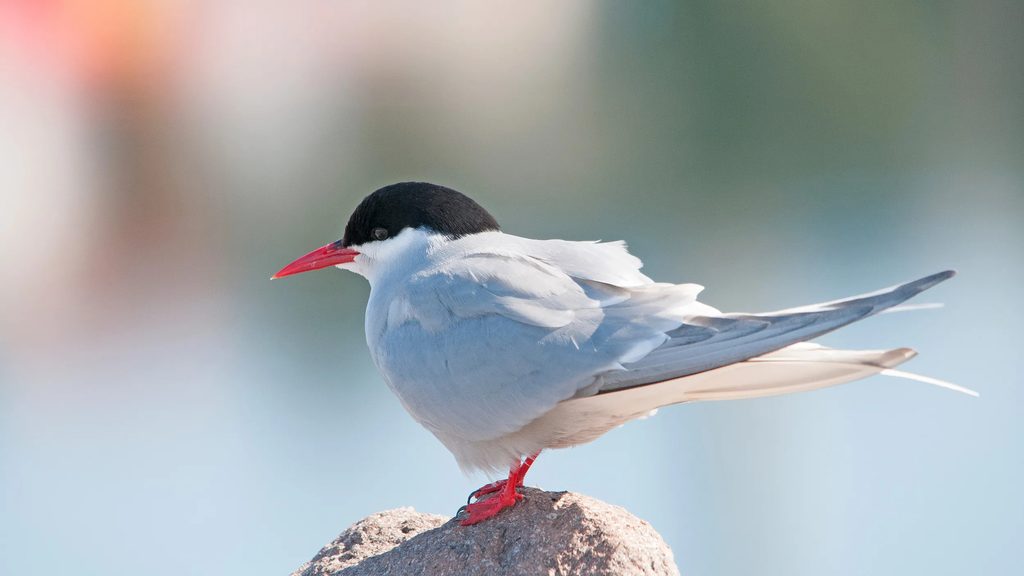
Artic Tern
Among all the birds you might see during a spring walk at Rye Harbour, the Arctic Tern truly stands out as a remarkable wonder of nature.
Smaller and more delicate than its relatives, this bird exudes grace and resilience. Its silvery-grey back shines in the sunlight as it glides overhead, complemented by a sharp black cap and vibrant red legs that add a splash of color. The blood-red bill and those stunning, long tail streamers create an unmistakable silhouette against the sky.
As spring arrives, you’ll hear the lively calls of Arctic Terns as they return from their incredible migration and gather in lively colonies.
Here at Rye Harbour, as in the northern colonies of England and Scotland, their presence brings vibrant energy to the reserve.
These birds are caring parents, and it’s an exciting experience to watch them swoop and dive to protect their nesting grounds from foxes, crows, or even curious walkers. Their daring flight manoeuvers are a real highlight and make any visit special.
It’s fun to tell the Arctic Tern apart from its look-alike, the Common Tern. Look for the Arctic Tern’s notably longer tail streamers, a fully red, shorter bill, and a slightly greyer underside. Noticing these small details makes watching them even more rewarding.
What makes the Arctic Tern truly extraordinary, though, is its incredible journey.
Every year, these small but mighty birds undertake the longest migration of any animal, travelling between the Arctic and Antarctic and back again, an astonishing round trip of up to 59,000 miles.
Over their lifetime, an Arctic Tern might cover the distance of three trips to the Moon!
Seeing one soaring above Rye Harbour is like witnessing a true champion of endurance, pausing briefly here before continuing its epic global voyage.
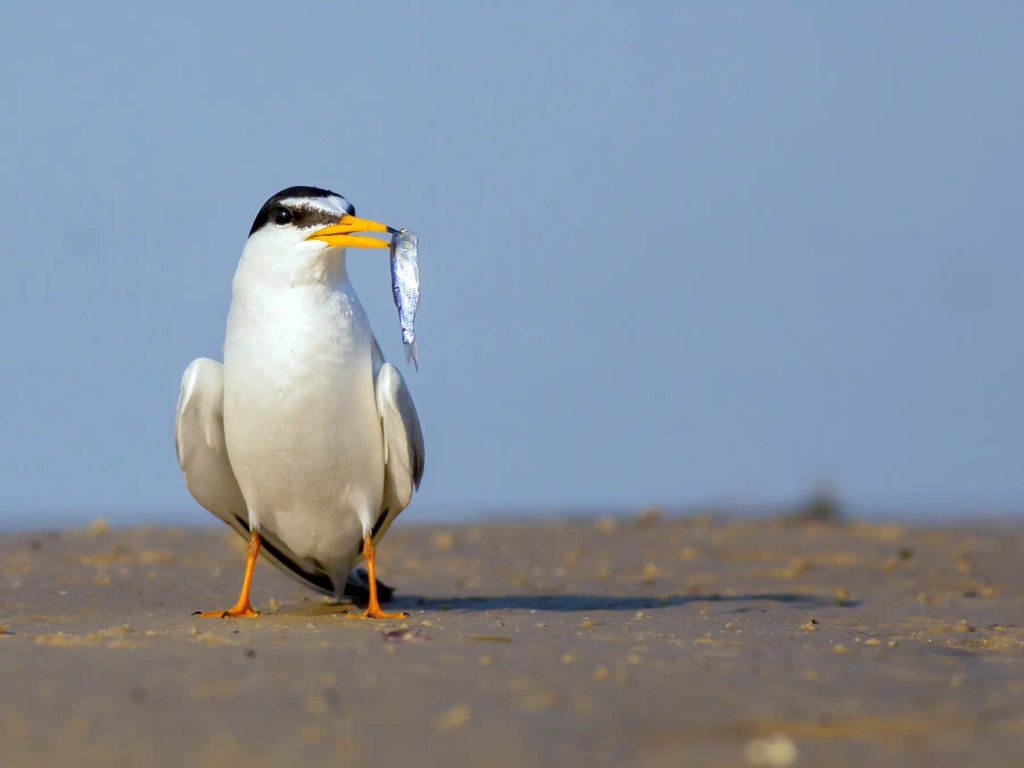
Little Tern
The Little Tern is a tiny marvel, and it’s truly a delight to observe. As one of Britain’s smallest seabirds, it weighs no more than a tennis ball but is full of energy and spirit.
Spotting one along the shores of Rye Harbour brings a burst of joy: catch a quick flash of white as it zips past, with a sleek black cap, a bright white forehead, and a tiny yellow bill tipped in black. These nimble birds seem to dance effortlessly on the wind, showing off their agility.
In late April, excitement builds as the Little Terns finish their incredible journey from wintering grounds in West Africa.
Their arrival marks the true start of spring on the reserve. Watching their courtship displays is a special treat: males call out, wheel high above, and swoop down with a silvery fish in their beak, a sweet offering to a hopeful mate. The female’s playful chase and her gentle acceptance on the shingle create one of nature’s most charming scenes.
Their nests are wonderfully discreet: shallow scrapes on open sand or shingle, almost invisible to the casual observer except for the watchful parents. Here, they lay two or three eggs, and soon fluffy chicks tumble along the tide line. Just off the shore, these clever birds show off their fishing skills, hovering and then plunging headfirst into the shallows to catch tiny fish and invertebrates—always staying close enough to land to make the most of their surroundings.
Of course, this closeness comes with risks. Their reliance on quiet, undisturbed beaches means that human disturbance or a lack of fish can threaten entire colonies. We must respect their space to ensure their continued survival.
What’s most inspiring about the Little Tern is its resilience. Imagine a bird that weighs just over a lemon flying thousands of miles year after year! One was even recorded nesting at 25 years old in North Wales, having travelled at least 200,000 miles in its lifetime.
Each sighting of a Little Tern reminds us of the incredible stories unfolding along Rye Harbour’s shores.
Among the tern species at Rye Harbour, the Roseate Tern stands out as the rarest and perhaps the most breathtaking.
Graceful and mid-sized, they’re easy to recognise by their delicate pink-tinged breasts and long, swallow-like tail streamers that trail behind them as they glide through the sky.
On a sunny day, a Roseate Tern seems to shimmer with a soft, almost dreamlike glow, especially when it mingles with its greyer relatives, creating a truly magical scene.
Roseate Terns are the romantic souls of the bird world. They nest in close-knit colonies, often alongside Common, Arctic, and Black-headed Gulls, finding comfort in numbers.
Whether in a shallow scrape on the shingle or in a special nest box carefully placed by conservationists, the Roseate Tern always chooses a safe spot for its young.
These charming birds visit us in the summer and are usually the last to return each year, not appearing until May when the coast is already bustling with life.
During summer, their pale plumage is beautifully accented by a smart black cap and a bill that’s all black in spring, turning a bright scarlet at the base as the season progresses. Their vivid red legs complete their striking, elegant look.
In the UK, viewing a Roseate Tern is still a special treat. The only regular breeding colony is on Coquet Island in Northumberland, with a few pairs sometimes spotted in other protected areas. During their spring migration from Africa, they occasionally pause along the south coast of England, and today, we had the lucky chance to see them right here at Rye Harbour.
While most terns dive straight down for fish, the Roseate Tern adds its own touch of flair. It swoops towards the water at an angle, slicing into the sea as if on a mission.
Watching this rare bird in action is a true highlight of any springtime walk around the reserve, a gentle reminder of the delicate beauty that Rye Harbour works so hard to protect.
Now, at the end of the day, golden light from the setting sun softly spills across the water, while the gentle sounds of seabirds fade into a peaceful hush. Terns complete graceful arcs above the shimmering surface, and the wild landscape seemed to pause in a perfect moment, a lovely way to end a spring day at Rye Harbour.
Thinking back on my walk, I felt so grateful for how much wonder this special corner of Sussex offers. Every turn in the path brought new wildlife, stories of resilience, and beautiful surprises, from rare terns soaring overhead to secret blooms nestled among the shingle.
Nature is always lively here, and each visit feels fresh and unique.
Of course, you can’t discover all of Rye Harbour’s hidden treasures in just one day. There’s so much more to see, and I plan to spend the night in Raven, my cosy campervan by the sea, listening to the gentle waves and watching the sun sink below the horizon.
Tomorrow, I’ll wake up early to see it rise again, then head back to Rye Harbour. In the next article, we’ll take you even deeper into the reserve, find new species, and explore different habitats.
Join me for the next chapter of this exciting adventure around Rye Harbour
If you enjoyed this blog, please check out more of our wildlife blogs here, or you may prefer to listen to the Wildlife Matters Podcast here.
If you want to support our work
Please click on the Wildlife Matters Patreon Community.
Please click to join the Wildlife Matters Substack Community.
You can donate here.
Further Reading
Sussex Wildlife Trust Rye Harbour Nature Reserve
1066 Country Rye Harbour Nature Reserve
Key Takeaways
- Rye Harbour Nature Reserve offers stunning coastal scenery and diverse wildlife, accessible by car or public transport.
- The reserve is home to over 280 recorded bird species, attracting numerous nesting and migratory birds, including various terns.
- Key features include conservation efforts, the Sussex Wildlife Trust Discovery Centre, and accessible paths for birdwatching.
- Unique plant species, like Sea Kale and Sea Pea, thrive in this habitat, showcasing ecological diversity.
- Expect to encounter beautiful flora and fauna during your visit, with opportunities for future exploration and further adventures.