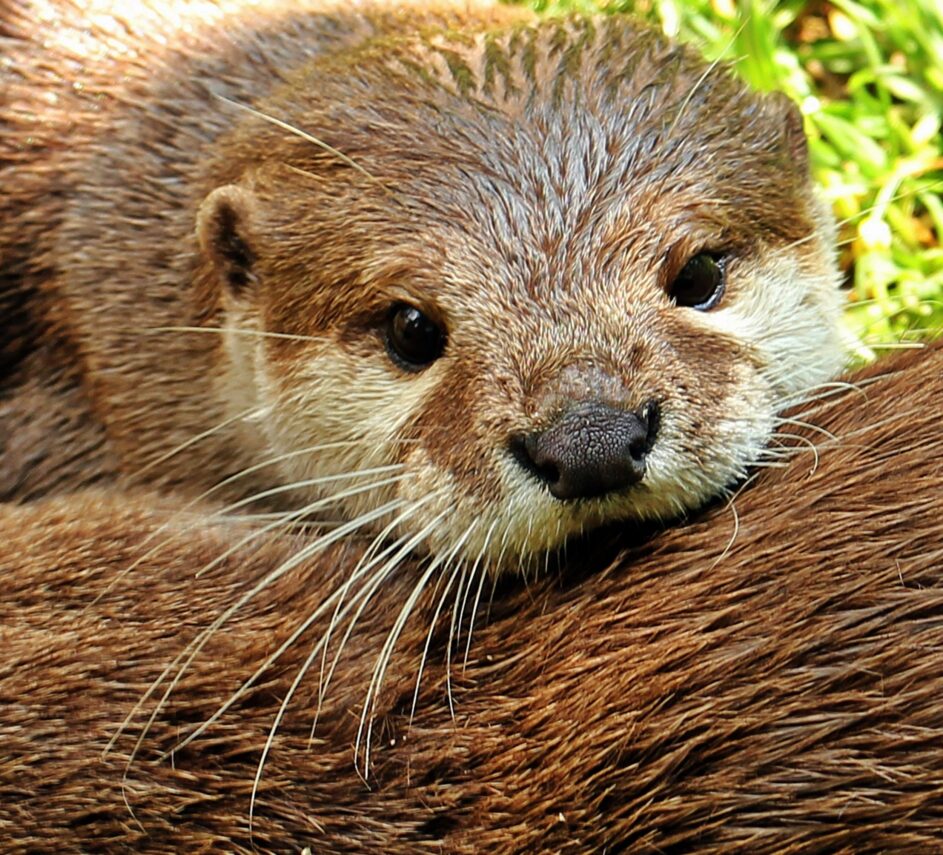
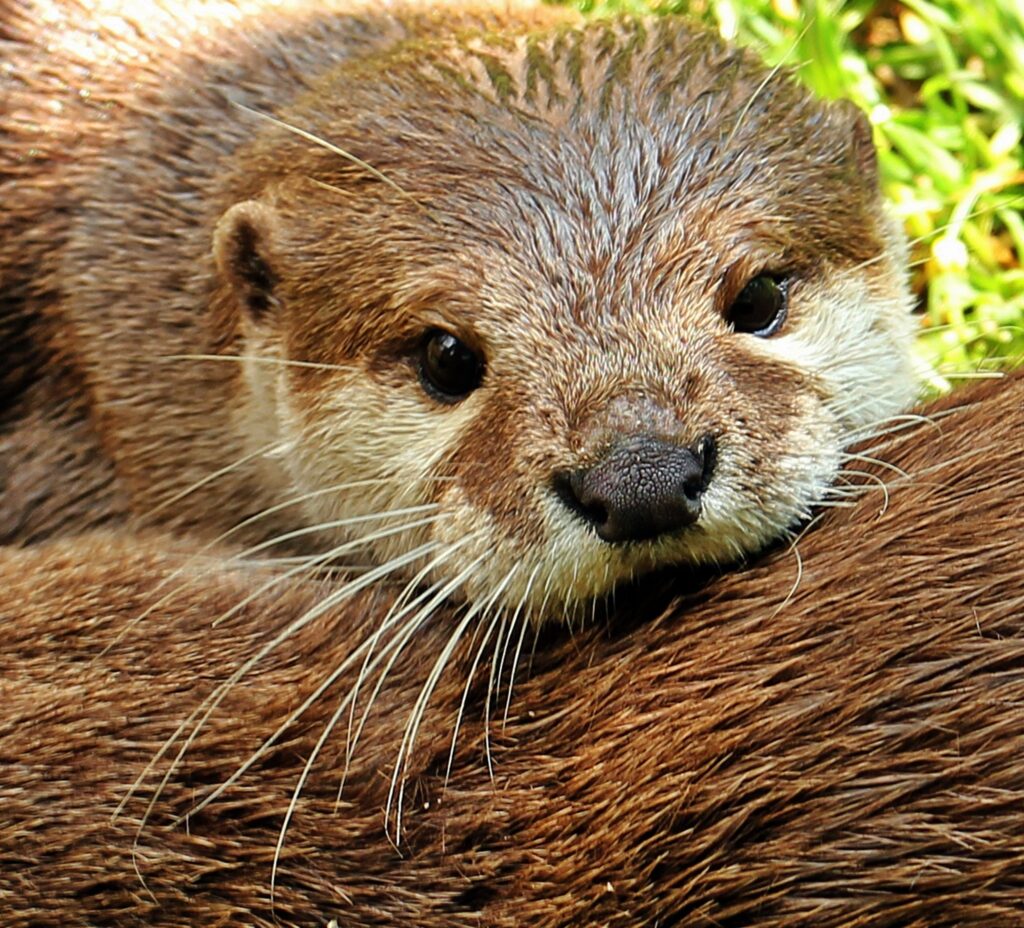
Let me confess something right away: I am utterly obsessed with otters, by which I mean the Eurasian Otter, the UK’s own whiskered water-dweller. So, welcome to this special Wildlife Matters feature, a deep dive (pun intended!) into the marvellous world of the Eurasian Otter.
Growing up in the South East, I never saw otters in the wild. My only encounters were on TV, but even there, I was mesmerised by their mischievous faces and twitching whiskers, their underwater acrobatics, and their surprising speed on land. Otters seemed to be equal parts mystery and magic.
My fascination only grew when I began working for my local Wildlife Trust, which had a project to bring otters back to every county in England. However, my world was woodland wildlife, which otters don’t fit into as neatly as some of their mustelid cousins, such as Pine Marten and Badgers, both species that ignite a similar passion within me.
The project involved monitoring local rivers and waterways. There was a lot of ground to monitor, and I readily accepted covering the River Wey from the southern section, which rises at Blackdown near Haslemere, and flows to Weybridge, where it joins the River Thames.
I heard incredible stories from colleagues and other volunteers in Hampshire and Dorset, and still more from Sussex, and it seemed to me that Otters were all around me but nowhere to be found in our local rivers.
It wasn’t long before friends and colleagues began sharing pictures of Otters from adjoining counties, raising hopes, but still my regular search, one section of the river at a time, continued to be ‘otterless’
I knew the signs of their musky-smelling droppings, known as spraint, and their dens, called holts, but the animals themselves remained elusive. They were like ghosts haunting the riverbanks, so elusive that at times I wondered if they were just a myth conjured by wishful naturalists.
If you’ve ever felt like you’re chasing a creature from folklore rather than fact, you’re not alone. But with patience, a bit of otter know-how, and maybe a sprinkle of good luck, you just might turn that riverbank myth into a magical encounter.
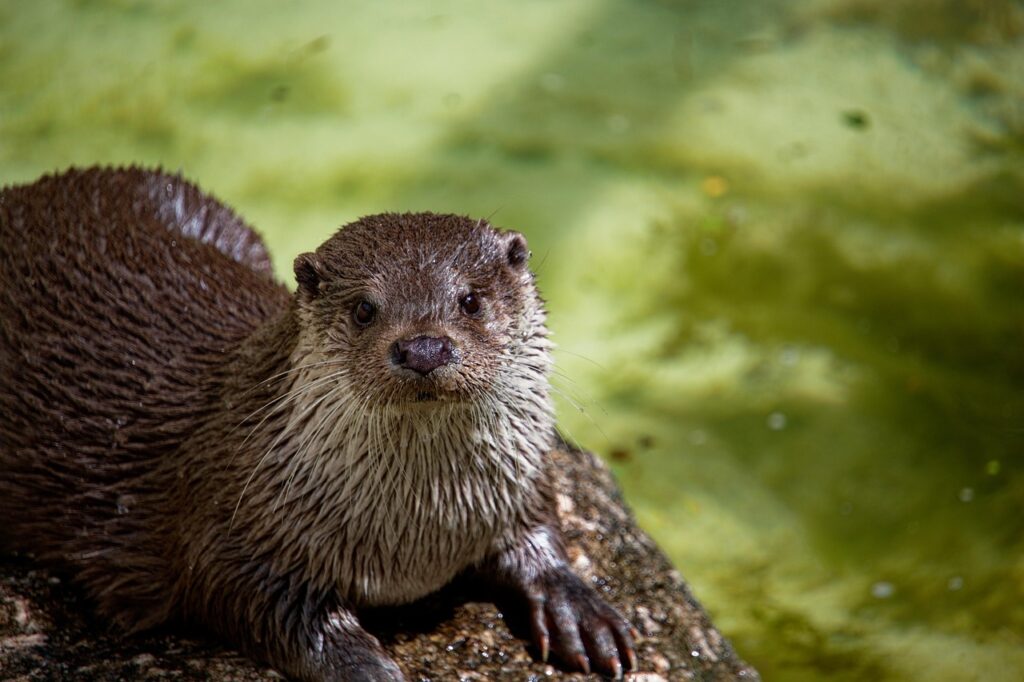
Otters are generally elusive. Still, if you take time to understand the needs of the otter, from habitat to understanding their basic needs, such as access to clean water and safe places to have their kits, to the availability of food and the lack of disturbance, then their behaviour can become more predictable.
Of course, every individual otter will behave in their own unique way, which always leaves the element of the unknown with these captivating mustelids.
A key difference lies in their habitat. Those living in freshwater rivers and lakes are primarily nocturnal, or more accurately crepuscular, which means more active at dawn and dusk, which are the best times to see otters, as these are the times they will come out to find food.
In contrast, coastal otters, and my own experience is with otters on the wild west coast of Scotland, are often active during the day. Coastal otter activity is impacted more by the tide times than the time of day, as the incoming or outgoing tide provides them with the best chance of finding food.
In my experience, disturbance, which usually means from humans, is a major factor in deciding if you will see otters. When you find a quiet stretch of water without lots of human and canine foot traffic, your chances will improve.
To the otter, it hardly matters if it’s a river, a lake, or the open sea as long as there’s food and shelter; they’re ready to call it home. Often, the first way of knowing about an otter’s presence comes not from a sighting, but from the clues they leave behind, so learning to read these signs is essential for any would-be otter spotter.
One of the best ways to find out whether otters use an area is to look for their spraints. Otters use spraints to mark their territories, which can extend up to 40km along a waterway. They use their spraints strategically and leave them in prominent places, often on grassy mounds or on boulders in a stream, sometimes on fallen tree bows in the water; they also seem to favour under bridges along rivers and canals.
A fresh spraint is usually black in colour with an almost tar-like texture. You can often see what the otter has been eating recently, another clue to what lives in the river, but fish bones and scales are often visible. Otter spraint has a distinctive, but not unpleasant smell, frequently described as musty or like jasmine tea.
The next clues to look out for are tracks. If we have had rain, then the soft mud or sand along riverbanks is ideal for looking for the otter’s distinctive footprints. Otter tracks are quite easily identified by their five-toed print and the clear webbing between the toes, which measures around 5 cm or two inches wide.
As with many things, the best time to look for otter tracks is in the early morning, when they are fresher, clearer, and undisturbed by other wildlife or walkers, which can happen throughout the day.
Although not tracks, Otter slides are also a great sign to look out for. Otters aren’t just playful for the fun of it; they’re also practical! Why waste energy clambering down a muddy bank when you can make your own waterslide? Watching an otter belly-flop into a river is like seeing nature’s own slapstick comedy routine, and it’s as efficient as it is entertaining.
Another otter indicator you may see is an otter run, which is a small, trampled path through reeds and bankside vegetation. Like many mammals, otters are creatures of habit. They will often follow regular routes or ‘runs’ when going about their daily business of exploring their territories for food and to make sure no other otters are in their area.
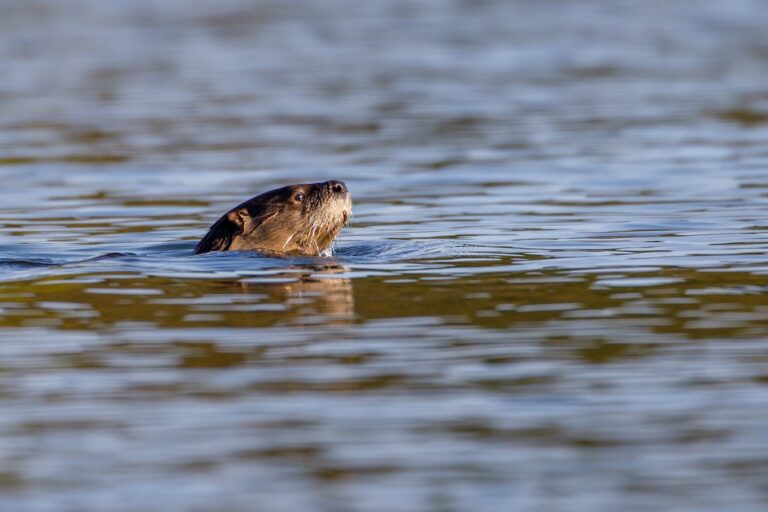
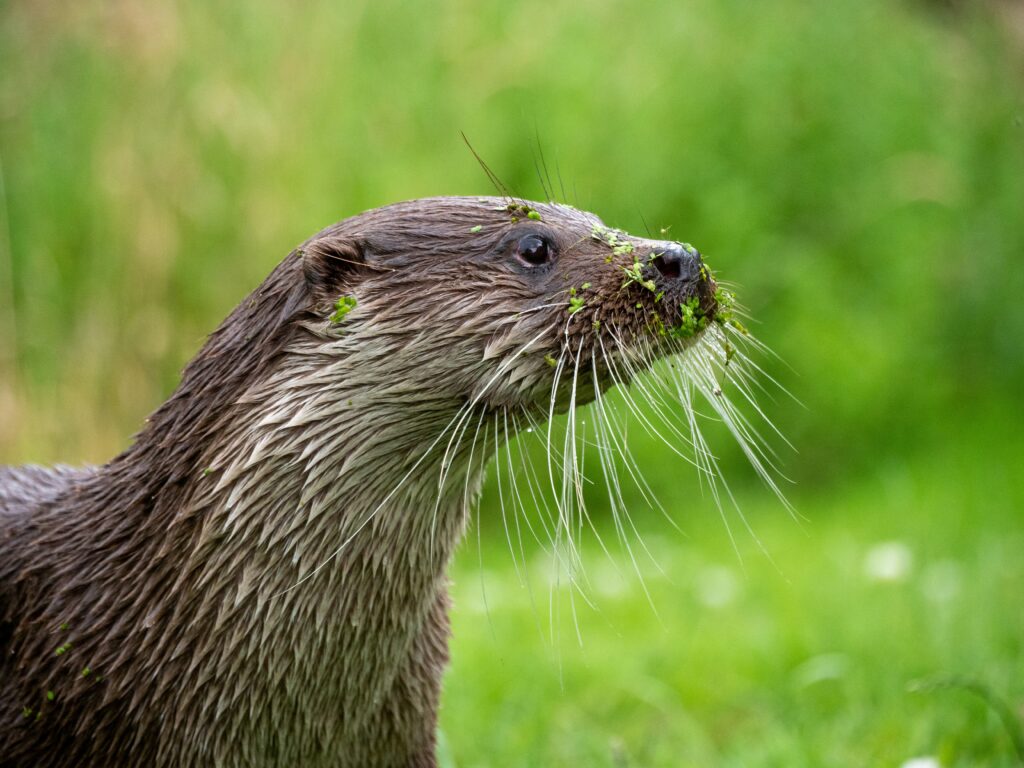
There are several clues when an otter is in the water. They swim very low, with very little of their body visible above the waterline, often with only their head above the surface. As they swim, they leave a characteristic V-shaped wake behind them. When they dive, they can hold their breath for up to 30 seconds and will often leave a telltale trail of bubbles as they submerge, usually resurfacing several metres away from the dive point.
The other side, which people often overlook, is how to prepare yourself for otter or any wildlife watching; first, your choice of clothing matters: for example, it can be a good idea to wear long-legged waterproof trousers and a long-sleeved jacket, but be mindful that many synthetic materials rustle loudly with every movement.
My preference is to opt for quieter fabrics, like softshell, which remain silent when you move and offer good water protection, but can be compromised by persistent heavy rain.
Otters, in common with many wild species, have highly tuned senses, especially hearing and smell, which are far more sensitive than our own, and many have excellent eyesight. In their wild world, they will be easily spooked by new sounds, smells or by seeing people.
If you do go otter watching at dawn or dusk, use a torch with a red light filter, as this is far less disturbing to wildlife than a standard bright white beam. These torches are widely available as head or hand torches now, with many rechargeable via USB, which is really useful if you travel by campervan as I do.
A good pair of binoculars really are essential. You can now buy very functional binoculars with high-quality lenses for £100 or less, but of course the high-quality optics do cost much more.
My wildlife kit is predominantly pre-loved. My DSLR, a Panasonic G9, has nearly a million pictures on its counter, and I bought both my lenses second-hand from well-known camera dealers. My binoculars were less than £100, but my action camera, zoom recorder and thermal imaging unit were all new.
You can still have amazing wildlife encounters with everyday kit, and I recommend starting like this before investing heavily in equipment you may not have the skills or experience to use to its best effect.
Always be aware of what is happening around you, paying particular attention to the behaviour of other wildlife. A sudden flurry of activity from ducks or other water birds, or gulls flying low over a specific spot, can often indicate the position of an otter or another predatory species.
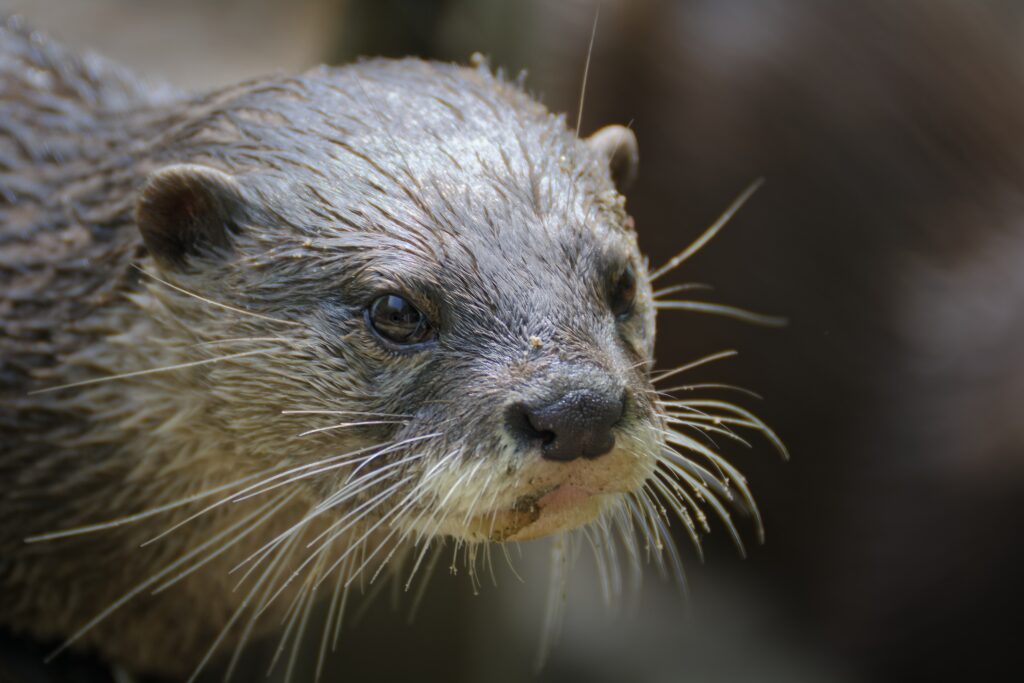
In Britain, there is only one species of otter, whether they live in fresh or salt water. This is the Eurasian otter, known scientifically as Lutra lutra. They are semi-aquatic mammals, perfectly adapted to life in and around water.
Their dense fur keeps them warm and waterproof, while their long, streamlined bodies and powerful tails, also known as “rudders”, make them agile swimmers.
An otter’s fur is the densest of any wild animal they can have up to one million hairs per square inch, which keeps the otter warm by trapping a thick layer of air next to its skin.
There are two distinct layers in an otter’s fur coat. A short, dense underfur provides insulation, while longer outer guard hairs provide protection.
Their fur is extremely dense, with around 600,000 to 1,000,000 hair follicles per square inch, which is around 1,000 times denser than human hair. Individual hairs, sometimes found on fences or hedges, are textured and feature tiny, scaly geometric barbs that interlock and mat together.
The interlocking barbs create a water-repellent barrier that stops cold water from ever touching the skin, as otters lack thick insulation blubber; their fur acts like a down comforter, holding a warm layer of air around their bodies in freezing water.
Otters also have sensitive whiskers around their snout which they use to help detect prey. Otter coats are vital to how they live, so they spend a lot of time maintaining them, grooming each day to condition the fur, lock the hair scales, and replenish trapped air.
Otters are larger than many people think, with a female growing to around 1 metre in length and a male maybe 1.3 metres long. They have muscular, dense bodies and can weigh up to 9kg.
Otters are well adapted as swimmers, with long, streamlined bodies, strong tails, and webbed feet, and they can close their ears and nostrils underwater. Their eyes are placed at the top of their head, so they can remain alert while the rest of their body is underwater.
Their diet consists of around 80% fish, but they will also eat birds, mammals, and frogs if fish are in short supply. They communicate via whistles, twittering noises, and spitting sounds, which a human ear can hear when it is quiet and still. They also communicate using spraint.
Over 100 different scent components of otter droppings have been identified. Scientists have identified up to 17 of these that are thought to contain information on sex and even individual recognition, which other otters can use.
Otters are territorial and will maintain large territories, often 20 to 30 km’s of riverbank or 3 to 4 km of coast, for females.
In contrast, a male otter’s home range will include several females and their territories.
Their gestation period is 9 weeks, and they can breed at any time of the year, although this usually occurs in spring. Otters have two or three pups, which are tiny and weigh no more than 40g.
Youngsters depend on their mother and won’t even open their eyes for five weeks. Surprisingly, otter pups are not born natural swimmers, and adults often force their young into the water for their first swimming lesson. Pups stay with and remain dependent on their parents for around 14 to 15 months before they leave home. The pups will then become sexually mature and breed in their second year.
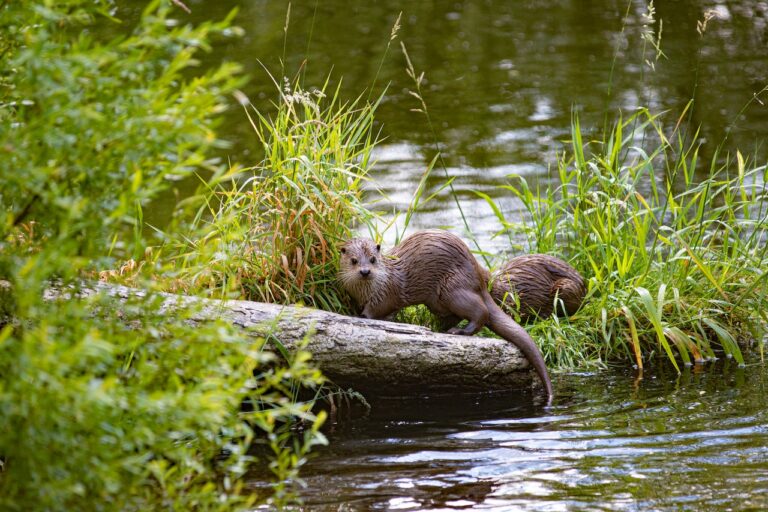
An otter’s home is called a holt, a den which is often found in cavities among tree roots on a riverbank or in other secluded natural holes. A holt will have several entrances, which help protect against flood risk or blockage, with at least one entrance above water level.
Holts are used for shelter and breeding, and an otter will have many holts within its territory. They also use resting sites, often called couches, which are usually in dense vegetation along the water’s edge.
The presence of otters is often considered an indicator of a healthy, clean river system. Because their diet consists largely of fish, crustaceans, and amphibians, otters can absorb toxins, heavy metals, and persistent chemicals, like PFAS and PCBs, through a process called bioaccumulation.
High levels of pollutants in the water quickly build up in their bodies, making them early warning systems for chemical contamination. They disappear quickly from areas affected by industrial runoff, agricultural pollution, or bank destruction. Researchers have studied otter spraints to monitor for microplastics and land-based pathogens such as Toxoplasma gondii washed down from urban or agricultural areas, tracking environmental threats across the entire watercourses of an area,
They are a vital part of our wetland ecosystems because they act as keystone predators that maintain ecological balance, control prey populations, and signal clean, healthy water.
In freshwater and wetland environments, otters help reduce the impact and numbers of introduced invasive species like the American mink, and while otters will crunch through substantial numbers of signal crayfish, research and observation show they act as a natural predator rather than a total eradication tool.
American signal crayfish reproduce rapidly, hide deep within riverbank burrows, and maintain high population densities that easily outpace the predation pressure of territorial predators like otters.
Although otters do help suppress numbers, managing signal crayfish typically requires strict biosecurity and containment measures rather than relying on natural predators alone.
In the UK, the population is now recovering after a dramatic decline in the 20th century caused by the widespread use of organochlorine pesticides, which accumulated in their fish prey and led to reproductive failure.
Thanks to bans on these harmful chemicals, improved water quality, and dedicated conservation efforts, otters are now making a welcome return to waterways across the country.
Otters are a legally protected species in the UK under the Wildlife and Countryside Act, and it is an offence to disturb them. It is illegal to hunt them, trap them or disturb them.
The otter has the highest level of legal protection possible as a European protected species, and its holts are protected too. Unfortunately, even though the species has made a distinct comeback and is now found often in our rivers, wild otters rarely live beyond 4 years of age. The oldest recorded otter reached around 19 years of age, but this is exceptional.
Reports now state that otters inhabit every county in the UK, which shows that otters have responded well to the ban on chemicals and legal protection against persecution and hunting. However, our river systems still require extensive habitat management to restore them to a healthy level that can sustain fish stocks and support healthy otter populations.
Like all good news stories, there is often a but… and it’s no different for otters, as in recent years they have encountered their fair share of new and varied threats, such as Road traffic accidents.
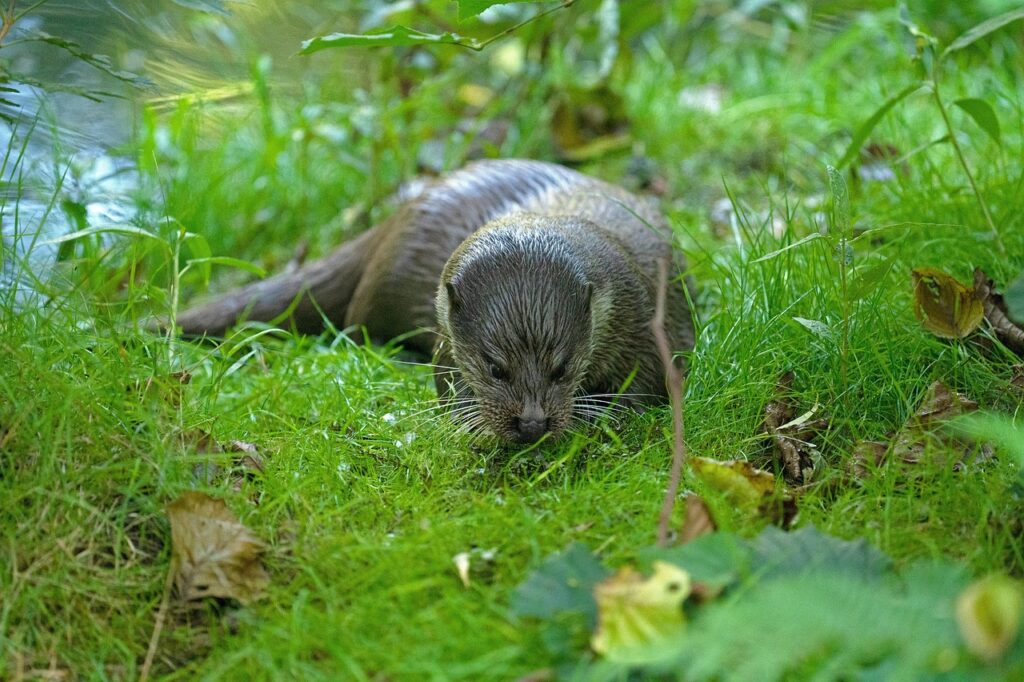
In certain parts of the country, road deaths are high and rising, and, as with many wild species in Britain, habitat destruction from road building and new urban development is of considerable concern.
Despite high-level legal protection, otters still suffer persecution from fishery owners and gamekeepers who believe they threaten farmed fish and game birds.
Coastal otters are impacted as ‘bycatch’ from the fishing industry, which means they are caught and drowned in the huge nets that are used. No one intends to catch otters or Dolphins. Porpoises, or seals, but they are all caught, injured and often killed in industrial fishing nets
For me, one of the worst issues is the pollution of our waterways with agricultural runoff into rivers, including pesticides, fertilisers, and high levels of antibiotics routinely administered to dairy herds, as well as nitrogen from chicken farms, causing algae blooms that are toxic to native river wildlife.
The comeback of the Eurasian otter in the UK is one of Europe’s greatest wildlife success stories. From the brink of extinction, these furry comeback kids bounced back and by 2011, they were splashing about in every county in England! Otters have since moved back into major British urban waterways, including canals and rivers near Manchester, Birmingham, and London. Unlike species requiring heavy captive breeding programs, the recovery was overwhelmingly natural, fueled by expanding populations from Welsh and Scottish strongholds.
So we return to where we started this story, back in 2009-2010 with me regularly walking the River Wey in Surrey in search of signs of otters.
Working with the local wildlife trust, we installed a series of artificial otter holts under the guidance of Chris Matcham. The research was based on work conducted at the British Wildlife Centre, where Chris, who was Surrey Wildlife Trust’s Otters & Rivers Project lead, determined that otters required a smaller holt than initially expected.
Chris approached Filcris to design, manufacture and supply a suitable solution. Filcris produced a prototype using planks, stakes and sheet roofing, which was trialled successfully at the BWC, with results published in Mammal News. This success led Filcris to manufacture several holt kits for Surrey Wildlife Trust, as well as other Wildlife Trusts and developers.
I can proudly remember one of these holts that was featured on 2009’s Springwatch when the otter cubs were born inside.
Our research and monitoring continued for another two years, with only the occasional signs of otters in the area, based on spraint finds believed to be from male otters at the extremities of their territories, maybe looking to develop them a little further. At least we hoped so.
The Wey Valley had been devoid of otters for many years, with the last official sighting being back in 1996. Then back in 2012, we found a series of new spraints and noticed they were from at least two different animals. This was enough for us to decide to put out camera traps in the area and on the artificial holts that were reasonably close by.
We stepped up our monitoring from a distance to avoid creating too much human scent and diverted dog walkers and hikers away from the site with a temporary footpath closure, which most accepted well.
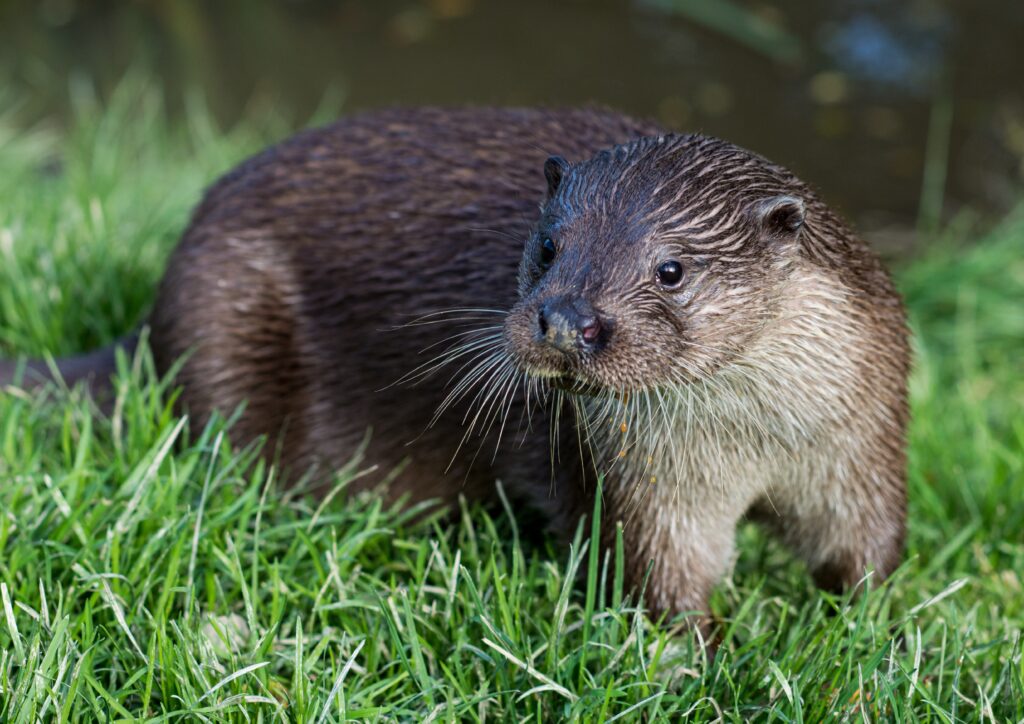
Then, early one morning before dawn, I was waiting on the edge of the area with binoculars and enjoying a beautiful sunrise. It is such a peaceful, quiet time of day, and one can easily get lost in one’s own thoughts. I sat still, occasionally lifting my coffee mug to my lips, its wispy steam rising from the dark, hot coffee in the fresh morning air. I breathed in deeply, enjoying the freshness of that early morning air.
It was then that I noticed some movement out of the corner of my eye. I slowly raised my binoculars and looked through the lenses. There, making its way along the riverbank, was an otter.
My heart skipped a few beats as I slowly moved my hand towards my camera sitting next to me on its tripod.
This was one picture I could not miss!
Very slowly
I shifted my hips to look through the camera lens and focus on the moving otter. I took a few single shots, not daring to risk the motor whirring from a burst of shots that might have startled the otter.
As I continued to follow the Otter along the riverbank, I decided to hit video, as it would give the team more detail when I shared it with them. Then, as I slowly panned along following the otter on its meandering early morning search along the riverbank, I was curious what it was doing.
It wasn’t feeding, and it hadn’t looked at the river, but it had its nose to the ground; maybe it was following a scent trail? That led me to think what scent was it following, maybe another mustelid, a stoat or a weasel, maybe an American mink, which have been seen in the Wey Valley. I doubted it would be the larger mustelid cousin, a badger, which I knew was in the area; in fact, in this field was one of the outlying setts which was often used by the clan.
As the otter headed towards the artificial holt, I was excited to see what, if any, attention it would pay to it, as after nearly four years working on this project I had only seen captive otters at the British Wildlife Centre using the artificial holt.
As the otter approached, it stopped and raised its head to smell the air. It looked around, moved forward a few more paces, then stopped again and noticeably lifted its head to smell the air.
This continued a couple more times before the otter headed directly towards the holt and stopped barely three or four metres from it. Then, the otter made a series of noises, a whirring, slightly clicking sound, and it repeated the pattern of the call three times before lying low, almost prone on its belly with just its head held up.
It was as if the otter were swimming in the river with that classic eyes-and-head look, but this was on the land; I had not seen this behaviour before. The otter repeated this calling-and-lying-prone process several times for several minutes, and then something remarkable happened.
Another otter appeared from the holt, and they approached each other cautiously before they began to either fight or play a game – I really didn’t know which to begin with
They rolled around on the ground in a way I had seen otter pups play together before, and I had watched enough badgers playing to know that their play encounters can look more than rough and tumble to us.
After a few minutes, I decided this was play, not aggression. I also thought it might be courting behaviour, but I had never seen that in otters, so I couldn’t be certain.
After maybe five minutes, the pair of otters disappeared into the river and out of sight for me and the camera. I stopped filming and sat back in my chair and let out a huge sigh of relief combined with happiness and anticipation that the work we had put in over the last four years, including the water cleaning and monitoring of the river water, may well have paid off.
I called Chris, our project lead, and said I had some pictures and video to show him if he was heading to the local Wildlife Trust HQ. When he arrived, we made a coffee, sat at a desk, and put my camera card into the slot in his laptop. I was really apprehensive that I had recorded what I believed I had, as I hadn’t checked back, and this was the first time I would see the video.
We both sat in complete silence as we watched over eight minutes of otter courtship and nearly twenty minutes of the male otter’s approach and wanderings. Later, we went to the site and retrieved the trap camera footage from the holt, which showed the female arriving the night before.
The male came from the same direction and had very quickly picked up on a new female in the area. After four years of work, we could finally say that wild otters had returned to Surrey. At that time, only Kent had not had a sighting, so we were very late to the party despite our best efforts.
What we didn’t know then was that those otters would soon raise two pups, turning a longstanding conservation project into a heartwarming family saga which will be a story for another day, and a perfect place to end our story today.
Key Takeaways
- The article shares a personal journey exploring the marvels of the Eurasian Otter and the effort to monitor their populations in the UK.
- Otters are elusive creatures, often seen at dawn and dusk, and require specific habitats to thrive, including clean water and shelter.
- Readers learn how to spot signs of otters, such as spraints and tracks, and understand their behaviours in various environments.
- The Eurasian otter, a crucial part of wetland ecosystems, has made a remarkable recovery in the UK thanks to conservation efforts.
Support Us
If you enjoyed this blog, please check out more of our wildlife blogs here, or you may prefer to listen to the Wildlife Matters Podcast here.
If you want to support our work
Please click on the Wildlife Matters Patreon Community.
Please click to join the Wildlife Matters Substack Community.
You can donate here.
Further Reading
WWT Wildfowl and Wetlands Trust – A Guide to European Otters
Wildlife Trusts The European Otter