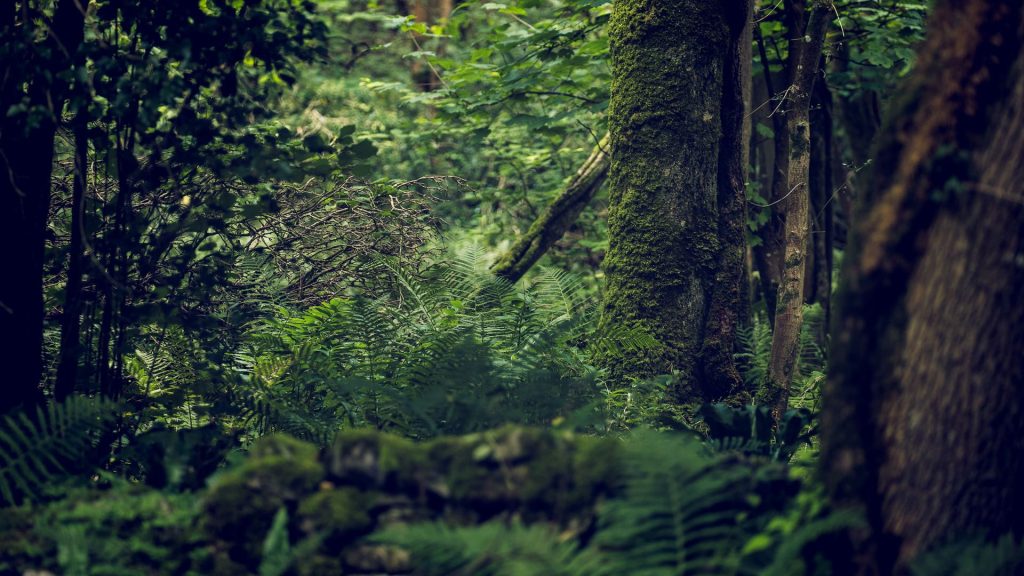
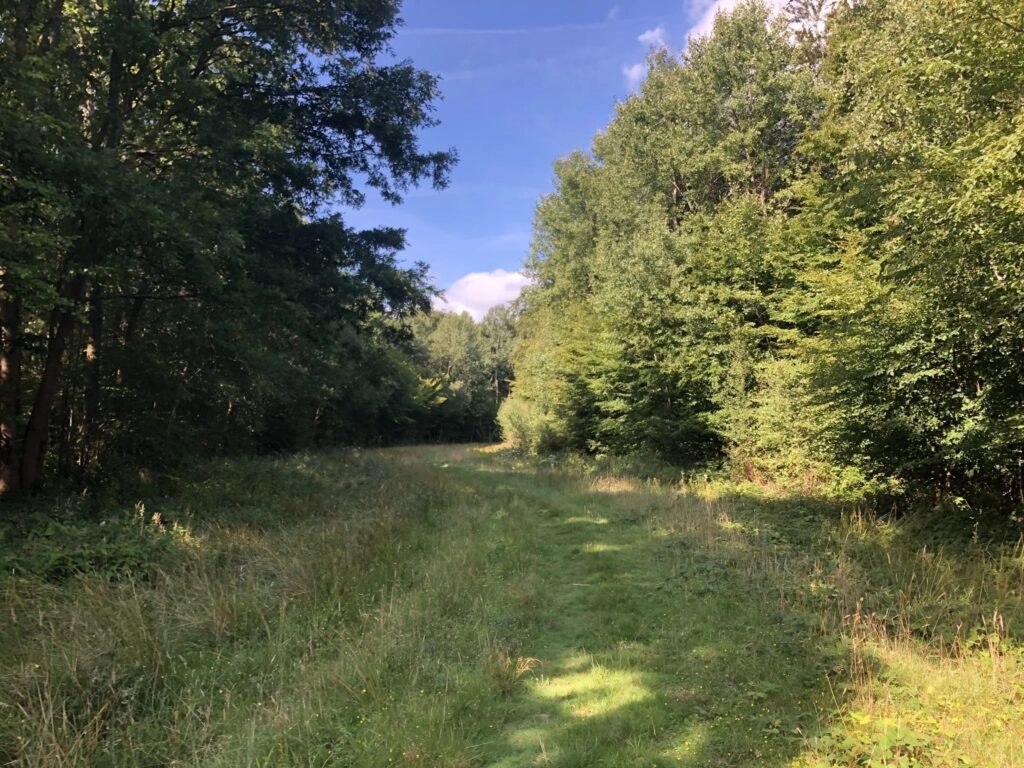
Hello and welcome to this week’s Wildlife Matters main feature, and today we are at Beckley Woods, one of the wet woodlands of the Weald.
It’s been raining for most of the last week not showers, but solid and heavy rain which may sound like a strange time to go on a woodland walk, but this woodland comes alive after heavy rain, so this is one of the best times to visit.
Beckley Wood is a mixed woodland. There are still remnants of the ancient Weald woodland, mainly small pockets planted in the 17th century to produce timber for shipbuilding.
In the 17th and 18th centuries, Sussex was the epicentre of the English wooden shipbuilding industry, driven by its prized, slow-growing Oak. Because mature timber takes 150 to 200 years to grow, the Crown and Royal Navy relied on systematic forest management and designated oak plantations to ensure a steady supply for warships.
The historic forests of the Weald, which span Sussex and Kent, provided ideal compass timber. Shipwrights required curved, naturally grown oak boughs and V-shaped sections for ship frames and brackets, which mature Sussex oaks provided perfectly.
The shipbuilding industry faced intense local competition. The booming 16th- and 17th-century Wealden iron-smelting industry consumed vast amounts of timber for charcoal, threatening ship timber supplies. Parliament eventually passed legislation to restrict timber use in furnaces to preserve Oak for the Royal Navy.
The systematic planting and preservation of timber were vital. The Royal Navy relied on surveyors and “regarders” to mark mature trees in Crown forests for naval use.
While dedicated forest “plantations” were managed elsewhere in the country, local shipbuilders tapped into the ancient woodlands and managed estates of Sussex, transporting timber down navigable rivers to coastal shipyards.
The Oak and Birch woodlands planted in the Weald provide crucial ecological and environmental benefits.
They sustain hundreds of native insect species and foster diverse understory habitats. This mixed-species canopy effectively sequesters carbon, mitigates flooding, and stabilises local soils in areas like the Low Weald.
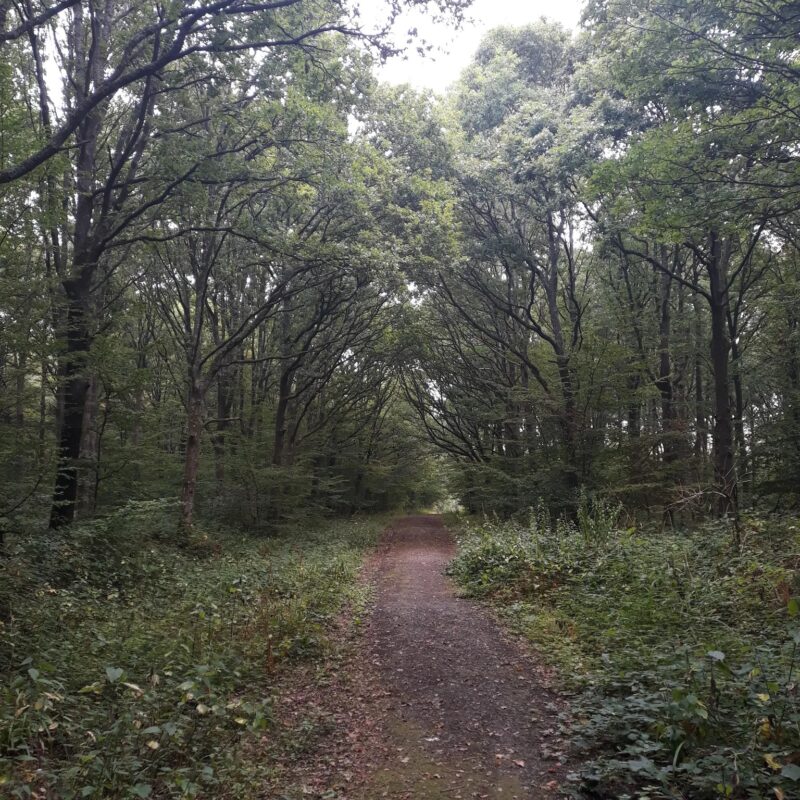
Oak supports hundreds of leaf-eating caterpillars, which are vital food sources for local bird populations. Birch adds structural variety, allowing more light to reach the forest floor to support plants like bluebells and heathy vegetation.
The leafy canopy sequesters large amounts of carbon dioxide, filters particulate matter, and cools local ambient temperatures during the summer.
Root systems bind the soil to prevent erosion, while canopy interception and leaf litter help manage rainfall runoff. All woodlands also provide nature escapes for people. Woodlands are great for our health and wellbeing.
I can feel the electricity in the air as I walk through the sodden woodland. A storm is coming; I can’t hear it or see it as yet, but the rain has eased for the first time in days, and I am reminded of the classic phrase: the calm before the storm.
It’s February, and the sun hasn’t shown its face for days, possibly weeks, and today the woodland feels stark, bare, an almost shivering landscape in anticipation of the approaching thunderstorm.
The wildlife has gone silent. The rooks and carrion crows that had heralded my entrance to the woodland twenty minutes or so ago are now silent; the cooing of the pigeons, the chatter of the sparrows all gone; it’s clear to me the wildlife knows what is coming.
The bare, interwoven canopies of ancient oaks and birch trees contrast with the indigo sky, which is heavy with cloud and charged with electricity.
But this is the reason I am here; this woodland has a network of ephemeral streams and, if the rain is prolonged and heavy, waterfalls which I have come in search of.
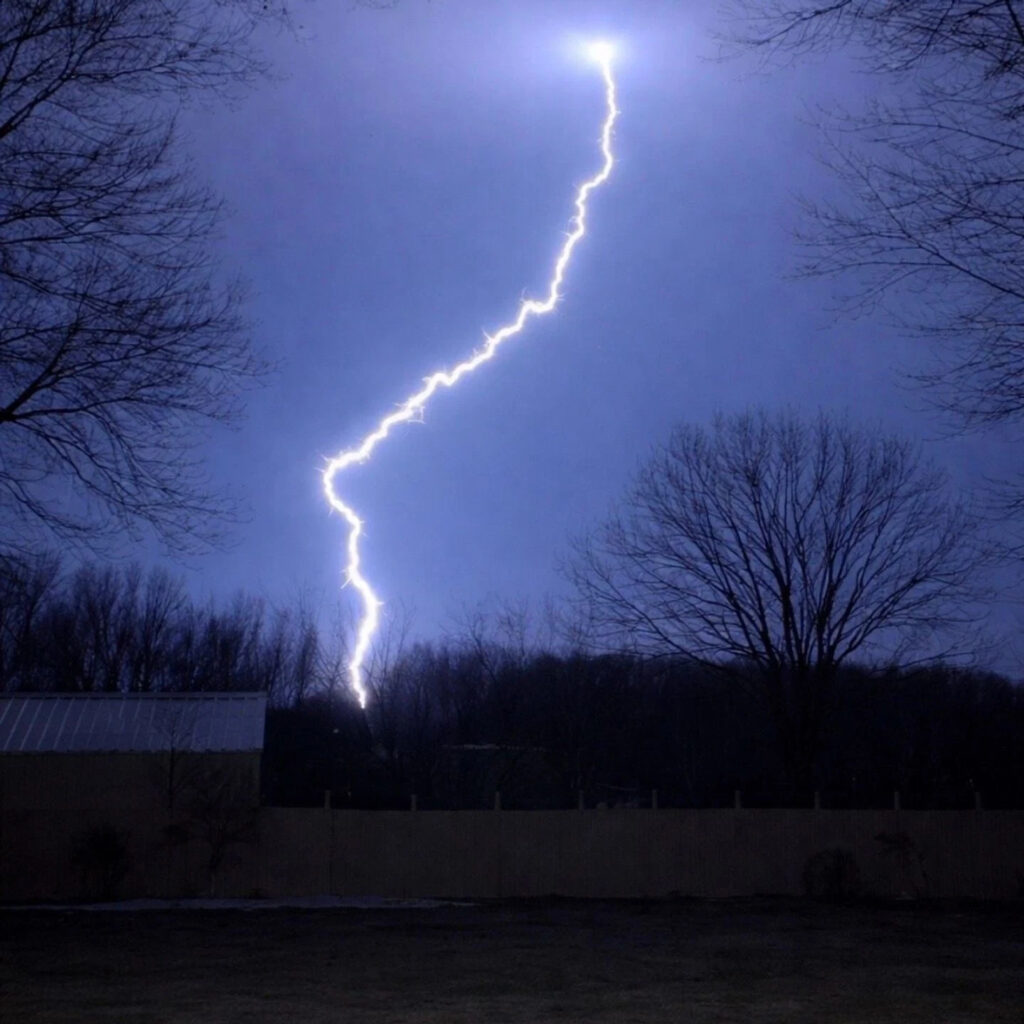
The storm’s arrival is sudden and dramatic: a blinding, jagged strike of forked lightning erupts from the low-hanging clouds, turning the monochrome forest into a stark silhouette of white and deep purple.
I begin to count to gauge the distance to the centre of the storm: 7, 8, 9, when a deafening crack of thunder shatters the stillness. The reverberations roll through the canopy, bouncing off the damp valley floor like cannon fire.
The chill sets in as the icy rain and sleet are driven in horizontally by bitter winds. I stand and watch the long, elongated raindrops hit the soft woodland floor covered in Fallen leaves, which bounce and reverberate as they head back towards the sky before losing their vital energy and falling back to the sodden earth.
The smell of ancient woodland soil, rich in humus and soaked by fresh rain, gives off its trademark earthy scent of rotting wood, moss, and fungi. I breathe in the earthy, rich smell and feel alive.
Beckley Wood sits within the High Weald and ranges from around 80 to 120 metres above sea level, so we are fairly high and therefore close to the storm that will soon be directly above the woodland.
I follow the wildlife’s guidance and decide to hunker down and ride out the storm. There is a rock formation through the trees with some low overhang from years of erosion. I get to my knees and can take shelter under the rock by lying almost flat on the ground, facing out to watch the spectacular storm.
Within minutes, the wind picks up, whistling as it drives its way through the woodlands, looking for the old, decaying and dead trees to uproot and return to earth as it tests every branch and bow as it ravages its way through the woodland.
It takes nearly half an hour to pass through; I can still hear the thunder in the distance as it heads inland, having made its way up from the coast. The wind has slowed, and the rain has become a constant drizzle, but the woodland feels fresh and alive.
I emerge from my rocky shelter and stand up ready to set off in search of the ephemeral waterfalls and streams of the High Weald.
The High Weald is shaped by water as much as it is by woodland. Beneath the canopy of ancient forests, countless small streams cut through sandstone and clay, forming quiet, seasonal waterfalls that are easy to miss unless you know where to look.
These are not dramatic tourist landmarks, but subtle features of the landscape that appear, fade, and change character with rainfall and time of year, reflecting the fragile nature of these places and the effort involved in finding them.
To balance sharing with protection, precise locations are not published openly. Instead, general areas are described here.
I follow the main path through the woodland, the raindrops cascading through the bare oak bows and branches.
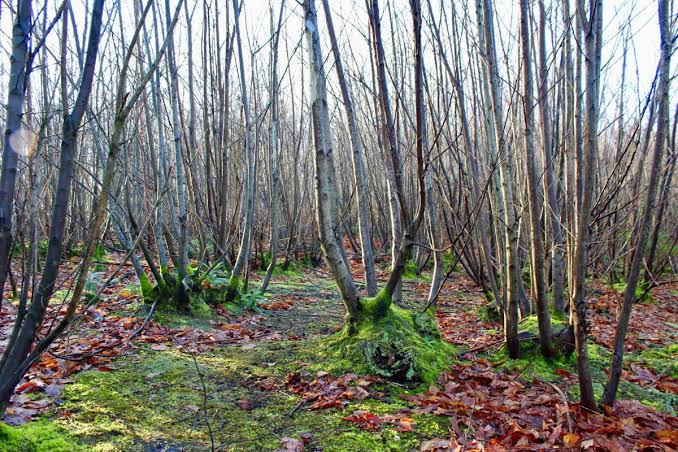
The understory here is Birch with sweet chestnut, another nod to the history of this woodland, as sweet chestnut in this region was historically planted for the local hop-growing and fencing trades because the timber grows straight and is naturally water-resistant.
The Weald foresters harvested the sweet chestnut on a 15- to 30-year rotation. Cutting the trees down to the stump, known as a coppice stool, encourages rapid new shoot growth, and this rotational felling helped flood the coppiced portions of the woodland with light, allowing a diverse understory of flora, which would include carpets of bluebells, and the range of flora that grew from the undisturbed soil allows rare insects to thrive.
I stop and stand still. Up ahead on the path, high in a tree sits a Buzzard. Buzzards generally hunker down and wait out heavy rain because wet feathers weigh them down and reduce flight efficiency, so they will seek shelter in trees, on posts, or under overhangs, just like I had done.
This young Buzzard was a sorry sight; its feathers were wet, and it was sitting low on its legs trying to keep warm.
During light rain, Buzzards may perch out in the open to preen, later drying their wings once the rain stops, but this one looked as if a bucket of water had been emptied over it.
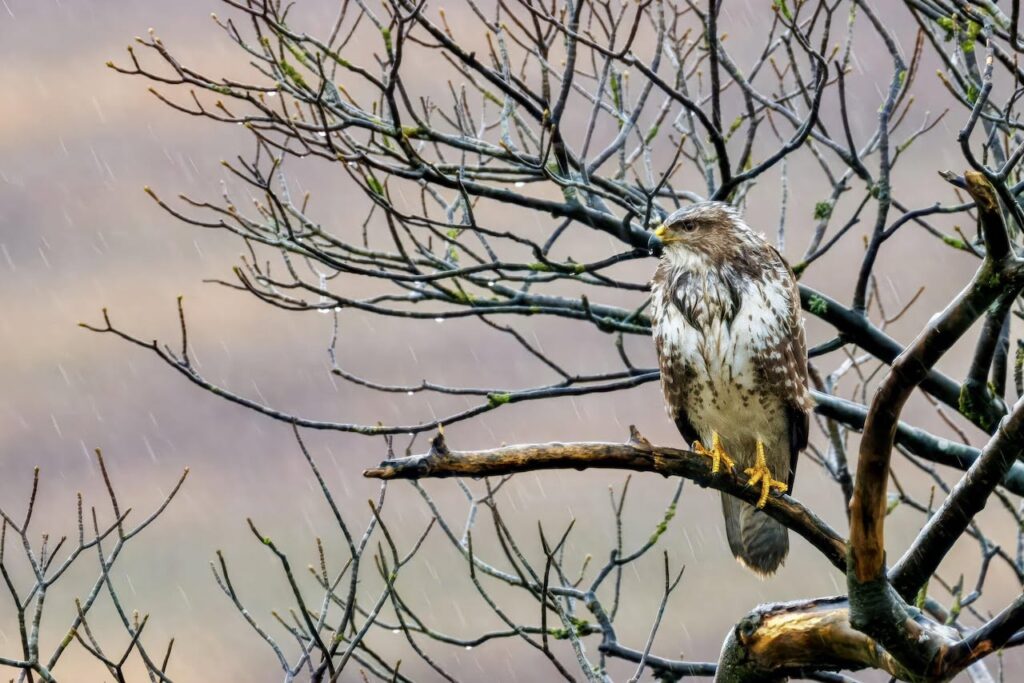
The picture really shows the benefit of winter light, as the colours of the Buzzard stand out against the dark winter sky.
While large birds like buzzards can tolerate damp conditions, finding active thermals is incredibly difficult in the rain. As a result, they significantly reduce their activity.
In spring, you may see adults huddle over nestlings to protect their brood from sudden downpours.
As I passed under the Buzzard and walked on, I could hear the sound of running water. This is what I was searching for today, so I walked away from the path and followed my instincts, listening closely to the sound of the water as I made my way through the thick undergrowth.
The ground started to become waterlogged and boggy. I realised I wasn’t going to be able to follow a direct route to the sound of the water as this was now wet woodland.
I stopped and took a good look around me. The tree species changed from Oak to Alder and Willow, both classic wet woodland species and often known as Carr species, which is the name for wet woodlands.
Alder and Willow are trees which thrive on wet or waterlogged soils. Both species will commonly be found along the banks of streams and rivers and wherever poor drainage results in wet soils.
A natural process of succession will also lead to wetlands and marshes eventually becoming wet woodland.
Wetlands and marshes naturally gradually dry out through siltation and evaporation as the ground becomes dry enough to support tree growth. Alder and Willow will gradually grow up and replace existing vegetation, leading to the development of wet woodland. Further drying out of the land leads naturally into a drier woodland type dominated by other broadleaf trees such as Oak.
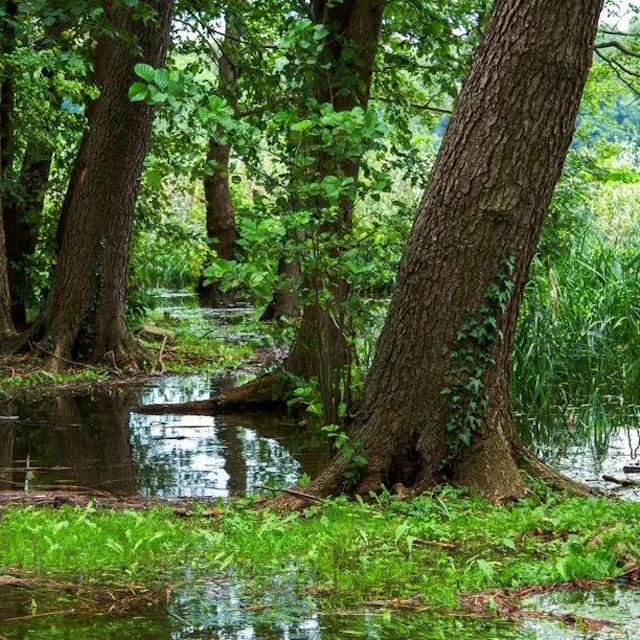
In the past, wet woodland would have been common in Britain, particularly on the sides and in the bottom of river valleys like here in the Weald where Ghyll streams run in deep valleys of rock. The rich dark soil holds water for the benefit of trees, plants and many insect, reptile, amphibian and fish species.
Modern farming and development require drainage, so habitats like wet or marshland have meant that wet woodland has become something of a rarity and is one of the habitats recognised as essential in many local Biodiversity Action Plans, often called BAPs.
Wet woodlands are powerhouses that produce billions of insects each year, providing vital food for bats, birds and other wildlife.
Wet woodlands are important wildlife-rich habitats, but they’re often overlooked.
The wet woodlands of the Weald are dominated by tree species such as Willow, alder and Downy Birch, which grow in very wet soils.
They would once have been common across the county, but many have been lost through land clearance and drainage.
Small areas of wet woodlands are now largely found as patches along streams, in wet areas in open countryside and in the wetter parts of broadleaved woodlands, often when they’re in valley floors and along streams.
They form an important part of the wildlife-rich mosaics on the wet soils. Because wet woodland tree species grow fast, wet woodlands (especially those on peaty soils) capture and store carbon more quickly than many other woodland types.
Wet woodlands are especially important for insects and other invertebrates which thrive in their damp environment, especially when there’s lots of deadwood.
Invertebrates are an essential food source for bats and birds, including Bechstein’s bats and Willow Tits. Willow Tits are a wet woodland specialist species and are thought to be the country’s fastest declining resident bird.
Wet woodlands are often dark environments and support few flowering plants. However, in more open areas characteristic species can include Marsh Marigold, Yellow Flag Iris and Meadowsweet.
Wet woodlands in more open areas provide perfect habitat for rare lichens, which live on the well-lit bark of willows on the edges of the woodlands.
Reductions in water flow in and around wet woodlands, along with changes in the water’s nutrient load, can harm the structural diversity of wet woodlands. Therefore, water flow and quality must be maintained.
Wet woodlands are a critical nature-based solution as they store water, reduce flooding and, to some extent, act as buffers to other more sensitive habitats such as mires and watercourses.
I decide to follow a badger track that runs to the left of me, and it leads me to the more solid ground and eventually down to the stream I could hear.
This is what some call a Ghost stream; more correctly, it is an ephemeral stream. Ephemeral Streams only flow in direct response to precipitation events.
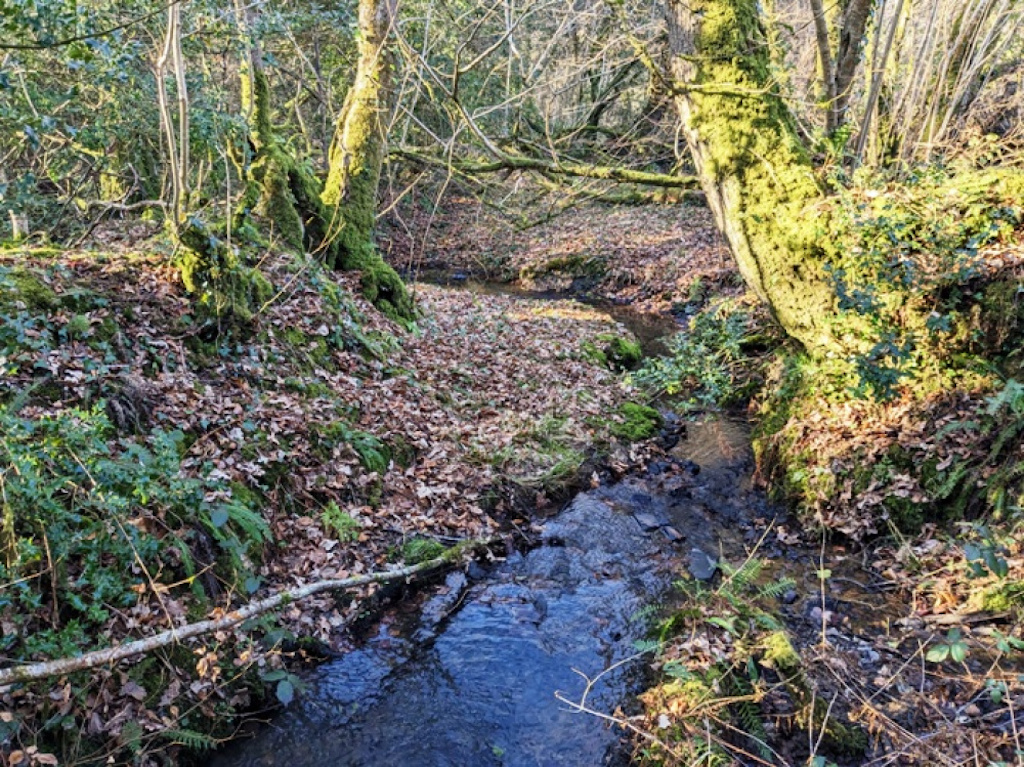
These waters typically do not have a well-defined channel and are comprised of stormflow.
These streams will not be present year-round and may not display traditional characteristics attributed to permanent streams until sufficient rainfall occurs.
Because they are not flowing for most of the year, these waters can also be referred to as Ghost Waters.
Ghost Waters flow downstream, carrying sediment and other matter. These deposits can disrupt larger water bodies within the stream network that may host ecosystems and serve as drinking water.
These freshwater streams can contribute to surface water and stream flow only during times of precipitation, always leaving them shallow and above the groundwater reservoir.
There is typically a higher prevalence of flora surrounding these streams when compared to the uplands of the region. During times of significant precipitation, the groundwater table can rise, and these plants or the surrounding floodplain absorb extra water.
Many ephemeral streams can go unnoticed because they are not as pronounced as other types of streams, such as an intermittent stream or a perennial stream.
Streams are considered intermittent when portions of the stream continuously flow throughout some of the year, with alternating legs that may be dry.
These streams, sometimes called a seasonal stream, rely on seasonal changes for their water source, such as rainfall or snowmelt, to create their flow. These waters still yield significantly less stream flow than perennial streams, which are considered “permanent.”
A perennial stream flows consistently year-round. The stream bed rests at a lower elevation than the adjoining groundwater, allowing for easy, consistent water discharge into the stream.
Ephemeral waters remain above the water table year-round, lacking any stream gradient. This results in dry beds relying on precipitation for flow rather than surrounding groundwater.
Because ephemeral streams dry up periodically, they do not support predatory fish populations. This creates a haven for species like frogs, toads, and salamanders to lay their eggs and for larvae to develop without being eaten.
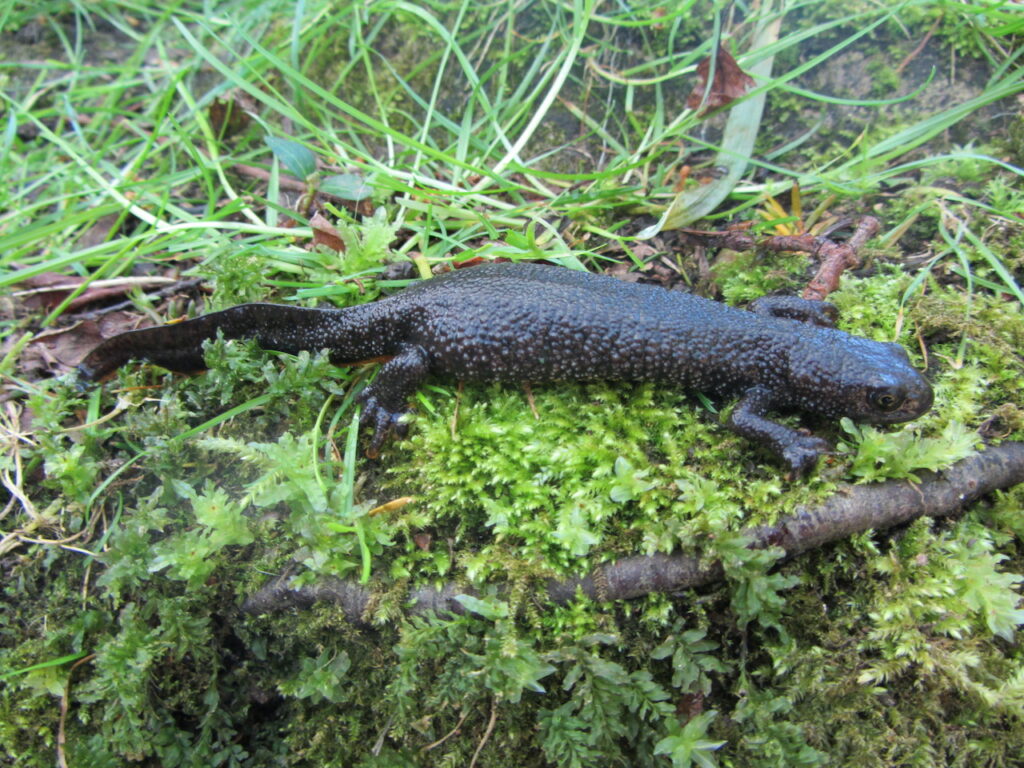
These pools are vital for species such as Great Crested Newts, Common Frogs, and Common Toads, which all rely heavily on these small, fish-free temporary water bodies to complete their life cycles.
Now in midwinter, many of these species will be hidden away. Amphibians survive the winter cold by entering a state known as brumation, which is a dormant state similar to hibernation.
Because amphibians are ectothermic, which means cold-blooded, their winter survival strategies are entirely dictated by their species and environment:
Frogs that spend winter underwater, like the common frog, rest in the mud and silt at the bottom of ponds or ephemeral pools. Because they still need oxygen, they absorb it directly from the water through their highly permeable skin.
Toads usually leave the water in autumn. They crawl into deep leaf piles, compost heaps, underneath log piles, into rockeries, or down old mammal burrows to stay below the frost line.
Newts spend the winter hibernating on land in cool, damp, frost-free environments.
From late autumn through February, they hide away under log piles, rocks, thick leaf litter, and within compost heaps or old stone walls.
While they usually stay dormant, they will occasionally take advantage of milder winter days to come out and forage.
Because they require a moist environment, you may even spot them moving on wet, mild nights or returning early to breeding ponds as early as January or February, depending on the species and location.
Small mammals such as hedgehogs, voles, and bats, as well as larger predators, rely on both the wet and dry phases for drinking water, finding insects for food, navigating the woodlands, and finding shelter.
Hidden within Beckley Woods are several ephemeral waterfalls, but the Woodland waterfall is one of the most distinctive woodland waterfalls in the High Weald.
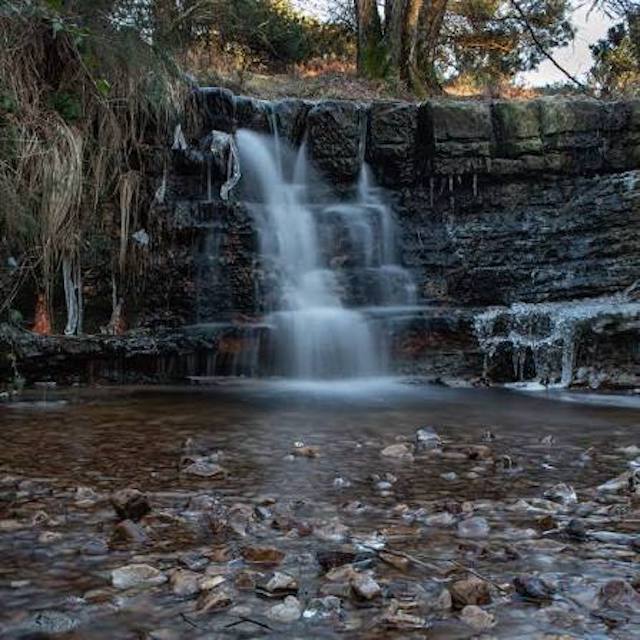
The main fall drops over a mossy sandstone ledge into a shallow pool, framed by ferns, roots, and steep wooded banks.
On a day like today, after a week of rainfall, the flow broadens across the rock face; in drier periods it becomes quieter and more delicate, revealing the layered sandstone beneath.
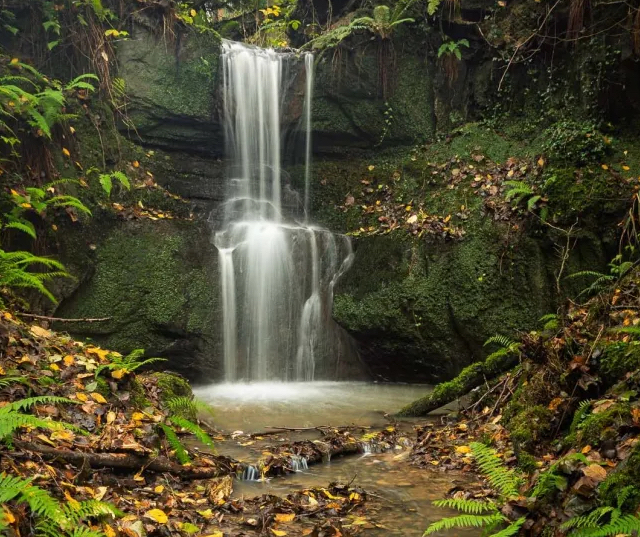
Along the same stretch of stream are several smaller cascades and step-falls, which can be easily overlooked as spread through the woodland.
Together they form a compact but varied group of waterfalls that change noticeably with the seasons, particularly in autumn when leaf fall adds colour and texture.
This is ancient woodland and requires care: paths are often muddy, banks can be slippery, and water levels rise quickly after rain.
There are several small waterfalls along the ephemeral streams and regular ephemeral pools dotted throughout this part of Beckley Woods.
As well as the amphibians taking advantage of the fish-free pools for overwintering and for spawning in the late winter or early spring, these ephemeral pools have not gone unnoticed by the ducks.
A pair of Mallards are on one of the larger ponds, which is maybe 10 metres wide and around half a metre deep. The male mallard, or drake, looks amazing with his iridescent blue-green head feathers, and he will be performing head bobs, chest puffing, and wing-shaking routines to attract or keep his mate interested right now,
I knew I was looking at a pair, as while some mallards pair off in the late autumn or early winter, February is peak courting time when the remaining birds solidify their bonds and begin establishing breeding territories.
Earlier, along the edge of the woodland, I had noticed a rookery. In February, a rookery bursts into life as these highly social corvids return to their clifftop or woodland colonies to build nests.
The bare winter canopy fills with noisy, boisterous activity as pairs mate, snap twigs from branches, and engage in elaborate courtship displays.
Rooks are notoriously loud, and this ramps up significantly in February. The colony is a continuous cacophony of cawing, rattling, and chattering as birds establish territories and defend their chosen nesting spots.
February is the prime month for nest building. Pairs busily weave large, messy bowls out of twigs and mud high in the treetops. It is quite common to see rooks aggressively snapping live twigs directly off trees or engaging in “kleptoparasitism”, which means stealing building materials from neighbouring nests when left unguarded.
The colonies are visually dynamic, with males strutting, puffing out their chest feathers, bowing, and fanning their tails while giving softer calls to woo females.
Beyond daytime nest-building, colonies remain gregarious; at dusk, hundreds of rooks may circle together before pouring into the trees to roost for the night.
I planned to go back to watch the Rooks for a while, but now something else had caught my eye.
High in the bare treetops was a large nest structure constructed from sticks; it had a mossy lining.
I took cover behind a nearby oak tree so as not to disturb anyone in the nest and pulled my binoculars from my rucksack. As I looked in more detail, my initial thoughts were confirmed that this was a Raven’s nest and even more exciting, there was a Raven in the nest!
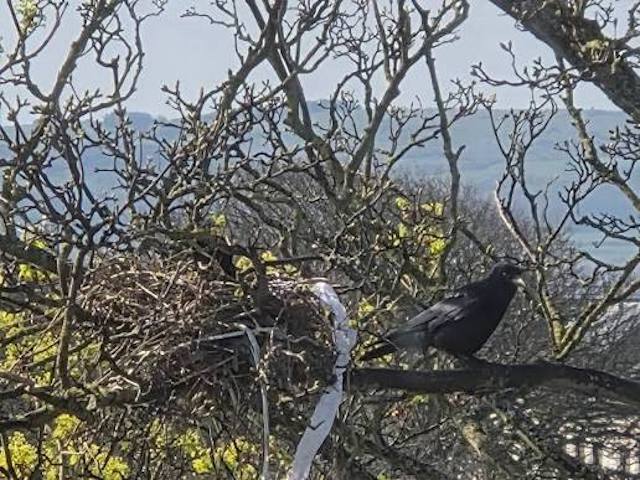
Ravens are among the earliest nesting birds in the UK, often starting to build or repair their nests as early as late January and laying their eggs by mid-to-late February.
They are known to form life-long pairs that defend their established territories all year. Historically found on remote, inaccessible cliff faces or quarries, they now also regularly nest high up in mature trees like pines or, as it is here, an old oak.
Around now, the female will lay between 3 and 6 pale blue-green, blotched eggs which she will incubate for about 3 weeks while the male fiercely protects the territory and brings her food.
I felt confident that the female was in the nest and sitting on her eggs. Remember, it has been a week of heavy rain, and today we had a spectacular thunderstorm and downpour, so we would be hunkered down and very unlikely to move.
I watched the nest for ten, maybe fifteen minutes, but didn’t see the male, and she was staying very still while protecting her eggs. I had heard that Ravens were being seen more regularly throughout the Weald Woodland, but I had never seen them anywhere in the area before, and in fact I have not seen them in the South East.
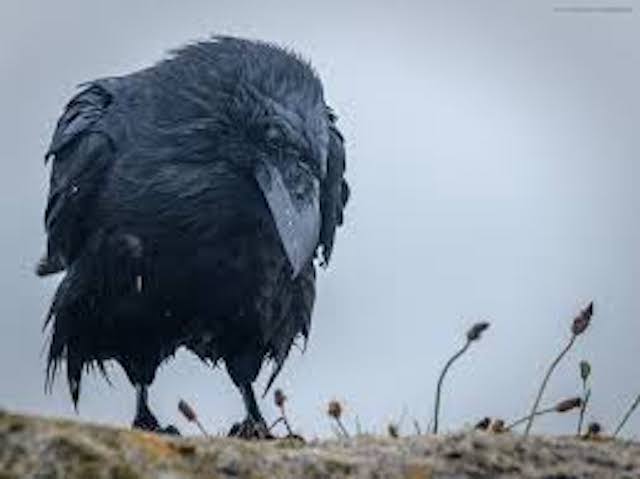
They are one of my favourite bird species, which is why I named my campervan after them, because I know they take care of and look after each other.
They are also one of the most intelligent bird species. Ravens have cognitive abilities that rival great apes and can match the reasoning skills of a 7-year-old human child.
Although their brains are the size of a human thumb, they pack in double the neuron density of mammal brains, allowing them to excel at abstract thinking, planning, and tool use.
Ravens instinctively use, modify, and even craft tools, for example, bending twigs into hooks to extract food from hard-to-reach places. They possess “mental time travel”. They will hide food, but if they know another raven is watching, they will fake the hiding spot and secretly stash the food elsewhere.
Ravens have a sophisticated “theory of mind” which means they can figure out what another raven or human is thinking or seeing. They recognise individual human faces and can hold lifelong grudges against those who have wronged them.
They exhibit linguistic displacement, meaning they can communicate about things that aren’t immediately present, such as alerting other Ravens to a food source or possible threat.
While ravens communicate with a vast array of calls, gestures, and regional dialects, they do not possess the complex grammatical language, abstract symbolic writing, or technological civilisations of humans.
Humans can plan for years or decades in the future.
A raven’s cognitive planning typically revolves around immediate or near-future survival needs like seasonal caching, breeding, and resource competition.
In highly abstract spatial-rotation tests, primates and humans generally outperform ravens, though ravens adapt incredibly well to tasks related to their physical environment.
You can understand why Ravens are one of my favourite wild birds, and I have a deep respect and understanding of them, so to see a wild Raven in its nest in the middle of February was a massive thrill for me and one of the highlights of the year – already.
And that is the ideal place for us to end this adventure to Beckley Wood, where we explored the ephemeral waterfalls and streams of the Weald in winter on this week’s Wildlife Matters main feature.
If you enjoyed this blog, please check out more of our wildlife blogs here, or you may prefer to listen to the Wildlife Matters Podcast here.
If you want to support our work
Please click on the Wildlife Matters Patreon Community.
Please click to join the Wildlife Matters Substack Community.
You can donate here.
Further Reading
Woodland Trust – Wet Woodland Habitat