Welcome to this week’s Wildlife Matters Main Feature, the third part of our series All About Badgers, where we are looking into Badgers in Winter. Today, we’ll explore how badgers survive and thrive during the tough winter months.
We’ve already looked at how these fascinating native mammals spend spring and autumn. We’ll talk about their summer habits in a future article.
These are my own observations from over twenty years of watching my local badger sett. It’s been a privilege to watch generations of badgers grow up here.
Some have moved on to start their own clans or join others. Sadly, a few have had short lives, mostly because of road accidents, while others have stayed.
The current dominant breeding sow is the fourth I’ve watched. She is a direct descendant of the first one I followed back in autumn 2005.
Few animals are as hardworking as the badger. Their nightly digging is truly impressive.
Picture a moonlit woodland, with only the sound of claws scraping as a badger snuffles through the earth.
With every scoop of soil, these diggers bring life to their environment. Their digging pulls oxygen deep underground, helping the roots of old trees and wildflowers.
As they forage, they also bring up nutrients buried in the soil, feeding the next generation of plants.
But badgers do even more. Their piles of freshly turned earth act like natural reservoirs, holding onto moisture even when the woodland is dry.
This damp soil helps plants survive drought and also protects against wildfires.
As badgers dig their tunnels, they create underground paths that guide rainwater into the soil, helping balance between floods and droughts.
At first, the scene might look chaotic, but it is actually nature’s masterpiece. Every night, badgers act as the woodland’s hardworking gardeners.
As they dig with their strong claws, they create seedbeds that help wildflowers, mosses, and saplings grow. When they bury and scatter seeds, they turn the forest floor into a patchwork of life, with each spot holding the promise of something new.
Even their latrines become hidden nurseries where seeds they have buried start to grow. Both rare and common plants take root here, thriving in the rich soil left by these black-and-white animals.
The setts and earth mounds that badgers build are more than just shelters. They are busy little worlds.
In these cool, damp places, amphibians hide under leaves, rare insects move through hidden tunnels, and pollinators stop to rest, all protected by the badgers’ work.
Badgers also quietly look after the woodland. By eating grubs, slugs, and snails, they help control pests. In their quiet way, badgers keep the forest healthy so that every creature, from the smallest beetle to the tallest tree, has a place to live.
Badgers do not want their homes to flood, because living underground means floodwaters can be very dangerous for them.
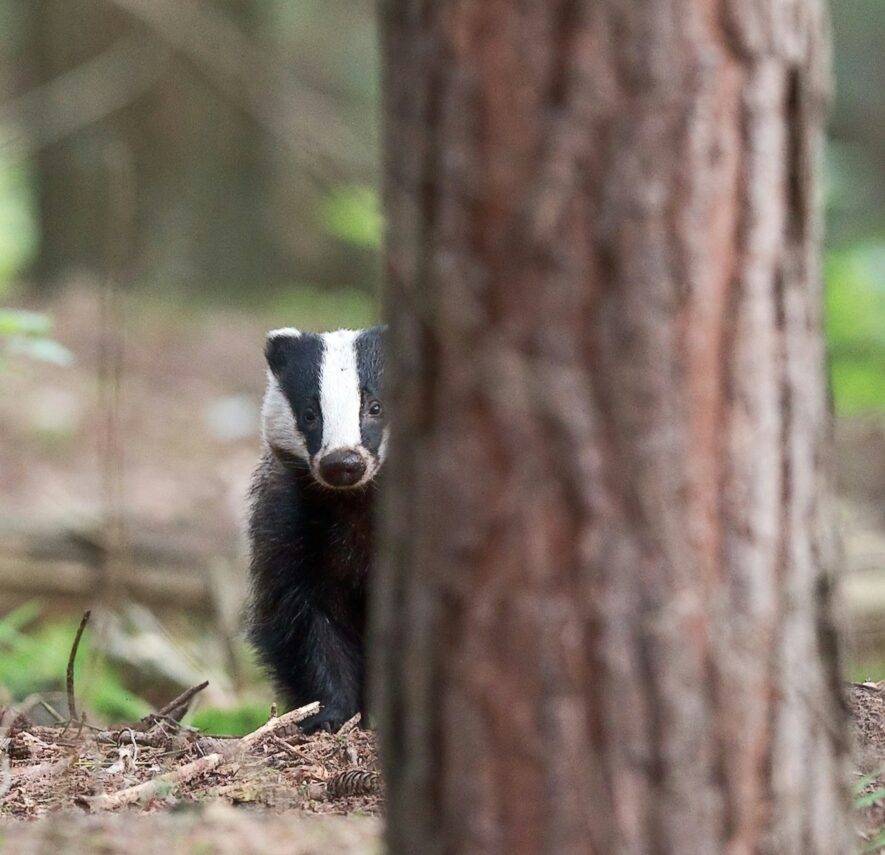
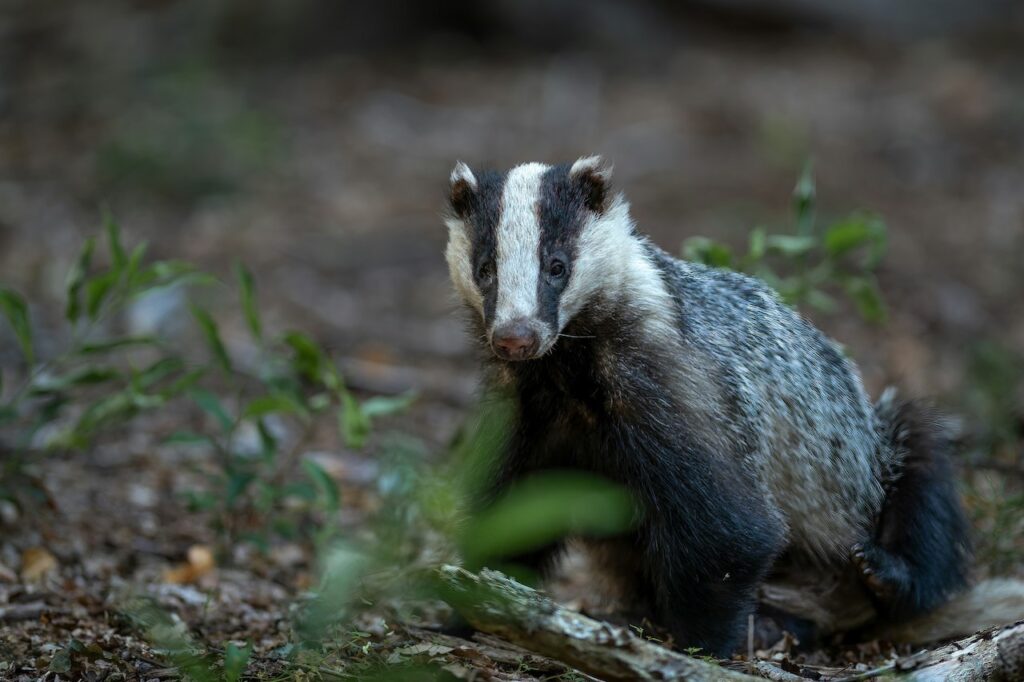
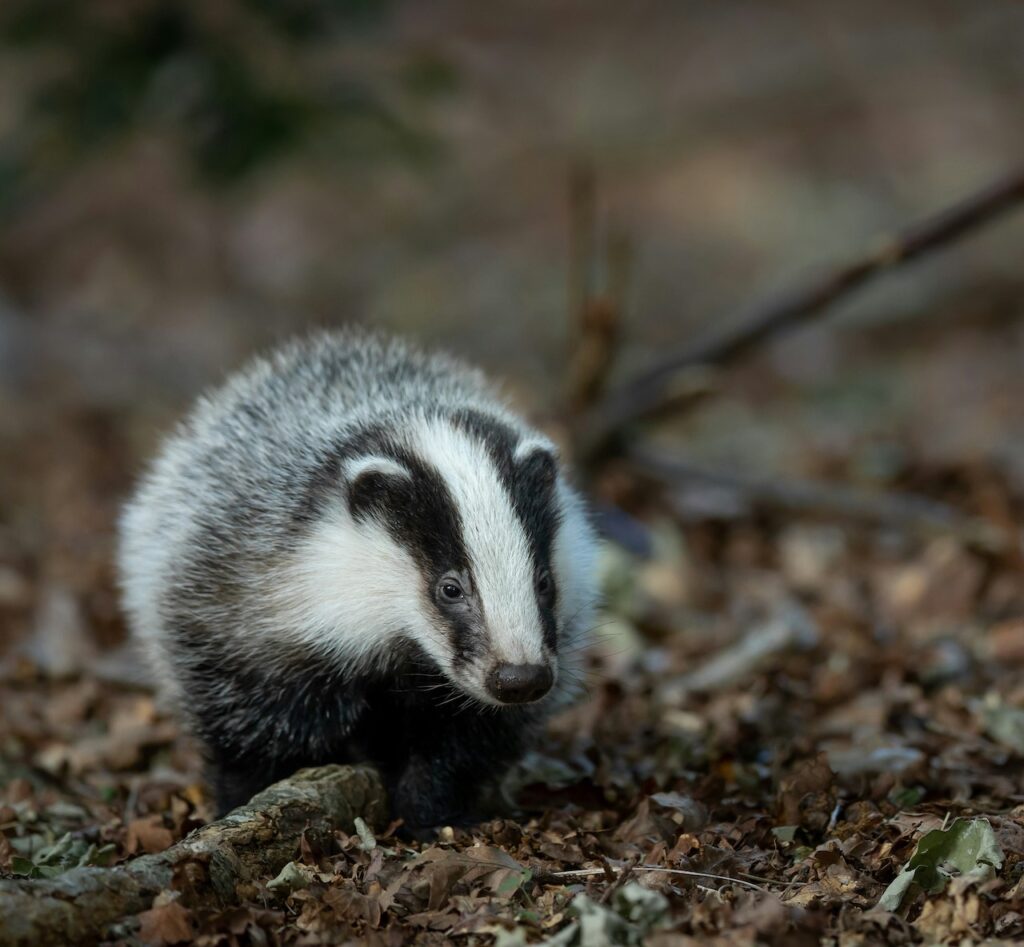
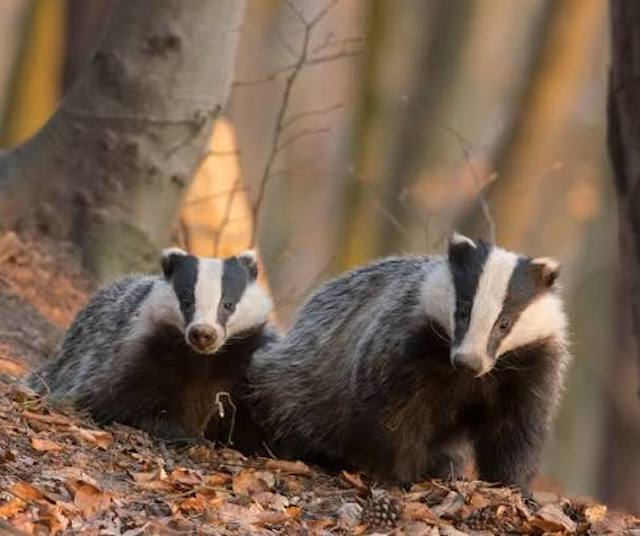
It’s easy to spot a badger when dusk falls in the woods. Its white head, marked with bold black stripes from snout to ears, stands out in the fading light as evening shadows spread across the ground.
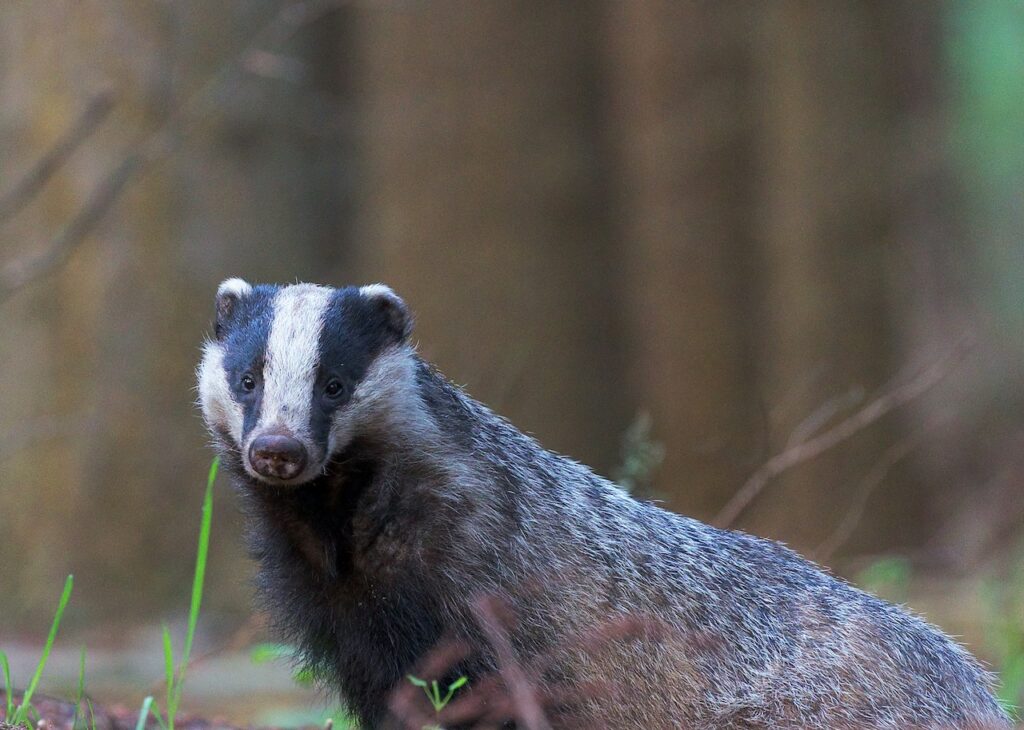
Adult badgers, from their twitching snouts to their short tails, can grow to about one metre long, including the tail.
Most weigh around 10 kilograms, but some can be as heavy as 18 kilograms, for digging. Their strong shoulders and large claws make them the excavators of the animal world, shaping the landscape in important ways.
Badgers are important. They play a key role as ecosystem engineers. By digging, they help improve soil quality, manage water, and support a variety of plants and animals.
Badgers are vital to woodland ecology; they are skilled engineers. With endless energy, they move large amounts of earth and create big underground homes called setts.
Their long, strong claws stay sharp as they scrape against tree bark, helping them build some of the most impressive homes in Britain’s wild areas.
Their setts, underground homes, are well hidden beneath the roots of old trees, giving badgers both privacy and protection from the outside world.
Some setts are truly impressive, with as many as fifty entrances and a maze of tunnels that can be as long as a football field.
Inside, there are cosy rooms for sleeping and spaces for raising young, making these setts lively underground homes full of hidden activity.
Life in these large setts has its challenges. When many badgers live together underground, fresh air can run low, and the air becomes heavy and stale.
To keep their homes fresh, badgers build their tunnels so they stay level. This helps stop pockets of stale air from forming deep underground.
They also make small air holes along their tunnels, hiding them under twigs and leaves, to keep fresh woodland air moving through their homes.
But badgers affect more than just their own homes.
Every tunnel and mound they create helps the woodland ecosystem in important ways.
When badgers dig for food or enlarge their setts, they do more than shape the earth. They quietly change the world beneath our feet.
Every strong swipe of their claws brings life to the soil. It mixes in fresh air, helps water reach the right places, and prepares the ground for a healthy woodland.
Each time they dig, badgers push important oxygen deep into the ground. This wakes up tree roots and helps new plants grow on the forest floor.
When badgers dig tunnels, they bring up nutrients from below and mix them with fallen leaves. This makes the topsoil richer and helps wildflowers and young trees grow, starting a new season of life.
The piles of earth they leave behind, called spoil heaps, act like natural reservoirs. They catch rainwater and keep the ground moist even after the rain stops.
During dry times, these damp spots help thirsty plants and protect the woods from wildfires. Underground, their wide tunnel networks help rainwater soak in slowly. This reduces runoff and feeds the woodland from below. This hidden watering system keeps the soil below us moist and full of life.
Every time badgers search for food or use their latrines, they help plant the next generation of the woodland by burying and spreading seeds everywhere.
This creates a lively mix of plants, full of different species and bright colours.
Their setts are cool and become safe places, not only for the badgers, but also for the amphibians, which quietly settle into these cool hollows.
Rare insects make hidden homes here, and tired pollinators rest after a long day moving among wildflowers.
Meanwhile, badgers patrol the woods at night, eating grubs, slugs, and snails. They act as nature’s pest patrol, keeping plant-damaging creatures in check and helping the woodland stay healthy and balanced for everyone.
Badgers are surprisingly tidy for such rugged animals. To keep their underground homes clean, they carefully dig shallow scrapes called latrines near the entrances to their setts. These serve as their outdoor toilets.
Badgers make sure their homes are comfortable. They arrange their bedding by dragging dry grass backwards with their front paws and chin, making their dens as neat as any country cottage.
While autumn is the busiest time for changing bedding, they keep things tidy all year.
Because their setts have many chambers, badgers often move between rooms. They might be looking for some peace in their large underground home.
Badgers do not see well, but their sense of smell is strong. They know each other, and even familiar people, by scent alone. Their sharp hearing also lets them notice the slightest sounds in the night woods.
What do badgers eat?
The European badger is always looking for new foods and tries whatever the seasons provide.
In autumn, badgers eat acorns, blackberries, and apples. They also dig for bluebell bulbs and roots under fallen leaves.
In spring, they peel bark to drink sap and eat grass, leaves, and fungi that appear after rain.
Badgers eat many different foods during the year, but they like earthworms best. On wet nights, a hungry badger might eat hundreds, searching the grass with great focus.
There is a well-known story about a very hungry badger that ate more than 300 worms in one meal, which, as far as anyone knows, is still a record in the woods.
The story is urban folklore, as no one knows who first saw this or even where the badger was, but it has been shared by many in the badger watching community.
Badgers are not picky eaters. They also eat beetles, slugs, snails, and wasp grubs. Because they have thick skin, badgers can break into bee and wasp nests for honey and grubs without worrying about getting stung. They also hunt small mammals for extra protein.
Badgers are seasonally adaptable omnivores and eat whatever food they can find. What they eat depends on where they live, since each place has different foods at different times of the year.
In autumn, badgers eat plenty of wild fruits and berries like apples, blackberries, elderberries, and sloes. This helps them gain fat to get through the winter.
Family Life
Badgers are loyal to their families. The same pair usually comes together each year to raise new cubs in their safe underground home.
With an experienced eye, you can tell a male known as a boar from a female, called a sow, by looking at their head and neck. Boars have broader heads and thicker necks and have lighter tails.
A badger sett is full of activity as badgers run, chase, and play together under the stars.
Cubs are born in February or March and have almost a year to eat, explore, and grow strong before their first winter underground.
When winter arrives and frost covers the ground, badgers head into their complex underground homes, staying safe and warm while everything above is cold and quiet.
It’s not the cold that keeps badgers underground, since they are well-insulated and tough. Instead, it’s the lack of food.
When earthworms and insects move deep below the frozen soil, even skilled diggers have to wait for warmer weather.
So, the group stays underground for days at a time, living off the fat they built up in autumn and waiting for the first signs of spring to bring them back outside at night.
On a warmer winter night, I’ve seen them come out to look for food. They also use these warmer winter nights to change their bedding before heading back underground.
A typical litter has two or three cubs, each about the size of a hamster at birth, just twelve centimetres long, with a short tail and soft, pale fur.
Their black-and-white stripes appear soon after, showing they are true woodland animals. The tiny cubs are with their mum in a cosy nursery room deep within the sett, feeding from her milk while the father braves the outside world to gather food for his growing family.
By late March, the cubs are ready to go outside for the first time. Between then and July, they grow quickly and soon become almost as big as their parents.
This is a special time for learning and discovery. The mother brings her cubs out of the sett, gently grooming them to remove parasites and teaching them the important routines of badger life.
The cubs, full of energy, tumble, wrestle, and explore every corner of their new world with endless curiosity.
These playful times are more than simple games. Here, the mother patiently shows her cubs how to dig for food, collect soft bedding, and use the woodland latrines. Through play, she teaches them important skills for life.
In July, the woodland air changes as mating season begins.
The badgers become restless and full of energy, darting and dashing under the summer stars. They look for their favourite play spots near home, and their lively games often flatten patches of grass and wildflowers, leaving signs of their play across the land.
After mating, the pair and their cubs might move to another sett, sometimes joining other families in a large shared home.
But before they leave, they carefully clean their old chambers so they are ready for when they return in autumn. By October, the cubs are ready to go out on their own.
On dry nights, the badgers collect grass and leaves to line their chambers, repeating this routine through November. By then, play gives way to quieter habits, but the clan still goes out most nights, even in harsh winter weather.
Many people believe that badgers hibernate in winter, but true hibernation is something only a few mammals do.
Animals that truly hibernate lower their body temperature to match the cold around them and enter a deep, unbroken sleep.
Their heartbeat and breathing slow down a lot, and they sleep on, undisturbed by the outside world until spring comes back.
Unlike true hibernators such as hedgehogs, dormice, and bats, badgers never fully give in to winter’s sleep. Instead, they enter a state called torpor.
Their world slows, their heartbeat softens, but they stay alert enough to wake when needed.
Winter slows them down, and sometimes they spend whole days dozing deep in their warm, earthy chambers.
There are still signs of their secret winter lives, like fresh dung pits and crisp pawprints in the snow, or more often, the wet mud, which are all clues to their hidden winter wanderings.
By mid-January, the parents are already busy getting the nursery ready for a new generation. They go out less often, spending long stretches underground to save energy and only coming out when they are really hungry.
Deep inside the sett, winter’s chill fades away. The badger family keeps warm deep below the ground as they huddle together, creating a cosy haven, making the cold feel like a distant memory.
Even in winter, there is still work to do. Badgers tidy their chambers, keeping their underground home clean and dry while they wait for spring to arrive.
They spend long, restful periods underground and sometimes venture above ground. They rely on the fat they stored in autumn and the comfort of their sett to get through the season.
As winter nights grow longer and darkness lasts, badgers still go out for their nightly meals.
They do it a bit later, always hidden by the night. For those of us who watch, November’s early darkness hides their movements, making each glimpse a rare treasure until spring comes back.
Some people use torches or night-vision goggles to try to see the secret life of badgers. I would rather let the badgers keep their secrets and not disturb their hidden world.
There is something magical about knowing wild animals are living just out of sight, under the quiet winter woods.
While the badgers stay quietly active under the frosted ground, I have stopped watching them for now.
I will wait until spring’s first light brings longer days and the new cubs come out into the world.
Just like the badgers, I may stay in more than usual now, but I will not hibernate either. Instead, I will look for new winter adventures, knowing the badgers will return when the season changes.
As the new year begins, changes are happening underground.
Out of sight, the sett is full of secret activity. Right now, two or three pregnant badgers are curled up deep inside, waiting for spring to arrive.
Badgers can mate at any time of year, but usually do so in spring and summer, often with more than one partner.
Their most interesting adaptation is delayed implantation. The fertilised egg stays dormant until December, when it suddenly starts to grow. This means all the cubs, sometimes with different fathers, are born together in February. It is a smart adaptation that makes sure the young are born when the world is ready for them.
Cubs born in late winter start to emerge in early spring, when new life and plenty of food appear outside. This gives them a whole season to grow strong and get ready for the year ahead.
Find an active sett, settle downwind and out of sight, and wait for dusk to coax the striped shadows from the cover of darkness.
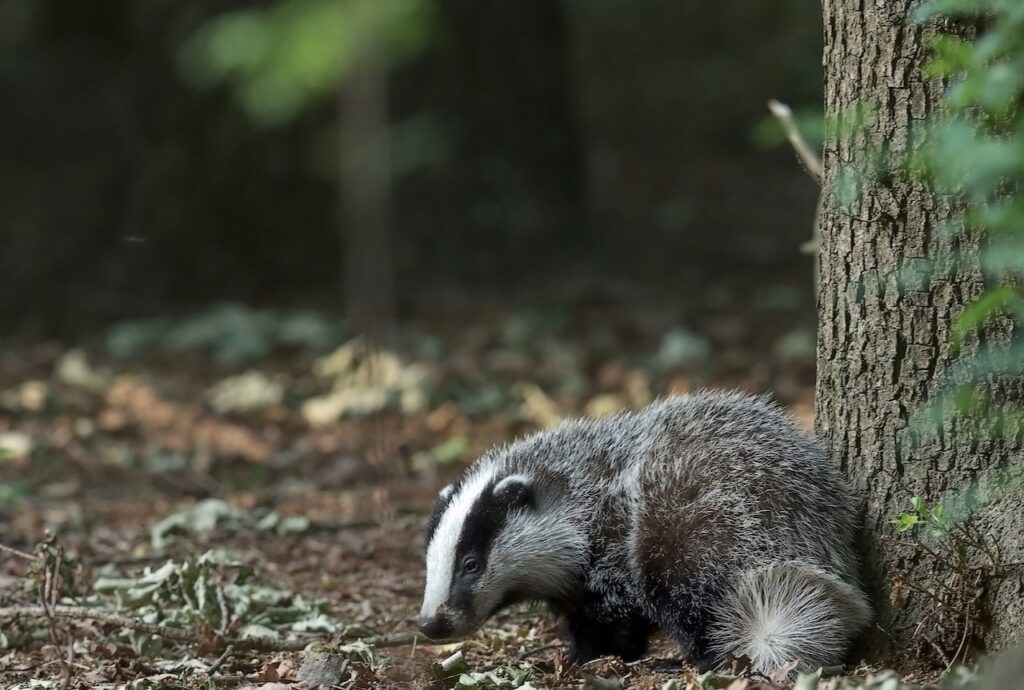
Badgers are nocturnal animals, spending their days asleep and becoming active as evening arrives.
Each night, they leave their setts to play, socialise, and search for food under the stars, but their routines are hard to predict. If you want to see them, you need patience.
Badgers rarely come out at the same time, and their nightly habits change with the seasons.
They often appear around sunset earlier in winter and later in summer.
Sometimes, a badger might come out while there is still golden light, almost as if something in nature quietly calls to them.
Every time they emerge feels mysterious, making each sighting special for those who wait and watch.
Badgers are both practical and mysterious. In summer, when nights are short and twilight lasts a long time, they come out before sunset because they need as much time as possible to find food.
In winter, when the nights are long and they are less active, they wait until it is very dark before leaving their sett.
I am one of many people who have watched these setts over the years. My local badger group has kept detailed records of this sett since the early 1950s, and some sightings go back to the 1930s.
This tradition of quietly watching these badgers has lasted for almost a hundred years. One of my favourite stories is about the old railway line that was closed before my time, back in 1964.
The story goes that for many years, the badgers would wait until the last train passed by at 9:10 p.m. before coming out, almost as if the sound of the train signalled the start of their night.
Another story, which is one I have seen and heard myself, unfolds each late winter, when the first haunting calls of tawny owls echo through the woodland.
That’s when the badgers begin to stir, their emergence perfectly timed to the soundtrack of the Tawny owls’ courtship high above the woodland floor as they perch high in the trees.
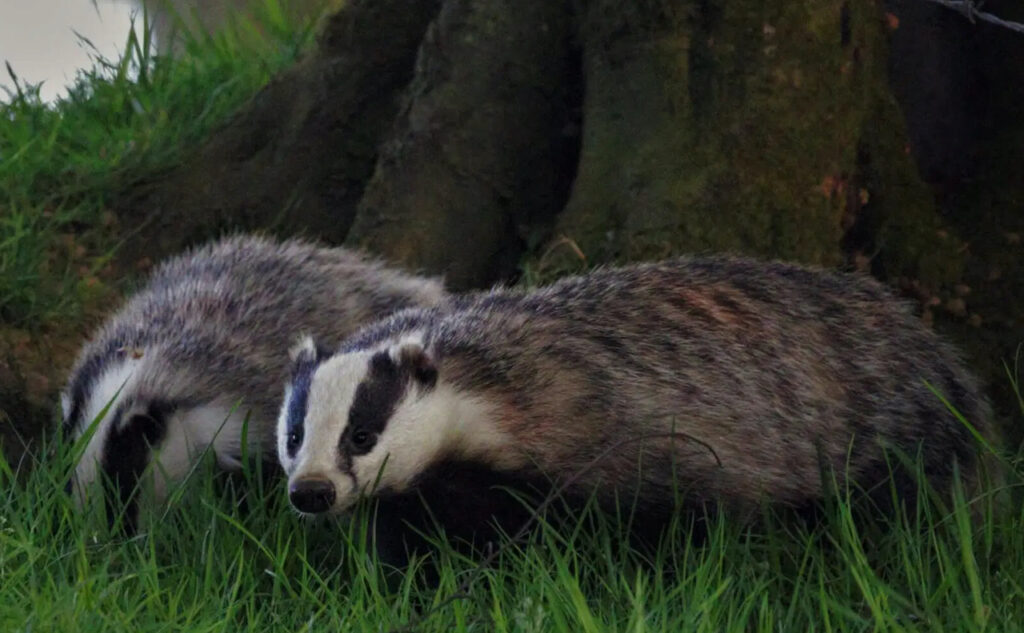
Badgers living in setts warmed by the sun stay underground longer than those in the shade. On bright, moonlit nights, they often wait even longer to come out, careful not to be seen under the bright sky.
When the night feels uncertain, and their senses are dulled, badgers stay underground. They choose caution and wait until it feels safe to come out again.
Weather also shapes their routines. After rain, when the earth is full of life, badgers come out early, eager to find the feast waiting for them under the dewy grass.
During dry spells, when the ground cracks and worms hide deep, hunger pushes the badgers out earlier and keeps them searching later into the evening.
Mother badgers with cubs are usually the first to come out. They are busy feeding their hungry young and making sure the cubs have the best chance to grow strong.
People nearby can also change badger routines. Setts close to busy areas often stay quiet until late at night, as the badgers wait for the noise to die down.
At my local sett, where people rarely disturb the badgers, the world keeps changing, and so do the lives of these badgers.
Summers have become hot and humid, and winters are now long, grey, and damp.
Badgers used to stay hidden during cold spells, but now I see them moving around, restless and active in the milder weather.
Because of this, I leave out water and extra food during spring and summer. Now, more than ever, this badger clan need some help to get through these wet, mild winters.
In just twenty years, I’ve seen climate become the biggest challenge for my local badgers. Also, the steady growth of our village into a medium town has had an impact.
People often ask if they can come with me to see the badgers, and I almost always say no.
It’s not because I’m selfish, but because I respect these wild animals and hope their lives can stay as undisturbed and wild as possible.
The location of this sett is well known to those who care about it.
The local badger group keeps careful records, tracing the clan’s story back to the 1950s, and every adult and cub is counted, each generation part of the clan’s and the woodland’s history.
The land which the sett is on does not belong to me, and I know I am not the only one watching. There is at least one other person, a quiet guardian who visits with a camera and is just as careful to keep the sett’s secret safe. Neither of us would ever share a photo or video that could reveal the badgers’ hidden home.
For years, we watched side by side but never met. We were two strangers connected by the same quiet routine, each aware of the other only through small signs and a sense of shared care.
That changed one summer evening about eighteen months ago. I was leaving the woods with my trolley and water container when he appeared on the path, coming to check on the badgers.
For a moment, we were not just shadows in the dusk but fellow caretakers brought together by a simple act of kindness.
He told me he had noticed water containers left in quiet corners, a silent clue that someone else was caring for the sett. Even before we met, these small signs showed our secret partnership.
For me, it is comforting to know I am not alone. Someone else cares enough to watch over the badgers, quietly devoted to their wellbeing and protection just like I am. In winter,
I still find myself drawn to the sett on milder days, hoping to catch signs of the clan stirring beneath the frosted earth. I look for fresh scrapes and diggings, signs that the clan has found worms and other creatures in the soil to eat.
When the firm grip of winter takes hold, it is the only time I step up. When winter makes the ground hard and food is scarce, I leave a quiet offering for my wild neighbours, hoping it helps them until spring comes back.
Tracking badgers in winter takes patience and imagination. This is their quiet season, when the clan disappears underground to rest in hidden chambers while the world above sleeps, leaving us with only dreams and footprints to follow.
Even in their quietest months, the badger clan’s story is never dull.
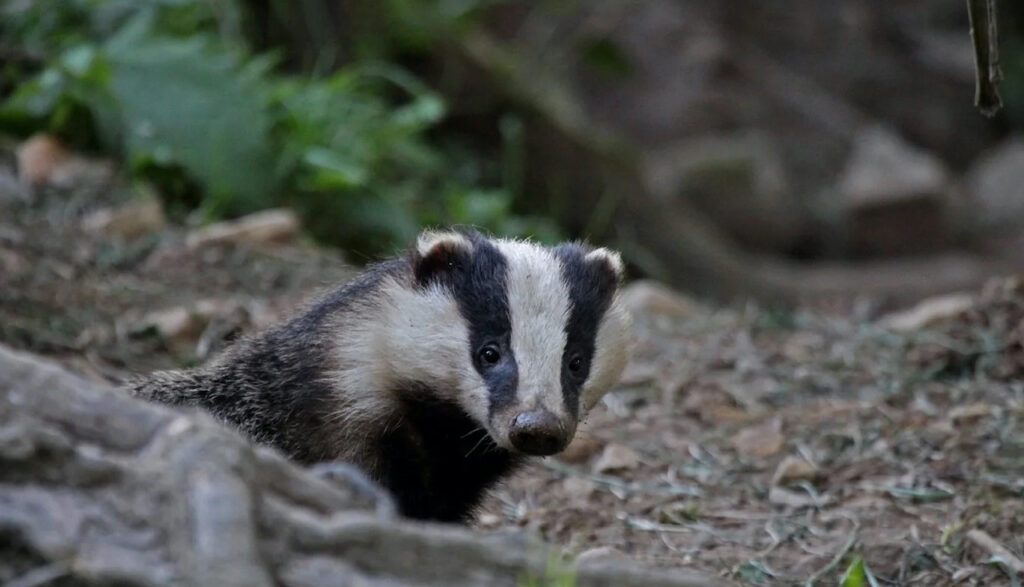
There is always something happening beneath the surface, a hidden excitement waiting to be found.
I watched the clan from the first cold days of November to the first signs of spring in March, wanting to capture every detail of their winter life and share the full story with you.
If you’re curious about badgers, I invite you to explore our collection of articles on our website or listen to our podcasts wherever you get them.
There you’ll find more stories and insights to help you appreciate these iconic, native wild animals.
Maybe, inspired by their secret world, you’ll want to join your local badger group and become part of their story too.