Wildlife Matters looks at The Dazzling World of Dragonflies: Britain’s Ancient Aerial Acrobats
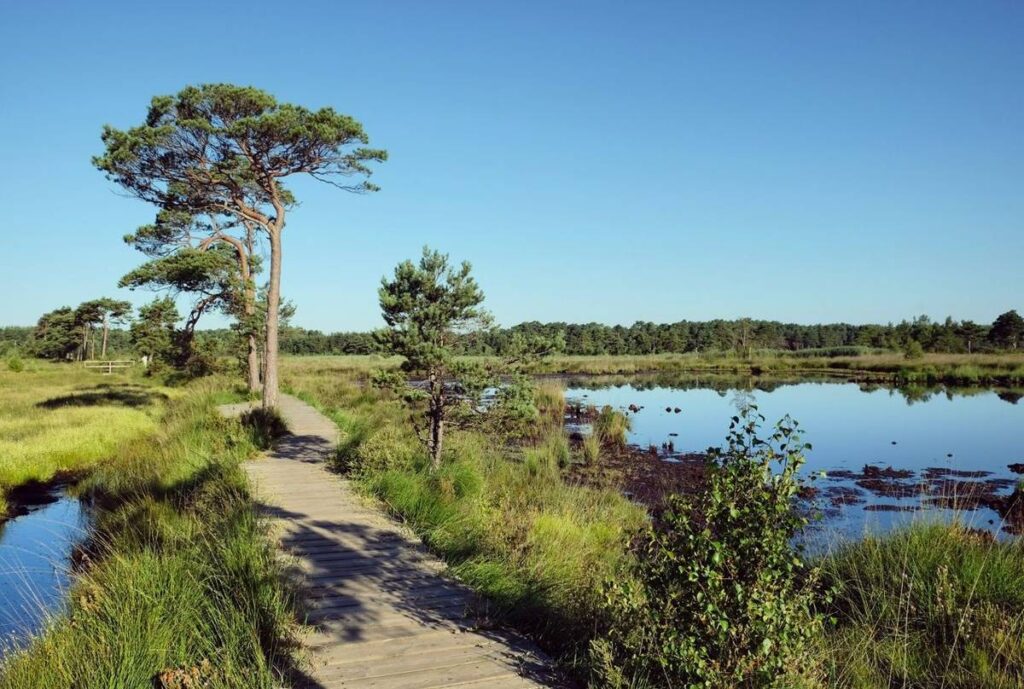
Today you join me in the Moat car park as we are about to head off into one of the best wildlife reserves in the south, the incredible Thursley Common, a 325-hectare National Nature Reserve in Surrey which has a patchwork of incredible, diverse, fragile and rare mosaic of open dry heathland, peat bogs, acidic bog pools, ditches, and pine and deciduous woodlands and is perhap the best place to spot two species we are searching for today, the ancient aerial acrobats known as the Dragonfly and Damselfly on the dedicated Dragonfly boardwalk here at Thursley Common.
Twenty-six species of dragonfly have been recorded at the site, and it is officially designated as a ‘Dragonfly Hotspot’, which means that we should have a good opportunity of seeing both dragonflies and damselflies; so let me show you as we go off on our most recent Wildlife Matters expedition.
Each summer, when sunlight shines on Britain’s freshwater areas, the air fills with flashes of electric blue, emerald green, and fiery red. Dragonflies and damselflies, Britain’s Odonata, are among nature’s most spectacular seasonal marvels.
With complex wings and otherworldly eyes, these ancient insects are not only beautiful but also fierce predators, important indicators of an ecosystem’s condition, and survivors of a lineage that predates the dinosaurs.
The Ancient Origins of Dragonflies
The history of dragonflies goes back more than 300 million years, long before mammals or even dinosaurs existed on the Earth. Fossil records indicate that their ancestors, the griffinflies, once flew above the primaeval forests with a wingspan of as much as 70 centimetres, which is greater than that of any dragonfly now living.
These extinct giants were among the earliest true masters of flight and moved through the moist air of the Carboniferous period as top aerial predators.
Today’s dragonflies are smaller yet no less impressive. Their evolutionary path has remained largely the same, proving how efficient their design is.
Modern dragonflies and damselflies are still unmatched in terms of aerial agility, thanks to their four wings, which can be controlled independently, a true wonder of natural engineering. They remain among the most successful insect predators on the planet, having developed their hunting methods over hundreds of millions of years.
When you arrive on the Dragonfly Boardwalk, you will see that it is wide and sturdy, has rails along its entire length, and, most importantly, offers wonderful views of the wetlands and the wildlife that lives in them.
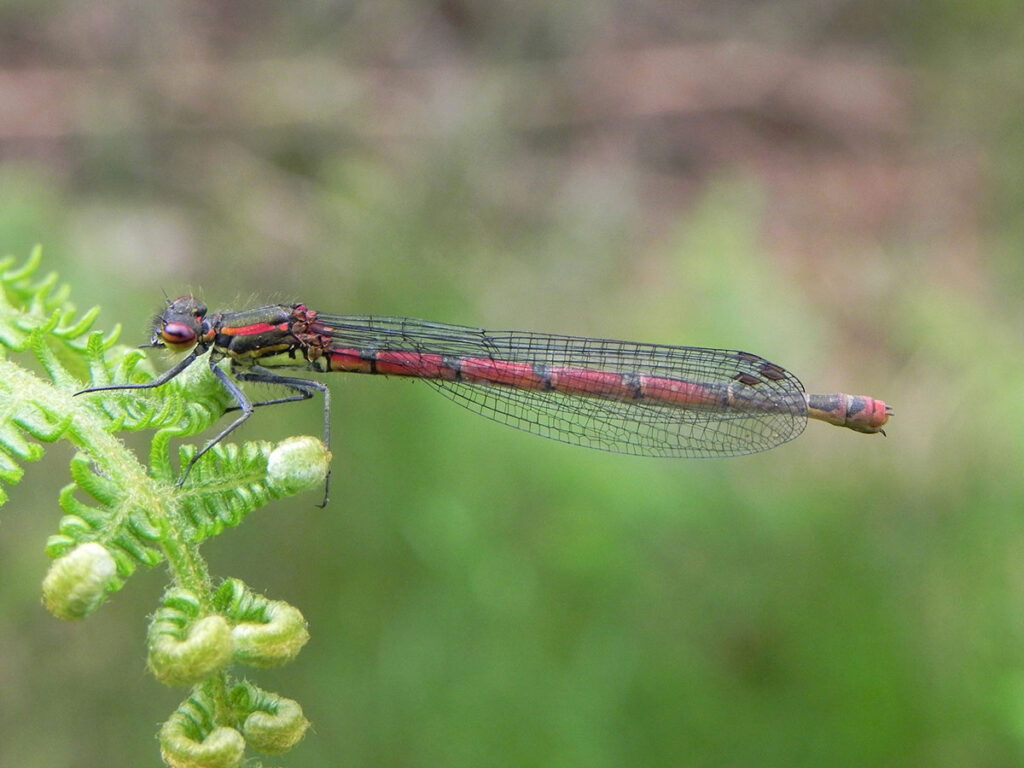
The day begins well as a Large Red Damselfly is seen ‘resting’ on the middle rail of the boardwalk side. This damselfly is the first of the year to appear and may show up as early as April if the weather is warm. It is a common species, inhabiting a wide range of habitats and is one of the first to colonise new ponds.
The males are mainly red with black legs and have black bands at the base of the abdomen, while the females are similar but come in three forms with varying amounts of black on their abdomen. That point of information was given to me by another visitor on the day, who had come from Sussex to look for some of the early-season dragonflies and damsels. Thank you, Gary; it was good to meet you.
What is the difference between dragonflies and damselflies?
The order Odonata, which is derived from the term “toothed ones” because of the serrated jaws that make these insects such efficient hunters, includes both dragonflies and damselflies. But how does one tell them apart?
The dragonflies, which belong to the suborder Anisoptera, are the bigger and more robust of the two. Their hind wings are wider than their front wings and, when at rest, they hold their wings outspread so that they can take off quickly at any time.
In contrast, damselflies (suborder Zygoptera) have a more delicate build, with thin bodies and wings of the same size, and when they are not moving, they fold their wings neatly along their backs.
They both have compound eyes, but in dragonflies the eyes are very large and usually come together at the top of the head, giving them almost 360-degree vision. In damselflies, the eyes are separate, which gives them a more symmetrical, spaced look. However, these differences go beyond being merely cosmetic; they indicate distinct hunting and survival strategies perfectly adapted to how they live.
While I am walking along the boardwalk with my camera and tripod and my rucksack slung over my back- yes, it is actually that hot today- I am pleased to spot the first dragon of the day.
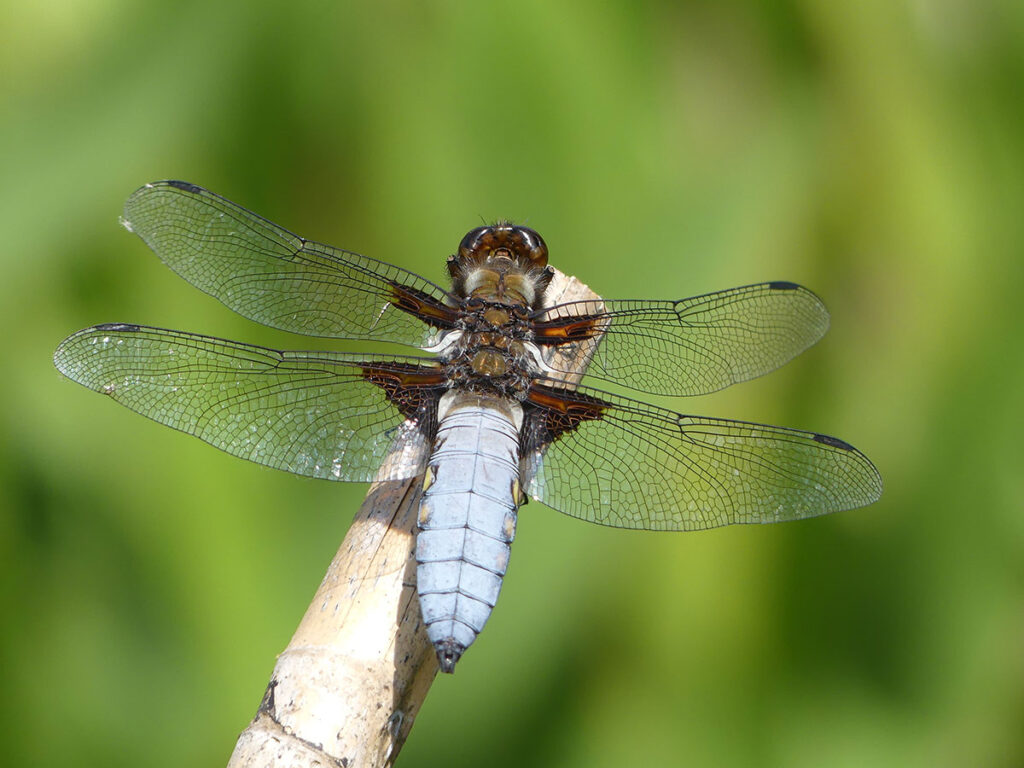
It is a Broad-Bodied Chaser, a type of dragonfly that is very frequently seen and which, like many others, will often return to the same spot to keep an eye out for prey or to mark its territory.
This species is one of the first to colonise new ponds and is a favourite in gardens; it can be recognised by the broad blue (in the male), or golden-brown (in the female) abdomen, and both males and females have dark patches at the base of each wing. However, the young or immature male resembles the female.
While I was standing there, concentrating on taking a good photograph of the Broad-bodied chaser, I noticed something below me that had happened to me for the first time, even though the species is not uncommon; it is, in fact, the longest one!
Because of its long ovipositor, the female is, in fact, the longest kind of dragonfly in the UK, reaching a length of 84 millimetres or about 3½ inches, and even though it is long, it is considerably slimmer than the Emperor.
The species also has its own folklore, maybe due to its outward resemblance to a large wasp; it is this species that led to the traditional folk name for a dragonfly, the horse-stinger!
Of course, they can’t sting.
To me, the long black abdomen with the yellow markings that appear to be rings is stunning and is the opposite of a wasp’s colouring.
The Hidden Years: A Life Below the Surface
Although adults are the ones that can be seen above the water, most of a dragonfly’s life is spent out of sight. After mating, the female lays her eggs on or near water, and when the eggs hatch, the larvae, called nymphs, begin a hidden, predatory life below the surface.
The nymphs of dragonflies and damselflies are fierce hunters in water, feeding on the larvae of mosquitoes, small fish, tadpoles, and even on one another.
They have extendable jaws and catch their unsuspecting prey at incredible speed. Different from the adults, who breathe through spiracles in their abdomen, the nymphs breathe using gills; in adult dragonflies these gills are found in the rectum, while in damselflies they are situated at the end of the tail.
The time it takes for nymphs to develop underwater varies from several months to six years, depending on the species and environmental conditions. During this time, they moult several times, growing bigger and preparing for their remarkable change into adults.
We are currently on the main Dragonfly boardwalk at Thursley Common, with a number of other people about, though it doesn’t seem to matter if you stop, set up your tripod, and get your camera in position to take some wildlife photographs.
I believe that most of the people come here because of the birds; the Dartford Warblers and woodlarks have already begun nesting, as the wardens’ signs indicate, and the nightjars will soon be nearby too. Therefore, as the signs state, stay on the paths, and this applies to your boots as well.
I halt, adjust the camera, and remove the water bottle from my rucksack.
Though it is early spring, the day feels like summer. Having taken some water, I once again begin to look at the wetland plants beneath the boardwalk and soon see a common blue damselfly; as
I align my view for the photograph, I notice an Azure Blue Damselfly on a neighbouring plant. The Azure Damselfly is also one of the most widespread of our blue damselflies.
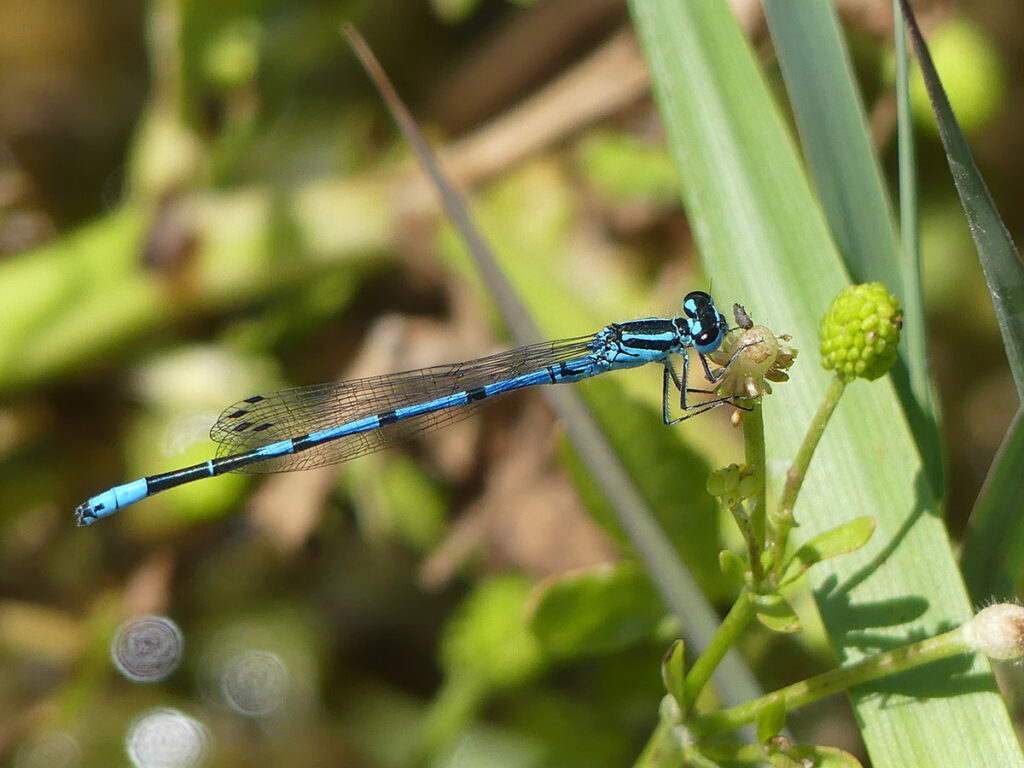
Although Azures prefer smaller and more sheltered ponds, Common Blue Damselflies are generally found around larger bodies of water. Yet both species can be found together in overlapping habitats, which is why it is necessary to examine their key identification features in detail.
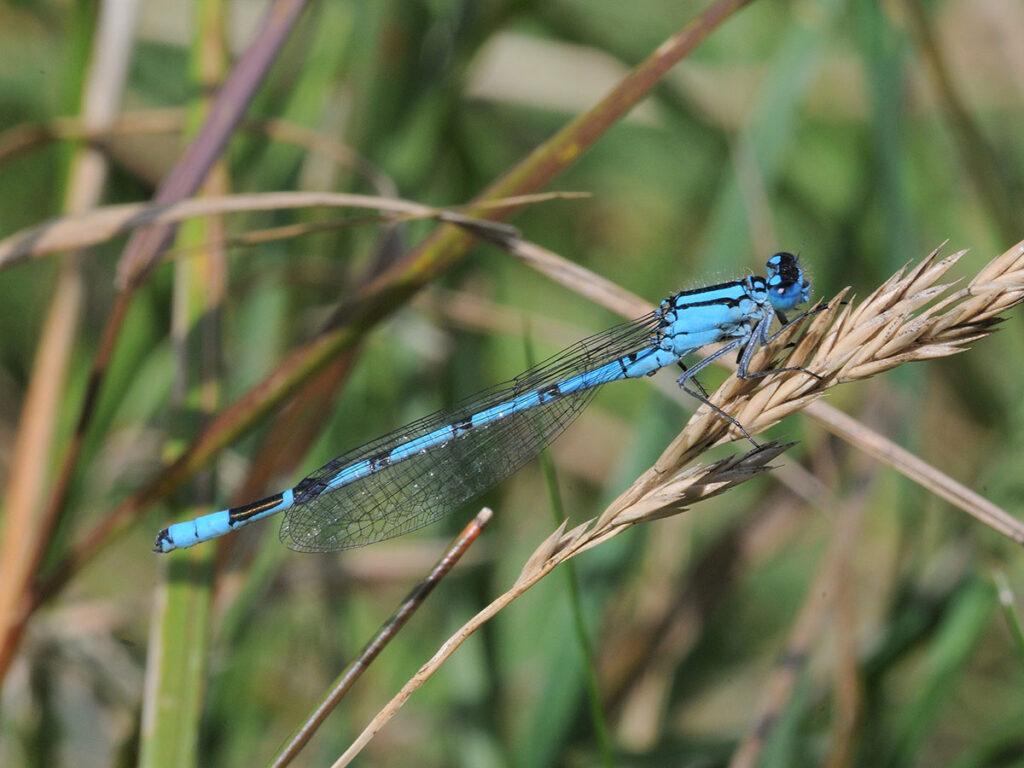
The male damselflies can be most readily identified on the second segment of the abdomen: the Azure Damselflies have a clear ‘wine glass’-shaped black mark, whereas the Common Blues have a ‘mushroom’ or oval mark in that area.
Females are mostly black with green or blue markings and, like the males, possess prominent blue eye spots connected by a thin bar on the back of the head.
The Common Blue Damselfly is very often seen, particularly in garden ponds and other protected areas of water with lots of aquatic vegetation. The males have a soft sky-blue colour with clear black markings, including a distinct U-shape on the second abdominal segment. Females are mostly dark in colour and have greenish or blue patterns, with about 10% being blue rather than green.
A Metamorphosis Like No Other
At the right time, often during the cool early morning or in the dark of night, adult nymphs climb out of the water and look for a reed, a rock or the bank. There, they go through one of nature’s most remarkable changes. The nymph’s skin splits and the adult dragonfly or damselfly then makes its appearance as a soft, pale and completely vulnerable adult.
The adults that have just emerged, known as tenerals, are delicate. Their wings are crumpled, and their bodies do not have the bright colours that they have when mature. In the following few hours, they pump fluid into their wings and harden their exoskeletons before finding shelter among the vegetation.
Only after a number of days do their real colours appear, indicating that they are ready to fly.
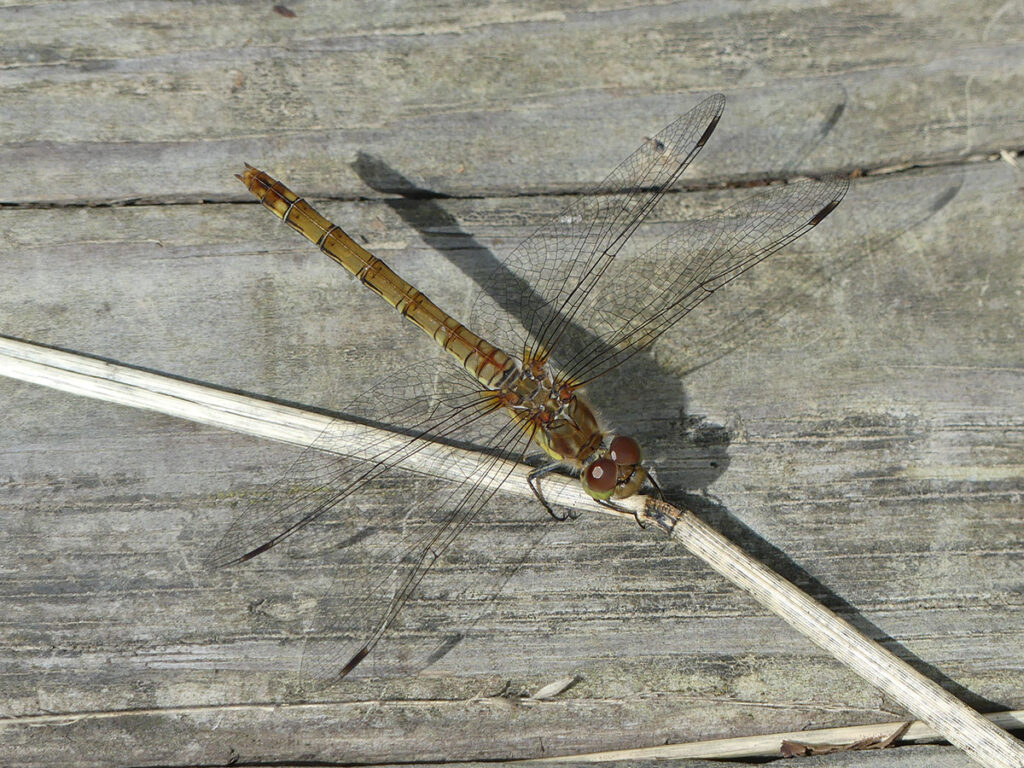
While I am walking along the boardwalk, I see a dragonfly sitting on a dry reed that is there. As a generalist, I find this one of the more noticeable insects and easy to identify, even without referring to my apps or books. It is a sturdy species and may survive until October or even November, provided that the autumns are dry, sunny and mild.
The males have an orange-red abdomen with parallel sides and a brown thorax; the females are dull yellow-brown on both the abdomen and the thorax. It is a Common Darter and can be told apart from the similar Ruddy Darter by the yellow stripes on its legs.
To the side of me is a small, nearly still area of the pond, thick in vegetation. This habitat change from the flowing waters will attract different species, so I stand back and wait. It isn’t too long before I see a still- or slow-water specialist. The skimmers resemble the chasers, except that their abdomens are narrower and their wings are entirely clear.
They favour still water and are often seen in the flooded gravel pits which are numerous in the northern part of Surrey.
This is a quick insect that flies low. Still, between episodes of activity during which it defends its territory or catches food, it rests on a regular perch, usually a stick or bare ground.
The males have a grey-brown thorax and a powder-blue abdomen with a black tip and yellow-orange, elongated spots on the sides.
Females and immature males are yellowish-brown and have black, curved bracket-shaped markings on either side of the abdomen.
As the insect ages, noticeable changes occur: the male usually has black scratch marks where the female’s legs held onto the abdomen during mating, and the female becomes tawny-brown or bluish-grey.
Masters of the Sky: Hunting, Mating, and Flight
When they have matured, dragonflies and damselflies become among the most skilled fliers in the world; all of their four wings are capable of moving independently, which enables them to hover, fly backwards and alter direction in an instant. In fact, some species can reach speeds of up to 30 miles per hour, making them impressive aerial acrobats.
Dragonflies have giant, multifaceted eyes made up of as many as 30,000 ommatidia, or separate lenses, giving them an almost full field of vision that helps them keep sight of fast-moving prey and escape predators.
They are fierce hunters and eat hundreds of mosquitoes, midges, and even butterflies each day. Their hunting success rate is unmatched in the animal kingdom, as they catch up to 95% of their intended prey.
Mating is no less spectacular. Dragonflies carry out elaborate courtship flights, occasionally creating heart-shaped “mating wheels”. Females lay their eggs in or around water; some species dip their abdomens into the water’s surface, while others insert eggs into plant stems under the waterline.
The British Dragonflies Diversity and Identification
There are approximately 57 species of dragonflies and damselflies in Britain, about 30 of which are commonly observed. They are divided into several readily identifiable groups:
- Hawkers & Emperors: Large, powerful fliers such as the Southern Hawker and Emperor Dragonfly
- More robust species, such as the Broad-bodied Chaser and the Common Darter.
- Demoiselles: Graceful, metallic damselflies including the Banded Demoiselle and Beautiful Demoiselle
- Blue & Red Damselflies: Slender, vibrantly colored species like the Common Blue Damselfly and Large Red Damselfly
We have already come across a few of these species this morning. Having now reached a sandy track which lies between a boardwalk and a spot where you can get close and at the same level as the water, I am taking the opportunity to get low behind some of the reeds growing along the banks since this seems like a good position in which to see some new species.
I am now seeing a Blue-tailed Damselfly. It is a male, as can be recognised by the turquoise blue band on its black tail and by the striking turquoise blue plates on the side of its thorax. Females are generally green, and I have come across some that have a dusky pink to red thorax, so they too can vary and are rather confusing.
The next time I see one, it will be simpler for me, since this damselfly species is one I regularly encounter in the small streams and rivers in my area. It is the Banded Demoiselle, a creature with beautiful colouring and patterns.
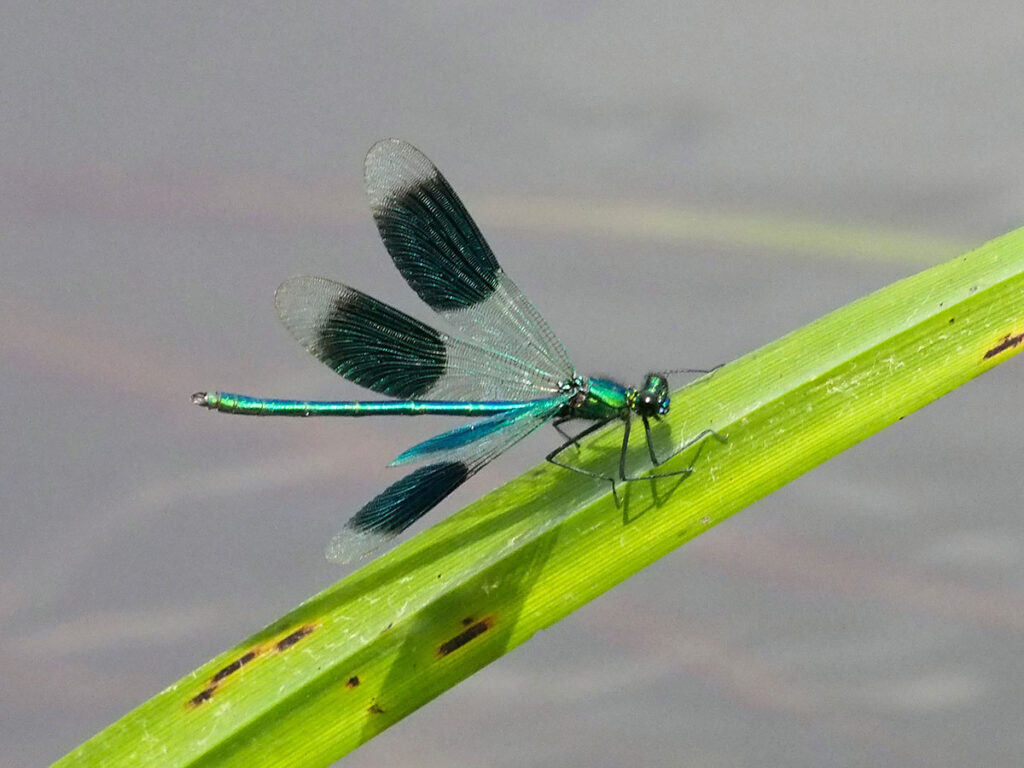
The male is striking, with a brilliant kingfisher-blue body and deep blue bands on its wings, giving it a fluttering, helicopter-like flight over slowly flowing streams and rivers. The females are metallic green and turn bronze as they get older; their wings are translucent and have a green tint.
The banded demoiselles are the biggest species of damselfly and the most striking in both their colouring and the grace of their flight. Since I mentioned this earlier, this species first caught my interest in the study of odonata, so I was most pleased to see them today.
We came to Thursley Common today because all the species I mentioned can be found here. The weather has recently been wet but has now been dry for a few days, and the temperature is very pleasant at 23C this morning, with a clear, bright day.
There are several good reasons to visit Thursley Common, including the rare migrant birds and its status as an excellent site for amphibians and reptiles. The variety of habitats produces unique biodiversity and a wonderful range of wildlife species, no matter the season.
It is worth mentioning that you should take with you everything you’ll need for your trip, such as water, food and weatherproof equipment, together with your camera and other recording devices, since there are no cafes or any shops in the area until you get to the village of Thursley, home to a friendly pub known as the Three Horseshoes. The national nature reserve has no public toilets.
The village of Thursley has a Saxon and Norse background, as shown on the village sign, which depicts the pagan god Tor alongside the old name for the hamlet, Thor’s Lee. In Norse mythology, Thor took part in numerous fierce battles, and this part of Surrey has a strong association with war. In the Second World War, Allied soldiers trained for D-Day on the commons, and the Ministry of Defence still operates here today.
Where and When to Find Dragonflies at Thursley Common
Dragonflies and damselflies are closely connected to water; the best places to see them are by ponds, lakes, slow streams, ditches, and even garden water features. Many species are very territorial, with males patrolling certain sections of water to defend against rivals and attract females.
In Britain, the dragonflies are most numerous from late spring until summer, even though a few hardy species can still be seen on sunny days as late as November; at the beginning of the season we look for large red damselflies and hairy dragonflies, but when summer comes, hawkers, chasers and the pretty demoiselles are seen in greater numbers.
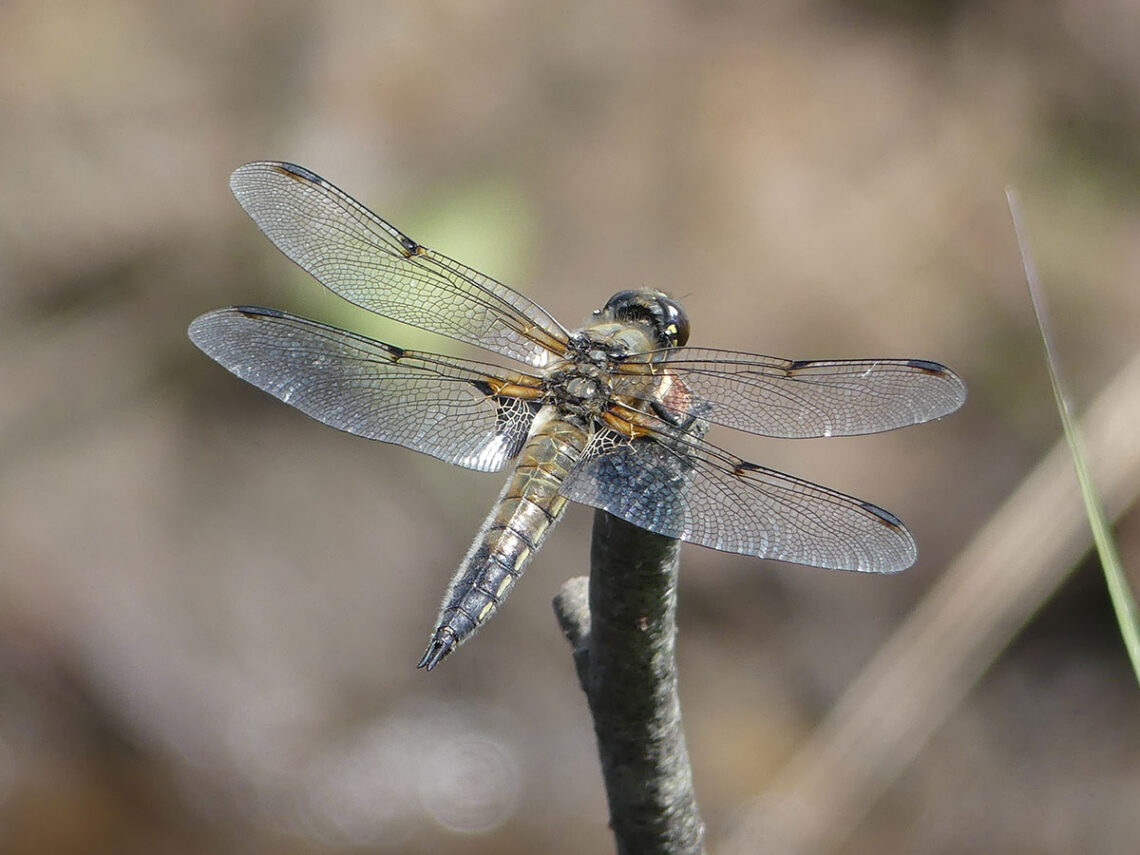
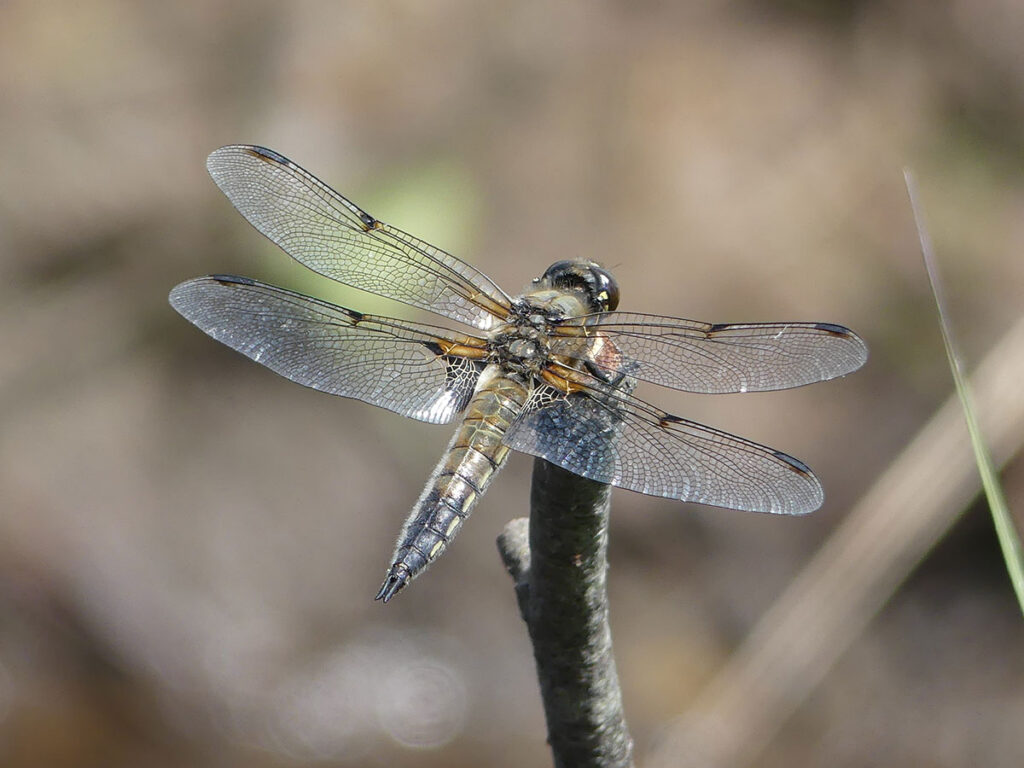
After having followed my own advice, I come across a four-spotted chaser, a species that is quite common; this tawny to dark-brown type is easy to recognise.
There is a dark mark at the node on all four wings, a feature that gives the species its name, and the hindwings in particular have a quite noticeable dark patch at their base. Both the males and the females have a mainly brown thorax and abdomen with a black tip, and the thorax is covered with fine hairs.
The males are extremely territorial, even when compared with other dragonflies. They make attacks first and then ask questions.
Guardians of Wetlands
Dragonflies are not merely pretty insects; they are important for the good health of Britain’s wetlands.
As both predators and prey, they occupy a vital position in the food web; adult dragonflies help control mosquito and biting-fly numbers, and their larvae maintain the balance of aquatic invertebrate communities.
Birds including kingfishers, wagtails, and hobbies make use of dragonflies as a major source of food. The presence of dragonflies is a sign that the water is clean and not polluted, making them good bioindicators. In areas where dragonflies flourish, there is also a rich diversity of other wildlife, ranging from amphibians to water voles.
One dragonfly species is well known to many people, and we are fortunate to see it frequently across much of the UK.
The Emperor is the largest dragonfly, with broad wings and a strong body; males have a green thorax and a bright blue abdomen with a black stripe down the back that runs the whole length.
Females, on the other hand, also have a green thorax and abdomen. Quite appropriately named, this species makes itself aggressively dominant in still-water habitats, ranging from small garden ponds and dew ponds to large lakes and reservoirs, and aerial ‘dog-fights’ between competing males are a remarkable sight.
Threats and Conservation: Protecting Britain’s Dragonflies
Although they are resilient, dragonflies face increasing dangers from habitat loss, climate change, and pollution. Wetland drainage, intensive farming, and urban development have reduced the number and quality of freshwater habitats. Larvae can be poisoned by runoff containing pesticides and fertilisers, and invasive plants and animals can disturb delicate aquatic ecosystems
Climate change adds another layer of uncertainty, as some species in the south are moving north while others struggle to adapt. Organisations dedicated to conservation, including the British Dragonfly Society and the Wildfowl & Wetlands Trust (WWT), are making great efforts to protect and restore wetlands, to monitor populations, and to inform the public about the importance of these attractive insects.
We can all take simple steps to help. For instance, make a pond in your garden and avoid garden chemicals like fertilisers and pesticides. You could also offer your time or give support to wetland restoration schemes to help make sure that dragonflies continue to appear in Britain’s waters.
When I am back on the boardwalk and have turned down a small lane that crosses some still water, I am by myself. I take a moment to look around, find another new species, then photograph it and use my app to verify it.
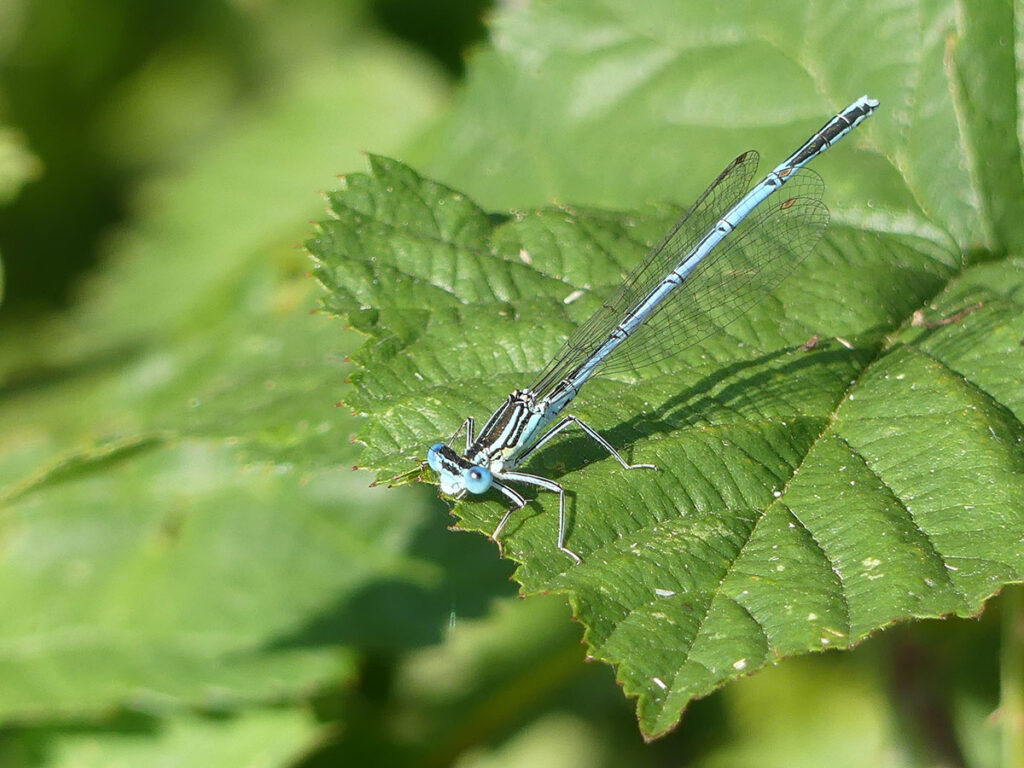
Although most dragonflies have bright and vivid colouring, especially the males, this one is pale and thus stands out because it is different. It is a white-legged damselfly: its young are off-white and resemble flying matchsticks; the males are blue with distinctly creamy-white legs, and the females are green. Less widespread than most of the other species I have seen today, they are usually found in slow-flowing rivers where they can be numerous. They are known to be a good indicator of pollution-free water.
How to Watch and Identify Dragonflies: A Beginner’s Guide
Please forgive me if you are a regular or experienced watcher of dragonflies or damselflies. I want to encourage people to take an interest in these amazing creatures, experience them for themselves, and discover some wild areas to explore.
Above all, no special equipment is needed to enjoy dragonflies; you only have to be patient and curious.
Here are Wildlife Matters’ top tips for would-be Dragonfly and Damselfly watchers:
- Go to a local pond, lake, or wetland on a warm, sunny day, since dragonflies are most active in sunlight.
- Move slowly and watch for quick movements above the water or among the reeds and grasses.
- To see their detailed patterns and colours, bring binoculars or a camera fitted with a zoom lens.
- Identify the common species using a field guide or an app and be sure to record the size, shape, body colour, wing markings, and behaviour.
You should never leave any trace in the countryside, and this rule applies equally when wildlife watching: you must always take care not to disturb the wildlife or their habitat.
The best opportunity for seeing the animals’ natural behaviour, from hunting to courtship flights, is to watch quietly from the edge of the water.
The Myths, Legends, and the Science
For a long time, dragonflies have held humans’ imagination in thrall. In numerous cultures, they stand as symbols of transformation, agility, and even good fortune. According to medieval folklore, the insects were believed to have magical abilities.
They were sometimes referred to as “horse-stingers” or “devil’s darning needles”, even though in reality they are not harmful to people.
Further scientific research is leading to the discovery of new marvels. The way dragonflies fly is inspiring engineers designing agile drones. Their vision, which consists of thousands of light-sensitive units, is one of the most advanced found in the animal kingdom.
Many species migrate hundreds of miles, crossing oceans and continents to reach suitable breeding areas.
Dragonflies and People: A Shared Future
The future of dragonflies in Britain is closely linked to how we look after the land, and their survival reminds us that all forms of life are interconnected. Every pond, stream and marsh is a small world full of drama, beauty and history.
When we learn to identify and value dragonflies and damselflies, we not only help conserve them but also strengthen our own ties with the natural world. If you are an experienced naturalist or simply someone who is interested in nature, the next time you see a dragonfly skimming the water or basking in the sun, take a moment to wonder about its journey from the ancient past to its uncertain future and think about the part that each of us plays in protecting these brilliant aerial acrobats.
Dragonflies and damselflies are ancient survivors, skilled rulers of the sky, and protectors of Britain’s wetlands; their history is marked by adaptation, beauty, and resilience.
If we work to protect and restore the habitats which they need, then future generations will be able to take part in the marvel of these amazing insects.
Whether you are captivated by their shimmering wings, fascinated by their predatory prowess, or inspired by their role in healthy ecosystems, dragonflies offer a unique window into the richness of the natural world.
The next time you visit a pond or stream, look a little closer; you may witness the unfolding story of one of nature’s most extraordinary creations.
Support Us
If you enjoyed this blog, please check out more of our wildlife blogs here, or you may prefer to listen to the Wildlife Matters Podcast here.
If you want to support our work
Please click on the Wildlife Matters Patreon Community.
Please click to join the Wildlife Matters Substack Community.
You can donate here.
Further Reading
WWT Wildfowl and Wetlands Trust – Dragonflies and Damselflies
British Dragonfly Society – Damselflies
British Dragonfly Society – Dragonflies
Key Takeaways
- The Dazzling World of Dragonflies showcases the beauty and ecological importance of dragonflies and damselflies in Britain.
- Thursley Common is a prime location for observing these species, hosting a diverse habitat perfect for dragonfly spotting.
- Dragonflies are ancient insects with a lineage over 300 million years old; they are skilled predators and essential bioindicators of healthy ecosystems.
- Visitors can learn to identify various species, such as the Broad-bodied Chaser and Azure Damselfly, enhancing their wildlife experiences.
- Conservation efforts are crucial to protect dragonflies from habitat loss and climate change, promoting biodiversity and ecosystem balance.
Estimated reading time: 21 minutes